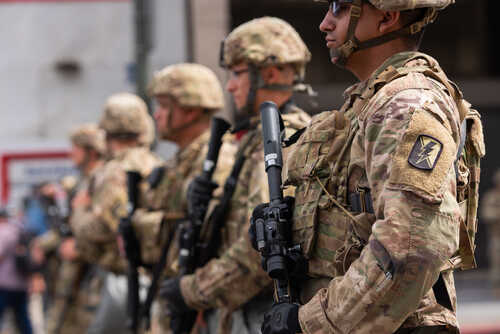
President Trump’s deployment of the National Guard to combat crime in Washington, D.C., and other cities raises questions about constitutional authority and federal overreach.
Story Highlights
- President Trump has deployed National Guard troops to Washington, D.C., and Memphis.
- Trump claims these actions have led to significant crime reduction.
- Controversy arises over the legality and effectiveness of these deployments.
- Legal challenges cite potential violations of the Posse Comitatus Act.
- Critics express concerns over federal overreach and political motivations.
Trump’s Deployment of National Guard Troops
In 2025, President Donald Trump initiated the deployment of National Guard troops to Washington, D.C., with claims of a significant reduction in crime rates. The federal intervention targeted urban issues, including crime and protests, particularly in cities led by Democratic officials. The decision to federalize the D.C. police and utilize the National Guard for routine patrols sparked debate over the legality and necessity of such actions.
The use of federal forces in domestic law enforcement is historically rare, constrained by the Posse Comitatus Act, which restricts military involvement in civilian affairs. D.C.’s unique status allows direct presidential control over its National Guard. Nevertheless, deployments in other cities like Los Angeles faced legal challenges, with courts ruling them as violations of the Act.
President Donald Trump has deployed the National Guard to Memphis, calling it a "replica" of his crackdown on Washington, D.C. https://t.co/khLWCzjrEx
— First Alert 6 (@WOWT6News) September 15, 2025
Legal and Political Controversies
President Trump asserted his constitutional authority to deploy federal forces, citing national security and crime reduction. However, the moves have faced rigorous legal scrutiny and opposition from local governments. Critics argue that the deployments represent an overreach of executive power, with potential long-term implications for federal-local dynamics and law enforcement norms.
Local leaders, particularly in Democratic-led cities, have voiced strong opposition, emphasizing the importance of local autonomy and the potential risks to civil liberties. The debate has further deepened partisan divides, with Republican leaders, like Tennessee Governor Bill Lee, supporting federal intervention in cities like Memphis.
Impact on Crime Rates and Public Perception
While President Trump claims a “miracle” reduction in crime in Washington, D.C., data indicates that crime rates were already on a downward trend prior to the National Guard’s deployment. The federal presence has resulted in over 700 arrests and the seizure of 91 illegal firearms, yet the long-term effectiveness and necessity of such measures remain contested.
The public reaction to these deployments has been mixed, with significant opposition from residents concerned about militarization and the erosion of civil liberties. The situation continues to evolve, with legal, political, and social implications for federal intervention in domestic law enforcement.
Watch the report:Washington crime crackdown | Trump’s DC showdown leaves 1,669 in custody, 168 guns seized
Sources:
Wikipedia: 2025 Deployment of Federal Forces in the United States
OPB: Trump is Deploying the National Guard to Memphis, Experts Worry it’s Becoming Normal
Brookings: What’s the President’s Legal Basis for Sending National Guard Troops to D.C. Streets?