
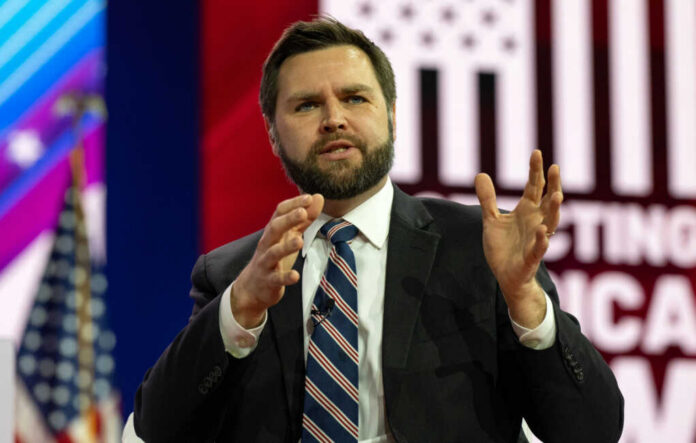
Vice President JD Vance walked away from 21 hours of grueling US-Iran talks in Pakistan without a deal, proving America’s unyielding stand against Iran’s nuclear ambitions leaves Tehran isolated and vulnerable.
Story Snapshot
- US-Iran negotiations in Islamabad ended after 21 hours with no agreement, as Iran rejected demands for a firm commitment against nuclear weapons development.
- Vance declared the failure worse for Iran than the US, underscoring American strength amid the ongoing war.
- Talks aimed to solidify a fragile two-week ceasefire but collapsed on US red lines, with negotiators now heading home.
- First direct US-Iran meeting since the war began six weeks ago highlights Trump’s firm leadership on national security.
Talks Collapse After 21 Hours
Vice President JD Vance arrived in Islamabad early on April 11, 2026, to lead high-stakes negotiations with Iran. The talks, hosted neutrally by Pakistan, lasted 21 hours and concluded early on April 12 without a peace deal. Iran refused US demands for an affirmative commitment not to develop nuclear weapons or related tools. Vance addressed reporters at the Serena Hotel at 7:08 a.m. local time, confirming the US delegation’s departure.
US Stands Firm on Nuclear Red Lines
President Donald Trump’s core goal drove the US position: Iran must verifiably abandon nuclear weapon pursuits. Vance emphasized constant communication with Trump, Secretary of State Marco Rubio, and Secretary of War Pete Hegseth during the marathon sessions. He described discussions as substantive but non-negotiable on red lines. Iran’s Parliament Speaker Mohammad Bagher Qalibaf and Foreign Minister Abbas Araghchi led their side, rejecting terms amid claims of US battlefield setbacks.
War Context and Ceasefire Risks
The talks marked the first direct US-Iran meeting since Operation Epic Fury launched open war on February 28, 2026. A two-week ceasefire agreed on April 7 provided a narrow window, now threatened by failure and Israel’s strikes on Iran-backed Hezbollah in Lebanon. Discussions covered Strait of Hormuz access and regional tensions. Pakistan’s Prime Minister Shehbaz Sharif facilitated as host, meeting Vance upon arrival. US power dynamics favored firmness, with Vance calling the outcome bad news primarily for Iran.
Vance presented a final and best offer before leaving, awaiting Iran’s response. The collapse stalls permanent nuclear restrictions and risks ceasefire breakdown.
Vance says US-Iran talks end without deal after 21 hours of negotiations https://t.co/AEggVf74FJ #FoxNews
— Armed INFIDEL (@edwin_spalding) April 12, 2026
Implications for America and the Region
Short-term, escalation looms in the US-Iran war, potentially disrupting the Strait of Hormuz and spiking global oil prices. Long-term, stalled diplomacy bolsters US and Israeli leverage while isolating Iran. Energy markets face volatility, defense remains active, and Middle East civilians endure prolonged instability. Politically, the Trump administration projects resolve, aligning with America First principles of strength over appeasement. Both sides of the aisle see government elites falter on core security, echoing frustrations with deep state priorities over citizen safety.
Iranian state media mocked US expectations despite defeats, contrasting Vance’s confidence. No expert analyses emerged yet, but uniform reporting confirms nuclear impasse as the hurdle.
Sources:
The Latest: US Vice President JD Vance says talks with Iran ended without an agreement – OPB
Vance says US-Iran talks end without deal after 21 hours of negotiations – Fox News
Vice President JD Vance confirms US-Iran talks end without deal after 21 hours – KUTV
JD Vance: Pakistan-Iran talks end; US demands no nuclear weapons development – Fortune