
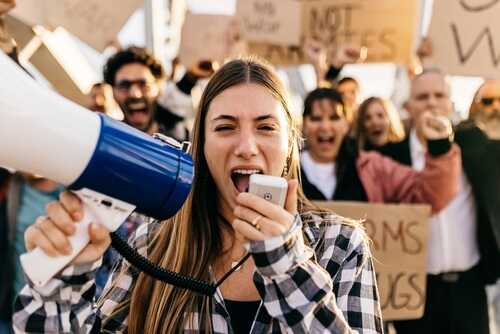
A national reckoning is descending on the U.S., driven not by partisanship but by a swelling moral movement demanding justice for the poor, the excluded, and the systematically silenced.
At a Glance
- Weekly “Moral Monday” protests are reviving civil rights-era tactics.
- Poor People’s Campaign leaders accuse U.S. policies of “policy murder.”
- Racial justice momentum has stalled since the George Floyd protests.
- Trump-aligned forces are reversing police reforms and DEI investments.
- A new national fusion movement seeks to unify across race and class lines.
A Moral Uprising Returns
Led by the Reverend William Barber, the modern Poor People’s Campaign is reigniting civil rights activism through coordinated “Moral Monday” demonstrations across the South and Midwest. The campaign targets policies that disproportionately harm low-income Americans: proposed cuts to Medicaid, public education, housing programs, and food assistance—all passed while billionaires reap tax windfalls.
Barber calls these policies not just unjust, but deadly: “policy murder.” His strategy mirrors the 1968 Poor People’s March, blending sermons, protest, and policy to awaken what he terms America’s “moral imagination.”
Watch a report: Moral Mondays Strategic Activism for Real Change
Justice Deferred
Four years after the murder of George Floyd, the structural reforms promised during that summer of protest remain largely undelivered. A Washington Post investigation finds most corporate DEI pledges have been rescinded, while police reform bills stalled or were reversed in key states. Many Black-led organizations report a backlash environment in both public and private sectors.
Meanwhile, right-wing leaders have fueled cultural resistance to racial equity, painting DEI initiatives and equity audits as divisive or “woke.” As a result, what began as a mass reckoning over racial violence risks becoming another unresolved chapter in American history.
Fusion Movement or Fadeout?
Barber’s coalition insists this moment is not just a protest, but a pivot point—a chance to forge a new political realignment rooted in faith, labor, race, and conscience. His team is organizing voter drives, worker actions, and civic campaigns in the run-up to the 2026 midterms.
Whether this movement can hold—amid rollback, fatigue, and repression—may determine whether America realizes the justice promised in 2020, or retreats into deepened inequality and moral collapse.
The reckoning has arrived. What comes next is up to the people.