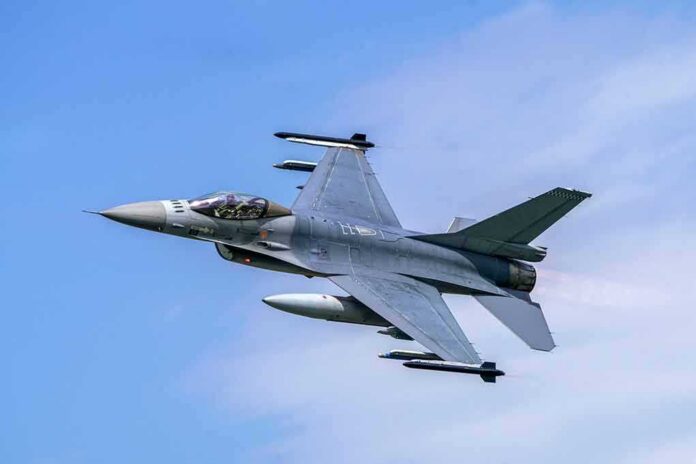
A Texas Air National Guard F-16 crashed during a Michigan training flight, but the pilot ejected and survived, officials said.
Story Highlights
- Texas Air National Guard F-16 from the 149th Fighter Wing crashed in northern Michigan.
- The pilot ejected and was reported in stable condition after rescue.
- Local officials ordered and later lifted a one-mile shelter and evacuation around the site.
- The crash occurred during a routine training mission launched from Alpena’s training center.
What Officials Confirmed About the Crash
Texas Military Department officials said a Texas Air National Guard F-16 from the 149th Fighter Wing went down in Grand Traverse County during a routine training mission on Thursday afternoon. The aircraft launched from the Air National Guard Combat Readiness Training Center in Alpena, Michigan, and experienced an in-flight incident before impact. Initial reports placed the crash near Blair Township, several miles south of Traverse City, with debris contained to a local area secured by first responders.
Unit spokespeople said the pilot ejected before the jet hit the ground and survived the emergency. Local authorities reported the pilot was conscious and later taken for medical evaluation in stable condition. Officials did not release the pilot’s name, citing standard procedure and privacy rules. Crews located the downed aircraft and set up a safety perimeter while they assessed hazards and coordinated with military safety teams to manage the site and secure evidence for investigators.
Safety Actions on the Ground
Grand Traverse County emergency managers ordered people within about a one-mile radius to shelter or evacuate as crews moved in, then lifted those orders once the area was safe. Fire, police, and military support teams worked to check for fuel, smoke, or other hazardous materials while they searched for flare or cartridge debris from the ejection sequence. The response matched protocols for a serious but contained military aviation mishap near homes and businesses, where quick control of access reduces risk to nearby families.
Officials stressed that the crash remains under investigation. Military safety boards take custody of the scene after local responders secure life safety and fire risk. Investigators then gather flight data, witness accounts, maintenance records, and wreckage evidence to determine what failed and how. Early reports mentioned a bird strike as a possibility, but leaders have not confirmed any cause, and they typically do not do so until a formal report is complete and cleared for release.
Where This Fits in Military Flight Training
Air Force safety reporting shows that fighter training sorties carry real risk because of speed, altitude changes, and demanding maneuvers. Safety centers track these events as a unique class of mishaps so they can learn from patterns and reduce repeat failures over time. That is why official updates focus first on facts the public needs now—where it happened, who was hurt, and what local hazards exist—and only later on detailed causes once the investigation is done and vetted for accuracy.
For readers, two points stand out. First, the pilot survived because training, equipment, and quick choices worked as designed. Second, the system locked down the site to protect nearby families and to preserve evidence. Those steps reflect steady, by-the-book discipline. Leaders under President Trump have emphasized readiness, accountability, and rapid recovery of flight operations. This response kept people safe, contained risk, and set up investigators to deliver answers without delay, while respecting the community and taxpayers.
What Comes Next for the 149th Fighter Wing
The 149th Fighter Wing, based in Texas, will coordinate with investigators and review maintenance, training schedules, and sortie planning. That process often includes engine checks, analysis of any recorded flight data, and interviews with the pilot and wingmen. If investigators identify a part failure or procedure gap, the Air Force typically issues safety notices across units to fix the problem fleetwide. Until then, leaders will avoid speculating and keep updates narrow and factual to prevent confusion.
Sources:
military.com, yahoo.com, cbsnews.com, abcnews.com, news4sanantonio.com, washingtonexaminer.com, nukta.com