
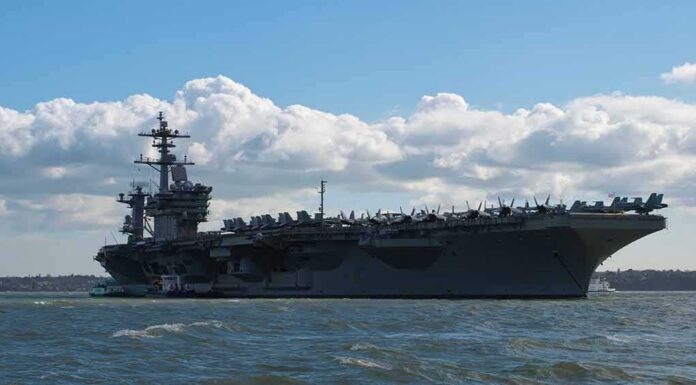
Senate appropriators just stripped $1 billion from the Trump-class battleship program, citing immature design and soaring costs, putting America’s premier firepower ship on pause while threats grow.
Story Highlights
- Senate panel removed $1 billion in early procurement, calling it “early to need.”
- Congressional Budget Office projects $23.4 billion for the lead ship and $275 billion for 15 ships.
- Lawmakers flagged missing final design and weapons not yet ready for production.
- Analysis warns first ship could take eight years or more to build amid yard strain.
Appropriators Hit Pause Over Cost And Design Risk
Senate appropriators removed the Navy’s $1 billion advanced procurement request for the Trump-class battleship, labeling it “early to need” in official funding tables. The action delays early buys for parts and materials the Navy sought before final design lock. The committee move does not cancel the program, but it sends a clear message: show a stable design and mature weapons first. This is a concrete setback for near-term momentum and complicates planning for the lead ship.
The Congressional Budget Office estimated the first ship, USS Defiant, would cost $23.4 billion, about $6 billion above the Navy’s prior projection reported by trade press, with follow-on ships averaging $18.0 billion. Over a 15-ship plan through 2056, total procurement could reach $275 billion. These figures reflect assumptions about nuclear power, schedule, and build approach, and the office cautioned that estimates are highly uncertain given incomplete design maturity.
Congress Demands Maturity Before Production Contracts
Congressional debate focused on design completion and weapon readiness. Reporting on the funding bill shows both parties raised concerns over the lack of a final design and the headline $275 billion program total. The House-passed defense authorization bill authorized $1 billion, but barred production contracts until the weapon systems are proven mature. That split stance lets supporters call the delay prudent oversight while keeping the concept alive pending clearer technical baselines.
The macro budget pressure is real. The Congressional Budget Office said adding this program would more than double the Navy’s annual surface-combatant buy costs, from about $6.9 billion in the fiscal year 2025 plan to roughly $15.2 billion. That jump would crowd out other ships unless Congress grows the overall shipbuilding account. The tradeoffs include destroyers, frigates, submarines, missiles, and yard upgrades, none of which appear in a side-by-side costed plan yet.
Schedule And Shipyard Capacity Risks Loom Large
Independent analysis warned the first Trump-class could take eight years or more to build, longer than initial hopes. United States shipyards are already loaded with aircraft carriers and submarines. The new battleship would stress those lines unless the Navy phases work or adds capacity. These warnings match a long history of lead ships running late and over budget, which critics cite to justify slower funding until the design and industrial plan are firm.
Supporters point to the mission. The Navy says the ship would deliver high-volume, long-range fires and act as a survivable forward command-and-control hub. The service argues Arleigh Burke destroyers are at their limits and that a modular design would allow upgrades over time. Advocates also highlight planned heavy armament, including vertical launch cells and hypersonic missiles, as a leap in surface firepower if integration stays on track.
What This Setback Means For Readiness And Fiscal Discipline
The appropriation cut slows near-term work but does not kill the program or its stated need. For fiscal conservatives, the message is simple: prove the design, de-risk the weapons, and lock the schedule before spending billions. For national defense, the mission gap is real, and the Navy’s case for more long-range fires and better command nodes is documented. The balance now is to prevent another costly lead-ship stumble while keeping pressure on adversaries.
🔴 Senate cuts $18.5B from Navy shipbuilding; zeroes out Trump-class battleship funding
Senate appropriators allotted $41.6 billion for shipbuilding in their Fiscal Year 2027 defense spending bill draft, cutting $18.5 billion from the Navy's budget submission. The Senate… pic.twitter.com/WEK2mYjXJ5
— NewsTongue (@NewsTongueX) November 18, 2026
Three steps can move this forward responsibly. First, publish design baselines and integration plans for major systems, including hypersonic weapons and sensors. Second, deliver a yard-capacity schedule that does not delay carriers or submarines. Third, present a clear opportunity-cost chart that compares this ship, additional destroyers, submarines, and missiles under the same inflation and timeline rules. Those actions would respect taxpayers, support the fleet, and keep America’s edge at sea.
Sources:
19fortyfive.com, news.usni.org, edition.cnn.com, breakingdefense.com, stripes.com, npr.org, heritage.org