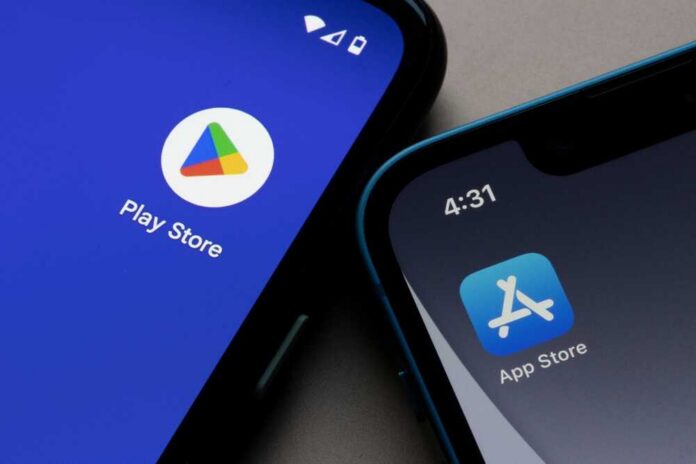
A quiet legal theory inside the Justice Department could turn every app you download into a “government record” with your name on it.
Story Snapshot
- Justice Department lawyers are reportedly testing a theory that app downloads can become federal “records” when users consent to data sharing.
- Privacy advocates warn this stretches records law and chips away at expectations of digital privacy without any vote in Congress.
- Existing federal privacy and records rules focus on what agencies create, receive, control, and preserve, not on what private users click in an app store.
- Trump-era reforms and conservative oversight could decide whether this theory quietly hardens into the next bureaucracy-driven power grab.
How A Simple App Download Becomes Washington’s Business
Federal records law has always turned on what government agencies make, receive, and keep, not on what private citizens do on their phones. Under long‑standing doctrines, anything an agency receives and preserves as evidence of its activities or decisions can qualify as an “agency record,” which then triggers retention duties and possible public access under transparency laws. Control, custody, and use are supposed to be the key questions, not how a person interacted with a private platform before any data ever reached Washington.
The new theory swirling inside the Department of Justice (DOJ) reportedly flips that logic, treating user consent to an app’s privacy policy as a kind of pre‑authorization for government record‑making. The idea is that when you tap “I agree” to allow a platform to share your identifying information with government partners, your download and associated data can be treated as a “government record” the moment it is transmitted, even if you never heard of the agency on the receiving end. That is a significant shift in where the legal line gets drawn.
From Privacy Act Protections To Elastic Government “Records”
Existing law is not silent on how Washington may handle your information. The federal Privacy Act says no agency may disclose a record from a system of records without the individual’s written consent or a specific statutory exception, and courts have treated “disclosure” broadly when a protected record is transmitted without authorization.[3] At the same time, the Office of Privacy and Civil Liberties emphasizes that agencies can, in litigation, make certain disclosures either with consent, via “routine use,” or under a court order, because the Act is not a discovery privilege.[3]
That structure is supposed to keep a balance: agencies can function, but they cannot pass your personal file around like a party favor. Now, instead of focusing on whether an agency actually retrieved and used a record, as courts have often required before finding a Privacy Act violation,[2][3] the emerging theory would treat any app‑based consent as a blanket green light for transforming private app metadata into government documentation. Critics say this divorces “government record” status from the core idea that the material evidences agency actions, not just private digital life that happens to be shareable.
Why Conservatives See A Pattern Of Bureaucratic Creep
Conservatives have watched this movie before: faceless bureaucracies test novel theories in the shadows, then tell the public it is all just routine housekeeping. The White House’s own “Lab Leak: The True Origins of Covid‑19” page now admits that the federal government demonized disfavored narratives during the pandemic and calls existing oversight mechanisms for dangerous research “incomplete” and “severely convoluted.”[1] That is an implicit confession that sprawling administrative systems can be weaponized, then cleaned up after the damage is done.
Similar dynamics are visible in how the DOJ has expanded its reach in other digital spaces. The department’s final rule on web accessibility under the Americans with Disabilities Act pushes detailed technical mandates on state and local government websites and apps, illustrating how civil rights language is leveraged to regulate ever more of the online ecosystem.[2][7] And federal open‑data portals now expose huge volumes of spending information without Congress revisiting the basic definition of what counts as a federal record in the smartphone era.[4] Each step may look technical, but together they grow the data shadow of government around ordinary citizens.
Administrative Power Versus Consent Of The Governed Online
Legal scholars have long warned that agencies sometimes use consent forms and decrees to bypass legislatures and entrench policies that never received full democratic debate.[7] When “I agree” on an app store screen is quietly repurposed as a foundation for new categories of government records, the same concern surfaces in a digital key: bureaucrats are redefining the legal status of your data without you, Congress, or a judge ever clearly signing off on the trade. That undermines the principle that meaningful consent must be informed and limited, not buried in boilerplate.
For conservatives who value limited government, this is where oversight in the Trump era matters. The DOJ’s own mission statement stresses enforcing the law and defending the interests of the United States.[3] That mission is not a license to stretch “government record” so far that anyone with a smartphone becomes a permanent entry in a federal data warehouse. Trump‑aligned lawmakers and app‑using patriots alike should press for bright‑line rules: no new records categories without clear statutes, no back‑door data grabs via unread privacy policies, and no quiet erosion of privacy under the banner of compliance.
Sources:
[1] Web – Lab Leak: The True Origins of Covid-19 – The White House
[2] Web – Nondiscrimination on the Basis of Disability; Accessibility of Web …
[3] Web – Department of Justice | Homepage | United States Department of …
[4] Web – USAspending: Government Spending Open Data
[7] Web – April Deadline Approaching to Implement Mandatory ADA … – MRSC