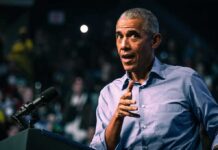

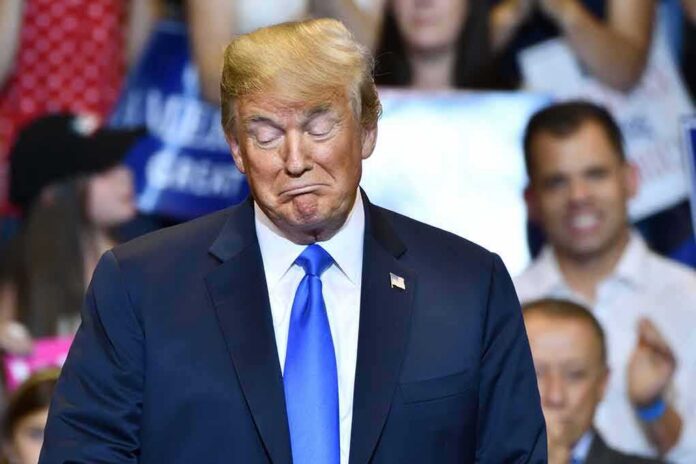
At a Washington protest rally, Jim Acosta used a crude joke about President Trump’s remarks on Senator Jon Husted to suggest Trump is gay, drawing headlines and backlash.
Story Highlights
- Jim Acosta delivered a stand-up style bit at a No Kings rally in Washington, D.C., aimed at President Trump.
- Acosta’s joke hinged on Trump’s widely reported comments about looking at Senator Jon Husted’s body, including his posterior.
- Acosta ended with a line about Natalie Harp, implying there was nothing for her to “worry about”.
- Coverage described the event as a protest with smaller crowds than past anti-Trump actions.
Acosta’s Rally Routine Targets Trump With Sexual Insinuation
Mediaite reported that journalist Jim Acosta took the microphone at a No Kings rally in Washington, D.C., and performed a short stand-up routine aimed at President Trump. The bit focused on Trump’s recent remarks about examining Senator Jon Husted’s body. Acosta said Trump was “talking about this guy’s ass,” then turned it into a punchline about Trump’s sexuality. He closed by saying, “I don’t think Natalie Harp has anything to worry about,” prompting laughs from the protest crowd.
Reports framed the appearance as part of a larger anti-Trump protest effort near the capital. Coverage described the No Kings demonstrations as “muted,” with turnout smaller than past anti-Trump events that had drawn larger crowds and more media attention. Within that setting, Acosta’s routine stood out because it tied a recent Trump line to a sexual insinuation. That framing fueled online clips and headlines, even as organizers tried to focus on broader political grievances.
The Trigger: Trump’s Remark About Senator Jon Husted
Trump’s Ohio comments provided the raw material for Acosta’s joke. During a public appearance, Trump praised Senator Jon Husted’s athleticism and described “examining” his body. He said he “looked at his ass,” then talked about Husted’s hands and build, which drew laughter from the crowd in the room. That colorful framing, familiar from Trump’s rally style, handed critics a ready-made sound bite. Acosta used that bite as set-up for his rally routine days later.
Mediaite and related write-ups documented the exact arc of the gag. They quoted Acosta’s description of Trump’s language about Husted and the pivot to the Natalie Harp line. The joke paired Trump’s words with an insinuation about sexual orientation. It did not claim new evidence about personal life or conduct. It aimed for ridicule through contrast. That is a common tactic in political comedy, where punchlines rely on exaggeration and timing rather than new facts.
Satire, Speech, and the Line Between Insult and Allegation
The Supreme Court has long protected sharp-edged parody and satire of public figures. In Hustler Magazine v. Falwell, the Court held that even offensive sexual parody of a public figure is protected when a reasonable reader would not see it as a factual claim. That standard explains why political humor often leans on mockery rather than proof. Comedians push boundaries to score a laugh, and the law gives wide room when no specific factual allegation is made.
Speaking at a “No Kings” rally, journalist Jim Acosta criticized President Donald Trump, accusing oligarchs of taking over news organizations. Acosta urged Americans not to give in to lies and fear and hold on to truth and hope. pic.twitter.com/4X0DZfbloy
— McGill Media (@GoMcGillMedia) October 18, 2026
That legal backdrop does not erase public standards. Many Americans, especially those who value family and faith, reject sex-based slurs as lazy and divisive. They see this style as a dodge from real issues like inflation, border security, crime, and energy costs. In this case, the reporting shows a joke built on a rally quip, not a documented claim. The moment reveals much about the protest’s tone and little about policy or results for the country.