
An active-duty Air Force major now faces court-martial for contemptuous words against President Trump, putting military discipline and political speech on a collision course.
Story Snapshot
- Air Force Major Jason Watson was charged under the Uniform Code of Military Justice after public criticism of President Trump.
- Charges cite a Substack interview, a uniformed protest at the U.S. Capitol, and a CNN interview as key events.
- Article 88 bars commissioned officers from using contemptuous words against senior officials, including the president.
- The case also includes alleged uniform and political-activity violations under Article 92.
Air Force Moves From Investigation To Formal Charges
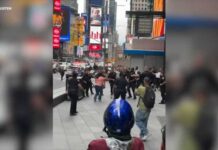
Cable news first showed Major Jason Watson in uniform on the Capitol steps on July 1 holding a sign that read “Impeach Convict Remove.” Reports said the Air Force opened an investigation after the appearance. By August 24, outlets reported the command advanced to formal charges under the Uniform Code of Military Justice, including contempt toward officials, failure to obey regulations, and conduct unbecoming an officer. Defense counsel confirmed the government preferred those charges in a public statement.
Charging summaries linked the alleged contempt counts to three events. Reporters cited a June interview with a political Substack, the July 1 uniformed protest at the Capitol, and an August 17 CNN appearance as the core basis for Article 88. In those appearances, Watson sharply criticized President Trump, claiming constitutional violations and urging action. The government also alleged separate uniform, political-activity, leave, and travel violations under Article 92, signaling this is not only about speech.
What Article 88 And Military Rules Actually Forbid
Federal law states that any commissioned officer who uses contemptuous words against the president and other top officials can face punishment by court-martial. Military reporting describes Article 88 as a narrow but long-standing rule that protects good order by keeping officers’ public comments respectful of civilian leaders. Separate rules restrict political activity while in uniform. Service guidance warns that appearing in uniform at a political protest can break those standards even without contemptuous language.
Watson’s case now tests those lines in a high-profile way. He called President Trump “flagrantly violating the Constitution, breaking the law, engaged in rampant corruption, and … killing Americans,” comments that media aired widely. He told CNN he hoped his actions would inspire Americans to act, which officials appeared to view as ongoing misconduct, given his later detention after another interview. Air Force leaders publicly reminded troops to follow rules on political participation and uniform wear during this period.
Discipline, Oath, And The Limits Of Speech In Uniform
Watson’s defense says he acted from duty to the Constitution and not from personal contempt. He framed his remarks as objection to alleged unlawful acts, not a personal attack, and argued his oath guided him. That framing may matter to public debate. But under Article 88, the key question is whether the words were contemptuous as charged, not whether the officer believed he was serving a higher duty. The full charge sheet text is not public here, so exact wording in each specification is not available.
For conservatives, the stakes are clear. The military must remain apolitical and under civilian control. Uniformed officers cannot campaign, protest in uniform, or demean elected leaders. That standard protects order and keeps politics out of the ranks. At the same time, the First Amendment instinct runs strong in America. This case will likely hinge on where lawful criticism ends and contempt in uniform begins. Until trial records are public, that legal line remains the central issue, not partisan spin.