
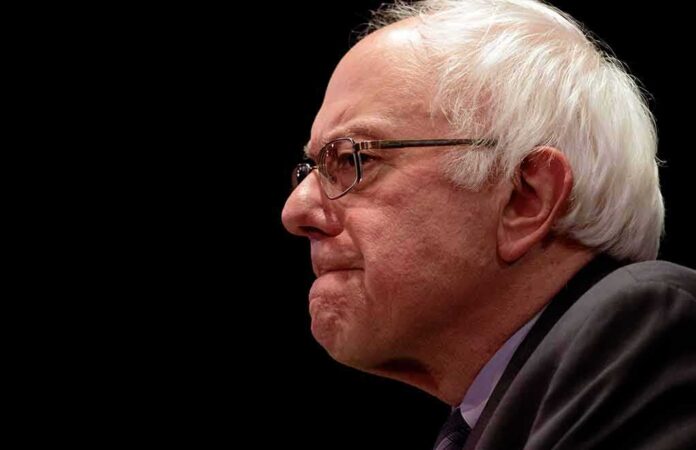
Bernie Sanders is cheering a new California wealth tax that targets billionaires like Mark Zuckerberg, raising big questions about what comes next for taxpayers, health care, and the Constitution.
Story Snapshot
- Sanders is using California’s proposed 5% billionaire wealth tax to spotlight Mark Zuckerberg and push national wealth taxes.
- He claims a $10.5 billion tax bill on Zuckerberg could “save healthcare” for 3 million low-income Californians.
- Critics warn wealth taxes are hard to enforce, drive people out of high-tax states, and open the door to broader government overreach.
- The fight shows the left’s growing push to tax wealth directly while President Trump’s supporters demand lower costs and smaller government.
Sanders Targets Zuckerberg to Sell California’s Billionaire Tax
Senator Bernie Sanders is leaning hard into California’s proposed 5% billionaire wealth tax, and he has picked Meta founder Mark Zuckerberg as his favorite example. On X, Sanders told voters that if they approve the tax this November, Zuckerberg would owe about $10.5 billion, and that money would “save healthcare for 3 million low-income people.” Sanders then mocked him as “poor Mr. Zuckerberg,” joking he would still have around $200 billion left to “feed his family,” and asking, “How will he survive?”
The California measure would be a one-time 5% tax on the 2025 net worth of billionaires who live in the state, with payments spread over five years. Backers claim it could raise around $100 billion to support health care and keep hospitals open as federal Medicaid cuts bite. Ninety percent of the revenue is slated for health care, with the rest earmarked for K–12 education and food aid programs. Sanders has rallied in Los Angeles with union allies to paint the tax as a simple choice between “billionaire greed” and basic medical care for working families.
From California Ballot to National Wealth-Tax Agenda
Sanders is not stopping at California’s ballot fight. He and Representative Ro Khanna have also introduced the “Make Billionaires Pay Their Fair Share Act,” a national 5% annual wealth tax on Americans whose net worth exceeds $1 billion. Their own summary says the tax would hit roughly 930 to 938 billionaires and raise an estimated $4.4 trillion over ten years. Sanders argues that money would fund $3,000 checks for households making $150,000 or less, boost Medicaid and the Affordable Care Act, expand Medicare benefits, and pay for housing and childcare programs.
Under that federal proposal, Sanders’ office highlights many of the same tech names he hammers in California, including Elon Musk, Jeff Bezos, and Mark Zuckerberg. One analysis cited by Sanders says Zuckerberg, with an estimated net worth around $220 billion, would owe about $11 billion in annual wealth tax under the national bill, and still be left with close to $209 billion. Sanders openly says his goal is to “go after their wealth, not just income,” because he believes extreme fortunes at the top fuel inequality and should help pay for large new social programs.
Pushback on Wealth Taxes, Flight from High-Tax States
While Sanders mocks “poor Mr. Zuckerberg,” reality already shows one key weakness of these plans: people can move. A community note added to Sanders’ own X post points out that Mark Zuckerberg moved to Florida after California lawmakers proposed the wealth tax, meaning he may not owe California anything if the measure passes. That is exactly the type of exit strategy critics warn about when they say wealth taxes drive investment, jobs, and innovators away from high-tax states and toward friendlier climates.
Legal scholars and policy analysts also question whether broad wealth taxes fit within the Constitution’s limits on direct federal taxes and how they would be enforced without huge new bureaucracies. Some note that Sanders’ plan depends on government valuing private companies, stock, and hard-to-price assets every single year, with massive pressure to chase and audit billionaires. For many conservatives, that sounds like a recipe for long-term government overreach, more power for federal agencies, and a slippery slope from “only billionaires” today to creeping taxes on smaller fortunes tomorrow.
A Deeper Fight Over Wealth, Work, and Government Power
Sanders frames this as a simple fairness fight: he says billionaires like Zuckerberg amassed “obscene” levels of wealth while ordinary Americans struggle with medical bills and rising costs. He argues that taxing a handful of ultra-rich families can fund health care, housing, and cash payments without touching anyone under $1 billion in net worth. That message resonates with many on the left who see wealth taxes as the best way to tackle inequality and expand social programs even further.
Bernie Sanders Asks How ‘Poor’ Mark Zuckerberg Will Survive If CA Passes Wealth Tax https://t.co/9HKy2JRzkV
— Dallys1515 💋 (@Dallys1515) July 31, 2026
Conservatives see something else: a political movement that treats wealth itself as suspect, uses envy-driven rhetoric, and keeps searching for new ways to tap private savings to grow government. Analysts already warn that wealth taxes in Europe raised less money than promised and were repealed in many countries after driving capital abroad. As President Trump works to cut red tape, fight inflation, and protect energy jobs, Sanders’ push to tax billionaires’ net worth—while joking about how they will “survive”—shows how deep the divide is between those who want a lean government and those who want to use tax law to remake the entire economy.
Sources:
yahoo.com, businessinsider.com, washingtonpost.com, sanders.senate.gov, nzherald.co.nz, youtube.com, newsbreak.com, theguardian.com, foxnews.com, facebook.com, inthesetimes.com, taxfoundation.org, fortune.com, cnbc.com, urban.org