

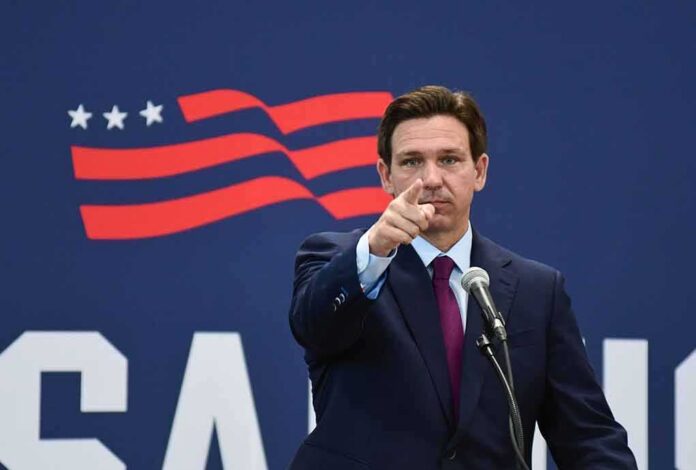
Ron DeSantis is once again putting Dr. Anthony Fauci on notice, using Fauci’s own record to argue that lockdown-era “Fauci-ism” hurt Americans far more than it helped.
Story Snapshot
- Ron DeSantis now frames Fauci as the face of lockdowns, mandates, and lost freedoms, and vows a “reckoning” for COVID-era decisions.
- Early in the pandemic DeSantis cited Fauci to justify restrictions, but later led the charge to reopen Florida and reject mandates.
- Fauci has admitted he sees DeSantis’ attacks as dangerous, showing how deeply the Florida governor lives “rent-free” in his mind.
- For conservatives still angry over school closures, mask rules, and economic pain, the DeSantis–Fauci feud highlights the push to hold elites accountable.
DeSantis Turns Fauci Into a Symbol of COVID-Era Overreach
Florida Governor Ron DeSantis has spent years turning Dr. Anthony Fauci into the symbol of what many conservatives see as disastrous pandemic policy. In speeches and interviews, DeSantis says Fauci’s advice led to lockdowns, business closures, and restrictions that “destroyed millions of people’s lives” when President Trump “turned the country over to Fauci.” He now promises that if he ever takes national power, there will be a “reckoning” for what “tyrants like Fauci did to this country.” This message speaks directly to voters who still feel they paid the price for decisions made in Washington, D.C., not in their communities.
DeSantis has sharpened that attack with memorable lines that conservative audiences repeat often. At rallies, he has called Fauci a “little elf” and joked that someone should “grab that little elf and chuck him across the Potomac,” turning anger over mandates into a punchline that sticks. His campaign and political teams sold “Don’t Fauci My Florida” shirts and drink holders as Covid cases rose, using humor and merchandise to brand Florida as the state that refused to bow to Fauci’s guidance. These stunts may look lighthearted, but the underlying message is serious: national experts, not local citizens, were in charge of your life, and that should never happen again.
From Early Praise to Fierce Critic: How DeSantis’ Stance Shifted
Early in 2020, DeSantis did not sound like Fauci’s fiercest critic. As the virus first spread, he praised Fauci as “really, really doing a good job” and said the doctor was “very, very effective and really doing a good job for us.” In March and April 2020 press briefings, DeSantis cited Fauci’s recommendations while backing measures like closing beaches and setting curfews, which he argued were based on federal guidance. That phase showed a governor trying to follow the expert line as the country braced for an unknown threat, much like many other state leaders at the time.
As months passed and the damage from shutdowns grew clearer, DeSantis broke hard with that early posture. He began describing Florida as the place that “chose freedom over Fauci-ism,” presenting his state’s faster reopening and refusal to impose vaccine mandates as proof that centralized rules were not only wrong but harmful. Scholars at the Paragon Health Institute later argued Florida’s mix of targeted protections and broader openness was “sensible,” pushing back on critics from both left and right who claimed he went too far or not far enough. For many conservatives, this record supports DeSantis’ story that he corrected course while Washington doubled down on control.
Fauci’s Reactions Show the Political Pressure
Dr. Fauci has not ignored DeSantis’ attacks; he has spoken openly about how they affect him. In later interviews, Fauci said he did not think DeSantis personally wanted to harm him, but warned that this kind of rhetoric “incites people who are dangerous” and “really want to harm.” That comment shows Fauci feels targeted not just as a scientist but as a political villain, and it confirms how deeply DeSantis’ lines have gotten into his head. When a public-health official starts talking about personal safety, it is a sign the political climate around Covid has turned very hostile.
Media outlets have documented how this feud fits a larger pattern of pandemic blame politics. Reports describe DeSantis attacking “Fauci-ism” and a supposed “Faucian dystopia” while also using Fauci’s name when he needed to defend early restrictions. Coverage from outlets like CNN and The Hill shows Trump and DeSantis now sparring over who followed Fauci, who should have fired him, and who truly protected freedom during Covid. For conservative readers, that fight is not just about one doctor. It is about whether any unelected expert should ever again have that much influence over daily American life.
Why This Matters Under the Trump Administration Today
Under President Trump’s second term, the anger DeSantis channels toward Fauci connects directly to current conservative priorities. Many on the right still believe lockdowns, mask rules, and school closures were a massive government overreach that hurt kids, small businesses, and church communities. DeSantis’ vow to “bring a reckoning” to Fauci echoes wider calls to investigate how decisions were made, how much damage they did, and how to stop federal agencies from repeating those mistakes. The push is not only about Covid; it is about reining in unelected bureaucrats across the board.
Despite realizing by June 2020 that lockdowns, masks and school closures weren't impacting the spread of COVID, Fauci went on to criticize Ron DeSantis and other politicians months and years later for reopening their states or refusing to mandate masks
Unforgivable dishonesty https://t.co/5ZlcWZhowg
— Ian Miller (@ianmSC) July 27, 2026
For readers worried about constitutional limits, parental rights, and medical freedom, the DeSantis–Fauci clash is a warning and a lesson. It warns that expert class leaders can pull huge levers of power with little direct accountability. It also shows that governors and presidents who stand up to them will face fierce media attacks and personal smears. As Republicans in Washington weigh new reforms to rein in federal health agencies, many will remember Florida’s message: never again let one “expert” decide whether Americans can work, worship, and educate their children.
Sources:
twitchy.com, foxnews.com, youtube.com, thehill.com, cnn.com, paragoninstitute.org