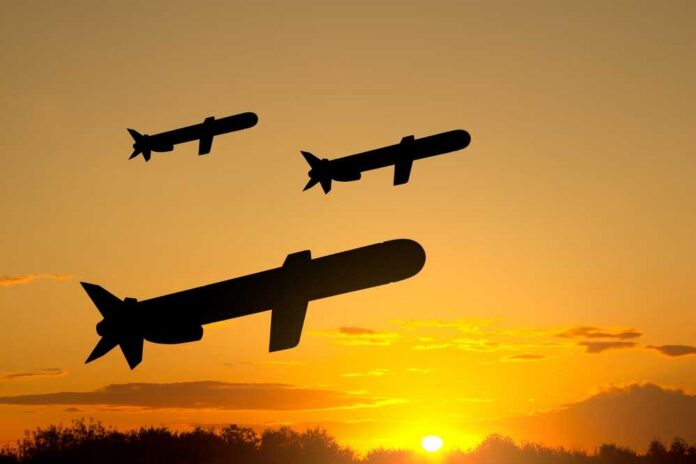
A Silicon Valley defense company wants to rewrite America’s arms export rules — and is even open to building its next weapons factory outside the U.S.
Story Snapshot
- Anduril Industries CEO Brian Schimpf wants the U.S. to loosen arms export controls so allies can build American-designed weapons in their own countries.
- Schimpf says the U.S. should act as the “world’s gun store” — supplying allies with both weapons and the ability to manufacture them locally.
- Anduril is already building its first major factory in Ohio, but the CEO says the company would consider building a second hub outside the U.S.
- Critics warn that relaxing export rules could spread sensitive military technology to places the U.S. can no longer control.
Anduril’s Case for Reshaping U.S. Arms Exports
Anduril Industries co-founder and CEO Brian Schimpf made a bold pitch recently: the U.S. needs to rethink how it shares weapons technology with allies. Schimpf called for a full reset of U.S. export controls — not just selling weapons to allies, but letting them produce American-designed weapons on their own soil. His argument is that modern warfare moves too fast for the current slow, bureaucratic system to keep up.
Anduril founder Palmer Luckey has echoed this vision publicly, saying the U.S. should be the “world’s gun store” for its allies. [3] Luckey has also argued that Taiwan, a key U.S. partner, should grow beyond making computer chips and become a serious weapons exporter in its own right. [8] Both men see allied manufacturing as a force multiplier — more weapons, built faster, closer to where they’re needed.
The Ukraine War Exposed a Real Problem
The push isn’t coming from nowhere. The war in Ukraine showed the world what happens when weapons demand outpaces supply. Centralized production in the U.S. created serious bottlenecks. Allies needed ammunition and drones fast, but the pipeline was too slow. Anduril argues that letting allies build weapons locally — using American designs — would solve that problem and make the whole alliance stronger in a crisis.
Anduril also points to a deeper problem inside the U.S. defense industry. Nearly two-thirds of major weapons contracts in the United States have only one bidder. [6] That lack of competition drives up costs and slows innovation. Schimpf’s argument is that spreading production to trusted allies could ease that pressure while keeping American technology at the center of allied defense networks.
Anduril Would Consider Building Abroad
Schimpf went a step further in recent comments, saying Anduril would “absolutely” consider building its next weapons manufacturing hub outside the United States. [2] The company is already constructing its first large facility in Ohio. But Schimpf signaled that an allied nation could host a future plant if the policy environment allowed it. That’s a significant statement from a company that markets itself as a patriotic alternative to slow-moving legacy defense contractors.
Defence tech start-up Anduril calls for reset of US arms export controls via @FT
https://t.co/Picojeb03i— Nicholas Wright (@nicholasdwright) June 15, 2026
China took notice of Anduril’s work long ago. In July 2024, Beijing sanctioned Anduril and several of its executives over the company’s arms sales related to Taiwan. [4] That move underscores just how seriously China views Anduril as a threat — and arguably validates the company’s argument that America needs to arm its allies more aggressively before conflicts escalate further.
The Risk of Loosening the Rules
Not everyone is on board with Schimpf’s vision. Current U.S. arms exports are governed by the International Traffic in Arms Regulations, a strict set of rules that require government approval before sensitive defense technology leaves the country. Those rules exist for a reason: once a weapon or its design crosses a border, the U.S. has limited ability to control what happens next. Critics argue that loosening these rules could let advanced American military technology fall into the wrong hands — even through allies with weaker security practices.
There’s also a fair question about whose interests this serves most. Anduril stands to profit enormously if the U.S. government opens up allied co-production. That doesn’t make the argument wrong, but it’s worth noting that defense companies pushing for policy changes that expand their own markets deserve careful scrutiny. The goal should be stronger allies and a safer America — not just bigger contracts for Silicon Valley firms.
Sources:
[2] Web – Anduril calls for US arms export reset to expand allied weapons …
[3] Web – Anduril CEO Says He’s Open to Building Weapons Hub Outside of US
[4] Web – The founder of weapons manufacturer, Anduril, says the US should …
[6] YouTube – Anduril’s Palmer Luckey on AI, nukes, and the war in Iran