California’s ruling class still lets people vote with no photo ID in most cases—while fighting to block commonsense reforms that would simply ask voters to prove they are who they say they are.
Story Snapshot
- California does not generally require photo identification at the polls, relying instead on registration databases and signatures.[1][2][4][7]
- First‑time voters who register without key ID numbers can use paperwork like utility bills or bank statements instead of a government photo ID.[1][2][4]
- A statewide voter ID and citizenship‑verification initiative is moving toward the 2026 ballot, facing fierce opposition from progressive groups.[5][6]
- A 2025 “Election Integrity” bill to require government ID at the polls failed in the Democrat‑controlled legislature, fueling grassroots frustration.[3]
How California’s Voter “ID” Rules Really Work
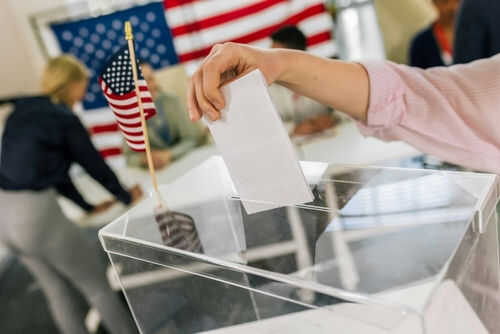
California officials openly state that, in most cases, a voter is not required to show identification before casting a ballot.[1][4][7] The Secretary of State explains that ID is requested only in narrow situations, such as some first‑time voters in federal elections who registered by mail or online without providing a driver license, state ID, or Social Security number.[1][2][4] That means long‑time voters can walk into a polling place, give a name, sign a roster, and receive a ballot without ever showing a photo ID.[1][2][4]
When ID is required for those first‑time voters, California allows a wide range of documents, not just a government photo card.[1][2] State guidance says accepted “identification” includes non‑photo items such as utility bills, bank statements, paychecks, government checks, and official government mail, alongside driver licenses and passports.[1][2][4] Civil‑liberties advocates cheer this flexibility as protecting access, but many conservatives see it as an open invitation for abuse when combined with loose verification and mass mail‑in voting.[2][5]
Registration, Same‑Day Voting, and Database Checks
California’s defenders respond that the real “ID check” happens at registration, not at the polling place.[1][2] To sign up, applicants are asked for a California driver license or state ID number, or the last four digits of a Social Security number, and officials attempt to match those numbers against Department of Motor Vehicles and Social Security Administration records.[1][2] If a voter lacks those numbers, they can still register and receive a unique identifier, but may later have to show acceptable documents when voting for the first time in a federal election.[1][2]
On top of this, California offers what it calls conditional, same‑day registration.[1][2] Voters can miss the standard fifteen‑day deadline yet still show up during early voting or on Election Day, register on the spot, and cast a ballot that will be counted once officials process the paperwork.[1][2] Supporters say this protects busy or mobile citizens from being shut out, but critics argue it compresses verification into a chaotic window and makes it harder to catch problems before ballots are mixed into the totals.[2][5]
The Fight Over a 2026 Voter ID and Citizenship Initiative
After years of frustration, reformers are pushing a ballot initiative that would require Californians to show government‑issued identification every time they vote and would force officials to verify the citizenship of registered voters.[5][6] Reporting describes the measure as likely headed for the November 2026 ballot, with enough early funding and organizational support to make it a serious statewide fight.[6] If approved, it would move California closer to dozens of other states that already request or require ID at the polls.[7]
US Attorney Bill Essayli is right to call out California's resistance to a DOJ audit of its voter rolls under the NVRA, HAVA, and Civil Rights Act. Lax ID rules for first-time voters (gym cards, insurance docs, etc.) combined with slow maintenance of lists and aggressive ballot… https://t.co/Q8pkIzNYu4 pic.twitter.com/HDRy9t3NXG
— Momo (@momo_mattomo) June 7, 2026
Progressive organizations are already framing the initiative as an “anti‑voter” attack, warning it would create privacy risks, new barriers, and “purges” of eligible voters based on imperfect databases.[5] They insist California’s current system is “secure” and say the proposal targets communities that already face obstacles, rather than addressing any proven pattern of fraud.[5] For conservatives who see identification as basic common sense—no different than showing ID to board a plane or buy a firearm—this opposition confirms that the political left prefers a loose system that benefits their own machine.[6]
What Sacramento Tried (and Failed) to Do About Election Integrity
Inside the legislature, a separate effort to tighten the rules has already run into a wall. The California Voter ID and Election Integrity Act of 2025, known as Assembly Bill 25, would have required every person voting at a polling place to present a valid government‑issued identification card before receiving a ballot.[3] The bill also aimed to verify voter citizenship, improve voter‑list maintenance, and incentivize timely counting of ballots—touching several pain points that outraged citizens repeatedly raise.[3]
Despite those goals, the measure failed in its first committee hearing in April 2025, killed before receiving a floor vote in the Democrat‑dominated legislature.[3] Existing law also continues to prohibit local governments from imposing their own voter ID rules, meaning conservative cities and counties cannot adopt stricter standards even if their residents demand them.[3] That one‑two punch—blocking both local reforms and statewide fixes—has fueled a sense that political insiders in Sacramento are determined to keep the system as loose as possible, no matter how loudly voters ask for accountability.[1][3]
Sources:
[1] Web – Wait Till You See What ‘IDs’ California Accepts for Voter Registration
[2] Web – New California voter ID ban puts conservative cities at odds with …
[3] Web – New California Law Prohibits Localities From Imposing Their Own …
[4] Web – AB 25: California Voter ID and Election Integrity Act of 2025.
[5] Web – California – VoteRiders
[6] Web – Why doesn’t the Registrar of Voters require voters to show I.D. at the …
[7] Web – [PDF] A Poll Worker’s Guide to Voter ID Requirements – California