
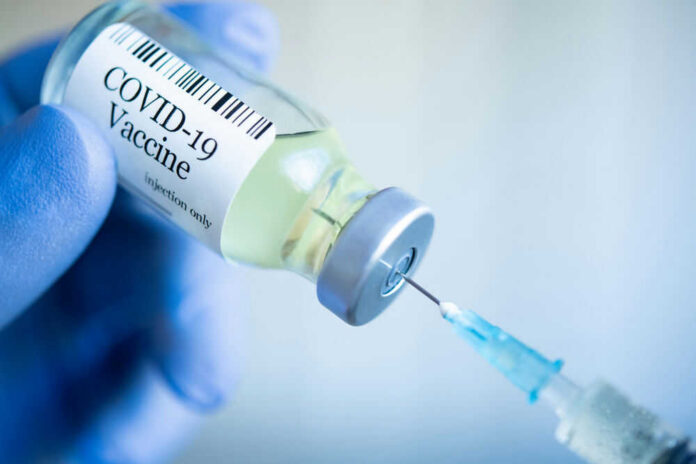
Newly released Senate records suggest federal health officials saw a serious vaccine safety red flag in 2022—then shaped public messaging to keep boosters on track.
Story Snapshot
- Sen. Ron Johnson released nearly 2,000 pages of HHS records tied to a detected ischemic stroke “safety signal” in adults 65+ after Pfizer’s bivalent booster.
- The records describe internal concern beginning in late 2022, while public-facing guidance continued to encourage booster uptake without changes to vaccination practices.
- Documents and related reporting say White House edits softened language in a CDC/FDA communications plan, changing how elevated risk was described.
- Internal work reportedly continued through at least September 2025, including a “Stroke Project,” raising fresh questions about transparency and informed consent.
What Johnson Says the Records Show—and Why Timing Matters
Sen. Ron Johnson, chairing the Permanent Subcommittee on Investigations, says HHS records indicate federal safety monitoring detected a statistically significant signal for ischemic stroke among adults 65 and older after Pfizer’s COVID-19 bivalent booster as early as November 2022. Johnson’s release, dated March 25, 2026, frames the issue as less about a single data point and more about what government did after seeing it—especially as the administration pushed booster uptake for seniors.
According to the timeline in Johnson’s materials and related coverage, December 2022 featured a coordinated effort to increase booster adoption in older Americans—exactly the group implicated in the safety signal. By January 2023, Johnson says CDC and FDA were drafting communications, while FDA’s public posture remained that no vaccination practice changes were needed. For Americans already skeptical of “expert class” messaging, the key question becomes whether promotion outran disclosure when uncertainty still required candor.
Messaging Disputes: “Moderately” vs. “Slightly” Elevated Risk
The records highlighted by Johnson focus heavily on how agencies described the signal, not just whether it existed. One specific allegation is that White House edits toned down language in a CDC/FDA communications plan—shifting descriptors from “moderately elevated” to “slightly elevated.” That sort of change may sound semantic, but in public health communications it can shape risk perception, especially among seniors deciding whether to accept an additional shot. The underlying documents are presented as evidence of message management.
Supporters of the prior approach could argue that early signals do not necessarily prove causation and that officials often wait for follow-up analysis. Johnson’s materials, however, emphasize a different standard: when government encourages a medical product for broad use, citizens deserve full, plain-English disclosure about known signals and uncertainties. That expectation is central to informed consent and aligns with a limited-government view that bureaucracies should not “nudge” behavior by minimizing inconvenient information.
The “Stroke Project” and the Long Tail of Pandemic-Era Decision-Making
Johnson’s release says internal review continued from January 2023 through at least September 2025, including a study effort described as the “Stroke Project.” If accurate, that time span will intensify scrutiny because it suggests the government treated the signal as serious enough to keep investigating for years while maintaining outward-facing continuity. The records also reference empirical Bayesian data mining and its “significant statistical limitations,” adding another layer: the surveillance tools have constraints, but their warnings still prompted internal action.
That distinction—limitations acknowledged internally while the public heard near-total reassurance—cuts to the heart of today’s broader trust crisis. Many Americans, right and left, already believe federal agencies protect institutional credibility first and ordinary citizens second. In that environment, even a defensible decision to study quietly can look like a cover-up if officials do not explain what they saw, what they don’t know yet, and what additional data would change guidance.
Myocarditis Hearings, VAERS Critiques, and a Pattern of Oversight Conflict
The ischemic stroke dispute is landing alongside Johnson’s longer-running oversight campaign focused on COVID-19 vaccine adverse-event detection, including myocarditis concerns raised earlier in the pandemic. In April 2026, the subcommittee held hearings featuring doctor testimony and additional document releases, including critiques that agencies were slow to elevate warnings through formal channels. A separate expert testimony cited problems in how signals were—or were not—recognized, including discussion of VAERS volume and procedural gaps.
What remains unclear is how HHS leadership at the time justified its final external messaging decisions, or whether there is a documented internal debate weighing transparency against fear of vaccine hesitancy. Johnson says document production was previously resisted and heavily redacted, then expanded under new leadership at HHS. For conservatives frustrated with entrenched bureaucracy, that history reinforces a basic demand: agencies that exercise sweeping influence over daily life must be rigorously accountable, especially when health risks are involved.
Sources:
Doctors testify vaccine side effects and Biden admin communication mishaps under scrutiny
2025.05.21-Chair-Johnson-Opening-Statement.pdf