
South Carolina moves to resurrect a $9 billion nuclear project abandoned in 2017, potentially signaling the end of America’s decades-long paralysis in building the reliable, clean energy infrastructure needed to power the nation’s future.
Story Snapshot
- Brookfield Asset Management selected to study restarting two half-built nuclear reactors at V.C. Summer, abandoned after catastrophic cost overruns left ratepayers with $9 billion in debt
- South Carolina Governor McMaster declares state is leading a “nuclear renaissance” driven by surging electricity demands from AI data centers and population growth
- Over 50 private companies expressed interest in reviving the project, contrasting sharply with the utility-led failures that plagued earlier nuclear construction attempts
- State’s new Energy Security Act and federal support under Trump administration align to advance nuclear power as the only proven 24/7 clean energy source
From Disaster to Opportunity
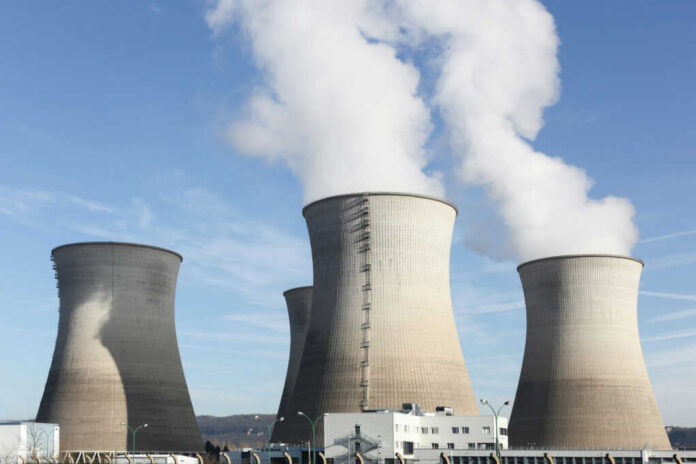
The V.C. Summer nuclear project in Fairfield County stands as a monument to government-backed mismanagement. Construction began in 2013 on two massive AP1000 reactors designed by Westinghouse, part of an ambitious wave of nuclear development that promised energy independence and climate benefits. Four years later, the project collapsed spectacularly amid billions in cost overruns, leaving two reactors roughly 50 percent complete and South Carolina ratepayers saddled with nearly $9 billion in debt. The developers went bankrupt, and the Nuclear Regulatory Commission canceled the operating licenses. For nearly a decade, the unfinished containment domes stood as rusting reminders of broken promises and bureaucratic failure.
Now, state-owned utility Santee Cooper has issued a request for proposals to restart the project, attracting overwhelming interest from the private sector. In October 2025, Santee Cooper selected Brookfield Asset Management, a global infrastructure investment firm, to conduct feasibility studies, develop restart plans, and assemble a construction team. CEO Jimmy Staton confirmed that more than 50 groups submitted proposals, reflecting a dramatic shift in investor confidence. This pivot from failed government-utility partnerships to private-sector leadership represents a fundamental departure from the model that crashed the original project, offering taxpayers and ratepayers a chance to recover losses while securing desperately needed baseload power.
Political Momentum Behind Nuclear Revival
Republican Governor Henry McMaster has positioned South Carolina in the “poll position” for a national nuclear renaissance, backed by the state’s newly enacted Energy Security Act. The legislation mandates advancement of nuclear energy development, reflecting conservative principles of energy independence, reliability, and job creation without the intermittency plaguing wind and solar. State Senator Tom Davis of Beaufort has championed privatization of the V.C. Summer restart, arguing that private capital and expertise can succeed where government-managed utilities failed. South Carolina already operates seven nuclear reactors—six by Duke Energy and one by Dominion—generating reliable, emissions-free electricity that keeps the lights on regardless of weather conditions.
Duke Energy, which operates the majority of South Carolina’s nuclear fleet, holds a license for a potential new reactor site in Cherokee County and has publicly committed to additional nuclear capacity. President Tim Pearson stated that “additional nuclear is in our future,” signaling confidence that lessons learned from past failures can inform smarter development. The convergence of state policy, private investment, and federal support under the Trump administration’s energy agenda creates the most favorable environment for nuclear construction in decades. Energy Secretary Wright has emphasized nuclear power’s critical role in meeting AI-driven electricity demands, which require constant, high-density power that only nuclear and fossil fuels can reliably provide.
Broader Implications for Energy Independence
The potential restart at V.C. Summer contrasts sharply with Georgia’s Vogtle project, the only new U.S. nuclear reactors completed in over 30 years. Vogtle Units 3 and 4 came online after massive delays and budget overruns, but they proved that modern AP1000 reactors can be built and operated safely. V.C. Summer’s advantage lies in its existing partial construction—resuming work on infrastructure already in place could accelerate timelines and reduce costs compared to starting from scratch. If successful, the two units would add approximately 2.2 gigawatts of baseload capacity, enough to power millions of homes and support energy-intensive industries that are increasingly relocating to states with reliable electricity supplies.
Nationally, the nuclear revival extends beyond large reactors to small modular reactors, with TerraPower and NuScale receiving NRC approvals in March 2026 for advanced designs. These developments signal a broader recognition that achieving energy security and reducing reliance on foreign energy sources requires technologies capable of delivering consistent power without the crippling costs of renewable subsidies and grid instability. For Americans frustrated by rising electricity bills, rolling blackouts in renewable-heavy grids, and the offshoring of energy-intensive manufacturing, nuclear power offers a path to rebuild industrial capacity, create well-paying jobs, and secure energy independence. The question remains whether bureaucratic red tape and entrenched interests will allow this renaissance to proceed or if South Carolina’s bold move will be strangled by the same regulatory dysfunction that killed the project in 2017.
Sources:
State utility leaders say SC is heading toward a nuclear renaissance – South Carolina Public Radio