

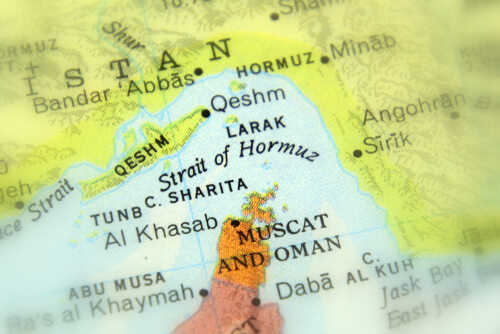
Fresh U.S. intelligence that at least 10 Iranian naval mines now sit in the Strait of Hormuz is a direct shot at American energy security—and a test of whether Washington finally learned the lessons of decades of weakness in the Gulf.
Story Snapshot
- U.S. intelligence and military officials say they have identified at least 10 naval mines in the Strait of Hormuz tied to Iran.
- Defense assessments warn that fully clearing the waterway could take months, risking energy price shocks and global turmoil.
- The U.S. Navy is racing to deploy artificial intelligence tools and unmanned systems to find and neutralize hidden mines.
- Conservatives see a pattern of Iranian provocation fueled by years of appeasement and underinvestment in hard power.
New Intel: At Least 10 Mines Confirmed In Vital Energy Chokepoint
U.S. intelligence and military officials now assess that American forces have identified at least 10 naval mines planted in the Strait of Hormuz, the narrow sea lane that carries a huge share of the world’s crude oil and liquefied natural gas.[1] Reporting based on briefings to journalists says the devices match Iranian-manufactured Maham-series limpet mines, which are designed to cling to hulls or sit just below the surface.[1] Officials describe the threat as real, immediate, and deliberately deniable.
U.S. officials previously told CBS News that assessments showed “at least a dozen underwater mines” laid through the passageway, underscoring that what is being confirmed publicly today likely reflects only part of what is already in the water.[1] Intelligence assessments say smaller Iranian craft capable of carrying two or three mines each have been active in the area, giving Tehran a cheap tool to harass shipping and to rattle oil markets without firing a shot at any U.S. ship directly.[1][5] For American families already squeezed by inflation, that matters.
Why These Mines Matter For Your Gas Prices And America’s Leverage
The Strait of Hormuz handles roughly a fifth of the world’s crude oil exports in normal times, so even a relatively small minefield can trigger insurance spikes, shipping delays, and higher pump prices for U.S. drivers.[4] Naval mine warfare experts have long warned that Iran maintains thousands of mines and has invested in newer, more advanced systems precisely because they are asymmetric weapons: cheap for them, expensive for everyone else.[4] That imbalance lets Tehran threaten global commerce and test American resolve.
Analysts note that the geography of Hormuz—narrow lanes, heavy tanker traffic, and tricky currents—makes it one of the worst possible places for even a handful of free‑floating or bottom mines. Historical studies and Central Intelligence Agency assessments show that Iranian forces have trained for years to use helicopters, small boats, and Revolutionary Guard naval units in mine warfare. A few dozen mines, if placed carefully, can force powerful navies to slow down, escort convoys, and devote billions in hardware to protecting every ship.[4] That is the leverage Iran is trying to buy on the cheap.
Clearing The Mines: From Six-Month Fears To Artificial Intelligence Solutions
Earlier this spring, a Defense Department assessment relayed to lawmakers suggested that fully clearing a worst‑case mine threat in Hormuz might take as long as six months.[3] A Pentagon spokesperson later cautioned that “one assessment does not mean the assessment is plausible,” pushing back on media speculation that the waterway would actually be shut that long.[3] But even that internal estimate shows how disruptive a serious mine campaign could be, especially if Iran seeded hundreds of devices instead of a few dozen.[4]
To keep that nightmare scenario from becoming reality, the U.S. Navy has been turning to artificial intelligence tools and unmanned underwater vehicles.[2][3] A major contract with a private software company is aimed at training advanced models to sift through enormous volumes of sonar and sensor data, spotting mine‑like shapes faster and with fewer errors than human operators alone.[2] Company leaders say their technology can cut retraining time for new regions from months to days, letting the Navy move quickly when a crisis flares in a new theater like Hormuz.[2]
Fog Of War: Conflicting Messages And Iran’s Denial Playbook
Public messaging around the mine threat has not been perfectly clean, something Americans remember from past Middle East crises. In April, Pentagon spokesperson Sean Parnell called some press reporting on a potential six‑month Hormuz closure “inaccurate,” stressing that assessments shared in classified briefings do not automatically equal likely outcomes. That caution has allowed Iranian officials and sympathetic commentators to lean on uncertainty and insist there is no proof, at least none the public can see, that Tehran planted mines this time.[2]
Israel Hayom: U.S. forces have identified at least 10 naval mines in the Strait of Hormuz.
— World Source News (@Worldsource24) May 19, 2026
Security scholars note that mine warfare is specifically designed to exploit that ambiguity: mines are invisible until they explode or are recovered, and Iran has a long record of practicing deniable harassment at sea.[4] U.S. and allied intelligence estimate Tehran holds thousands of mines, from simple contact weapons to more advanced influence mines.[4] As conservative observers point out, that stockpile and doctrine did not appear overnight; it grew over decades when Western leaders prioritized nuclear deals, climate conferences, and rhetoric over hard deterrence in the Gulf.
Sources:
[1] Web – Amid Iran talks, Strait of Hormuz dotted with about a dozen Iranian …
[2] YouTube – US Navy Taps AI Firm to Clear Iranian Mines in Strait of Hormuz
[3] Web – Pentagon assesses clearing Hormuz mines could take 6 months
[4] Web – Mine Warfare in the Strait of Hormuz: What the U.S. Can Expect from …
[5] YouTube – U.S. intelligence sees signs of Iran preparing to deploy mines in the …