President Trump’s blockade of the Strait of Hormuz has Iran “by the throat,” strangling the IRGC’s oil lifeline without firing a shot—a masterstroke exposing global elites’ failed diplomacy.
Story Highlights
- US Navy enforces blockade with 15+ warships, targeting Iranian oil exports through the vital Strait of Hormuz.
- Expert Susan Kokinda praises Trump’s economic pressure as IRGC endgame, forcing vulnerability without full war.
- Collapsed Islamabad talks precede escalation; tankers divert, oil prices surge globally.
- Iran attempts port bypasses and shadow fleets, but US mine-clearing and interceptions tighten the noose.
Blockade Takes Effect Amid Escalating Tensions
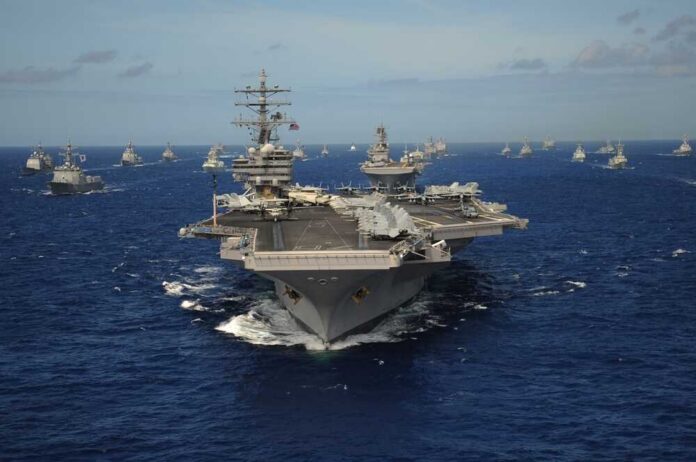
US forces activated the blockade on Iranian ports and coastal areas east of the Strait of Hormuz at 3pm BST. Over 15 US warships from Central Command enforce it, interdicting vessels paying Iran transit tolls, including Chinese and Indian tankers. This follows collapsed high-stakes peace talks in Islamabad. President Trump ordered clearance of suspected Iranian sea mines, heightening risks in the mine-threatened chokepoint that carries 20% of global oil trade. The action builds on maximum pressure sanctions, echoing 1980s Tanker War precedents.
Expert Analysis: Economic Strangulation Targets IRGC
Susan Kokinda, imperial expert, analyzes Trump’s strategy as deliberate economic strangulation of Iran’s oil-dependent economy. The IRGC, controlling much of Iran’s oil smuggling and military assets, faces direct pressure. Kokinda argues this exposes alliances—NATO, Europe, Russia, China—forcing Iran into vulnerability without full-scale war. She describes Trump having Iran “by the throat” or “over a barrel,” calling bluffs through physical economic realities over endless diplomacy. This differentiates from military strike narratives, prioritizing IRGC-specific endgame via sustained blockade.
Stakeholders and Power Dynamics Shift
President Trump drives the blockade to force negotiations through economic pain, leveraging US naval superiority and global oil dependence. Iran resists with mines, proxies, and shadow fleets, while civilian-IRGC factions strain over oil stockpiles. China and India test limits with tankers seeking access. Gulf partners face retaliation risks; global consumers brace for higher energy costs from disruptions. US warns no humanitarian block but hunts toll-payers, described as war-zone traffic enforcement rather than total blockade.
Recent developments show tankers turning back, a Chinese vessel testing the line, and Iran announcing port bypasses. Trump warns any Iranian fire could be “blown to hell.” Oil prices have surged amid volatility.
Impacts and Expert Perspectives
Short-term effects include tanker diversions, potential Gulf clashes, and higher global oil prices affecting consumers everywhere. Long-term, sustained pressure could fracture IRGC influence and reshape alliances if Iran cannot evade via storage or alternative routes. Gen. (Ret.) Chuck Wald notes Iran humiliated, targeting IRGC future. Critics like Prof. Barry Appleton call it war-zone policing, not full blockade; Neil Quilliam sees high-stakes bluff unproven; Prof. Kumar deems it incoherent given offshore oil. Hawkish views hail Trump’s brilliance; balanced analyses question rapid efficacy amid evasion tactics.
This strategy underscores frustrations with elite-driven diplomacy failing Americans, prioritizing America First resolve against threats while everyday citizens face energy cost hikes from global dependencies. Both sides of the aisle increasingly see government more focused on power than protecting prosperity through hard work.
Sources:
The Independent: Strait of Hormuz Blockade – Trump, Iran, US Oil
Economic Times: Donald Trump Orders Strait of Hormuz Blockade