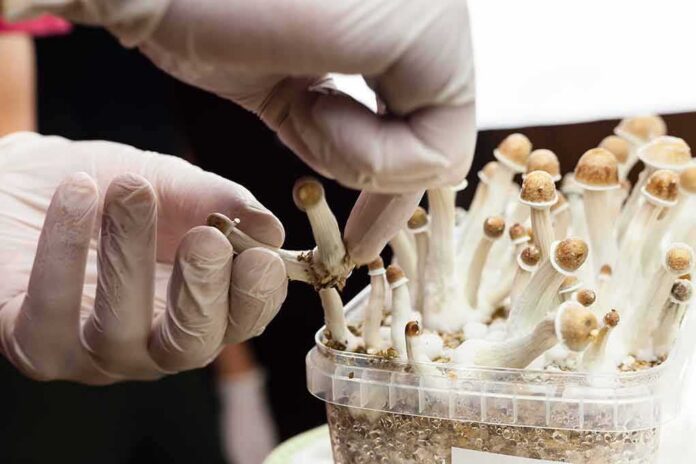
A new United Kingdom trial says a single dose of the psychedelic in “magic mushrooms” can ease stubborn depression, raising hard questions about drug policy, family safety, and the future of mental health care.
Story Snapshot
- A United Kingdom National Health Service trial found one dose of psilocybin eased treatment‑resistant depression more than placebo.
- About 40% of patients on psilocybin went into remission within three weeks, versus only 3% on placebo.
- Researchers still call this “phase 2” feasibility work, not a proven long‑term cure, and warn that more, longer trials are needed.
- The drug is the same psychedelic compound found in illegal “magic mushrooms,” raising concern about cultural glamorizing of hallucinogens.
United Kingdom Trial Claims Magic Mushroom Drug Helped Tough Depression
King’s College London and National Health Service partners ran the first publicly funded randomized trial in England testing psilocybin, the active drug in so‑called magic mushrooms, for people whose depression did not improve with at least two standard treatments. About 60 adults with treatment‑resistant depression were enrolled, all within the United Kingdom system. Half received a single 25 milligram dose of psilocybin plus therapy, and half received a true placebo plus the same therapy.
Researchers used a well‑known depression scale, the Montgomery‑Åsberg Depression Rating Scale, to measure symptoms before treatment and again at three and six weeks. At three weeks, people who got psilocybin showed a much larger drop in scores than those on placebo, which means less severe depression. That difference did not disappear at six weeks, suggesting at least short‑term benefit in this trial setting. All patients received structured psychological support around the dosing session.
Big Promises: Remission Numbers That Grab Headlines
United Kingdom media highlighted numbers that sound dramatic, especially to families desperate for options. Reports say about four in ten patients who took psilocybin met criteria for remission by three weeks, meaning their symptoms fell below the level used to diagnose clinical depression. Response rates, which measure clear improvement even if not full remission, reached 43% at three weeks and climbed to about 50‑56% by six weeks in the psilocybin group. In the placebo group, only about 3% met these thresholds.
Supporters argue that these results matter because the patients had already failed at least two prior evidence‑based treatments, such as standard antidepressant medicines or talking therapy. For this group, even a single‑dose treatment showing several weeks of relief feels like a breakthrough. The trial also ran under tight controls, inside National Health Service settings, with screening, monitoring, and trained staff in the room during drug sessions. That level of structure is far from casual street use, even though the drug involved is the same chemical found in banned mushrooms.
Caution Flags: Short Follow‑Up, Adverse Effects, Experimental Status
Buried in the technical reports is a message conservatives will recognize: the science is early, and the experts themselves say this is not a settled cure. The core King’s College London PsiDeR protocol clearly labels the work as a phase 2 randomized, placebo‑controlled feasibility trial, designed to test how well the study can run and gather safety data, not to declare a finished treatment ready for wide use. The primary endpoint sits at three weeks, and total follow‑up in that design is only six weeks.
The larger multicentre New England Journal of Medicine trial tied to King’s showed the same pattern: a 25 milligram dose improved scores more than a 1 milligram control at three weeks, while a 10 milligram dose did not clearly beat the control. Authors there stated in plain language that “larger and longer trials are required” and noted that the 25 milligram dose was linked with adverse effects. King’s own news release reported adverse events in most participants across dose groups in the multicentre work, underscoring that this is a powerful psychoactive drug, not a harmless vitamin.
What This Means for American Families, Faith, and Policy
For conservative Americans watching from President Trump’s second term, this United Kingdom push raises familiar questions. Mental health systems that failed many patients for years now look to psychedelics linked with 1960s counterculture as possible answers. Families worry that glowing headlines about “magic mushrooms” may blur the line between tightly supervised hospital trials and reckless self‑medication by young people searching TikTok for quick fixes. Cultural pressure could grow to loosen drug rules before safety and long‑term outcomes are truly clear.
At the same time, millions of Americans do battle serious depression and often feel ignored by bloated health bureaucracies. The idea of a one‑time session plus real therapy that brings relief is attractive, but it collides with core conservative concerns: personal responsibility, sobriety, and protecting children from dangerous trends. Evidence so far shows a short‑term antidepressant signal in highly controlled settings, not a proven, durable cure. Until longer trials confirm safety, and until we know that benefit lasts without repeat drug use, it is reasonable to treat psilocybin therapy as experimental medicine, not mainstream care.
Sources:
mirror.co.uk, kcl.ac.uk, independent.co.uk, pmc.ncbi.nlm.nih.gov, sciencemediacentre.org