
A group of Democratic senators now claims wildfire betting could tempt arsonists, raising new questions about how far regulators should go into prediction markets while President Trump works to restore law and order.
Story Snapshot
- Nine Democratic senators asked federal regulators to crack down on betting on wildfires.
- Their letter warns wildfire markets could create “perverse incentives” and even encourage arson.
- They pointed to more than $1.2 million in offshore trades tied to deadly California fires.
- No evidence has been shown that any fire was started or worsened because of these bets.
Democratic Senators Press CFTC Over Wildfire Betting
Nine Democratic senators sent a letter on August 3, 2026, to Commodity Futures Trading Commission (CFTC) chairman Michael Selig, demanding answers about prediction markets that let people bet on wildfires. The senators, led by Oregon’s Jeff Merkley, come from states that have seen major fire damage, including California, Nevada, Minnesota, and New Hampshire. They asked whether wildfire contracts are in the public interest and what steps the CFTC plans to take to restrict or prohibit them. The senators requested a response by mid-August.
The letter claims that “offering bets on destructive wildfires threatens to minimize communities’ suffering, all so the rich and powerful can profit.” The lawmakers argue that turning disasters into betting events disrespects families who lose homes and loved ones in these fires. Their focus is not on the science of fire risk, but on what they see as moral harm when financial markets are tied to tragedy. That framing fits a broader push from the left for more federal control over what ordinary Americans can do with their own money online.
Arson Fears and “Perverse Incentives” Cited in the Letter
The senators’ main alarm is that betting on wildfires could create “perverse incentives” for crime and manipulation. They say state and local fire officials warned that people “could be tempted to commit arson in order to make sure their bets are successful.” They also claim that wildfire contracts “run the risk of encouraging people to influence fires that have already started,” raising worries about public safety and insider trading. This language pushes the idea that prediction markets might not just observe events, but could change behavior in dangerous ways.
So far, however, there is no documented case in the public record where someone started or worsened a wildfire because of a prediction market bet. The reporting on this fight is clear that the senators are describing potential risks, not proven events. They use phrases like “could be tempted” and “run the risk,” which show concern but not actual data. For conservatives, that matters: strong federal action based on fear alone, without hard evidence, is exactly the pattern that has expanded government power in other areas in the past.
Offshore Markets and a Tough Wildfire Season Drive the Debate
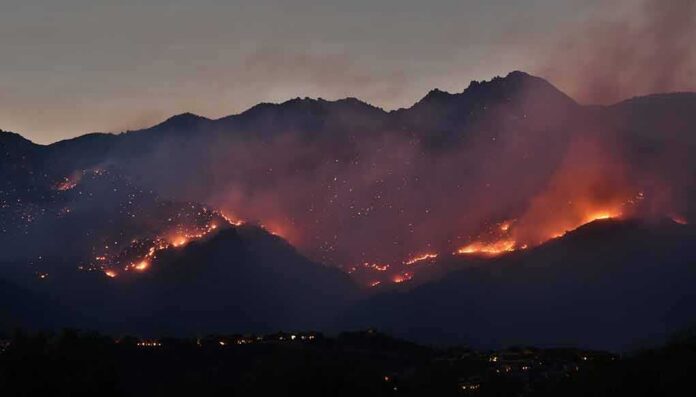
The letter points to trading tied to the deadly Palisades and Eaton fires in California in January 2025 as a key example. Offshore wagers on Polymarket reportedly saw more than $1.2 million in trades linked to those fires. The senators use this number to argue that wildfire betting is not a small side game, but a sizable market where people can profit while communities are burning. They also mention another site focused on “simulated bets” on California fires, showing concern about both real-money and play-money platforms.
The lawmakers stress that the United States is facing “yet another record-breaking fire season this year,” and say the CFTC “cannot allow these prediction markets to offer unrestricted betting on wildfires.” They ask the agency specifically how it plans to deal with both domestic and offshore platforms, suggesting they want a broad regulatory theory, not just a fix for one site. That matters for American traders, because offshore sites are harder for U.S. regulators to police, yet are often where innovation and market freedom live when domestic rules get tight.
Industry Pushback and Trump-Era Regulatory Questions
Not all market operators agree with the senators’ view. Kalshi, a regulated prediction market platform, says it does not allow wildfire markets “because they create perverse incentives.” That stance lines up with the senators’ worry, but it is a voluntary business choice, not a federal ban. By contrast, Polymarket has said that removing wildfire contracts “does not prevent a tragedy” and only reduces access to timely information. That argument frames these markets as tools to measure risk, not gambling on suffering.
The CFTC, now operating under President Trump’s administration, is already reviewing broader rules for event contracts and prediction markets. Under authority Congress added in 2010, the agency can block certain event contracts it finds “contrary to the public interest,” including those linked to gaming or other harmful activity. The senators’ letter tries to push wildfire markets into that same bucket. For conservatives, the key question is whether this is careful public-safety work or another step toward heavy-handed control over information, markets, and personal choice without clear proof of harm.
Sources:
independent.co.uk, arstechnica.com, bloomberg.com, hklaw.com, comments.cftc.gov