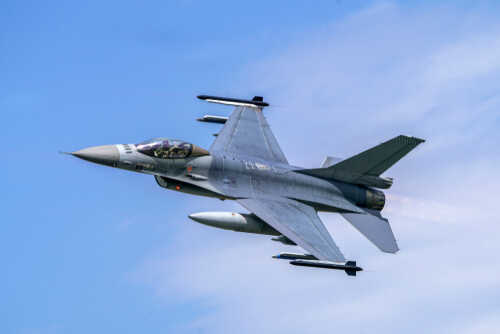
Venezuelan F-16 fighter jets made two dangerous passes over a U.S. Navy destroyer in international waters, prompting a rapid Pentagon response and a show of force from President Trump.
At a Glance
- Venezuelan F-16s flew over USS Jason Dunham twice in 48 hours
- Pentagon labeled the overflights “highly provocative”
- Trump ordered F-35s to Puerto Rico as deterrent
- U.S. strike earlier killed 11 Tren de Aragua cartel members
- Venezuela accused of shielding narcotics operations
Maduro’s Air Force Challenges U.S. Warship
The Venezuelan military conducted two overflights of the USS Jason Dunham destroyer within a two-day span, raising alarm inside the Pentagon. Defense officials described the actions as “highly provocative” and said they directly interfered with lawful U.S. counter-narcotics operations in the Caribbean.
The incidents came less than 48 hours after an American naval strike destroyed a suspected cartel vessel, killing 11 members of the Venezuelan-based Tren de Aragua gang. U.S. defense officials linked the timing of the F-16 maneuvers to the gang’s operations, suggesting coordination between Caracas and criminal trafficking groups.
Watch now: Venezuelan F-16s CHALLENGE U.S. Navy Warship in the Caribbean
Trump Moves to Reinforce Deterrence
President Trump quickly authorized the deployment of F-35 fighter jets to Puerto Rico to reinforce American air superiority in the region. He also granted U.S. naval commanders broad discretion to take defensive action if Venezuelan aircraft approached dangerously. “If they fly in a dangerous position… your captains can make the decision as to what they want to do,” Trump stated.
The Pentagon issued a direct warning to Caracas, accusing the Maduro regime of shielding drug cartels through military provocation. U.S. officials reiterated that counter-narcotics patrols in international waters are lawful and essential for combating the narcotics trade that reaches American streets.
Drug Networks Behind the Escalation
The Tren de Aragua gang, now designated a terrorist entity by the U.S. government, has expanded across the Americas and into U.S. cities, intensifying security concerns. Analysts say Venezuela’s use of U.S.-made F-16s to shield cartel operations underscores the extent of the regime’s ties to organized crime.
By escalating in international waters, Venezuela risks direct confrontation with the U.S. Navy, which retains full operational rights in the Caribbean. Maritime security experts note that military overflights of warships are rare and represent a sharper provocation than diplomatic protests. The Caribbean remains one of the most active drug smuggling corridors to the United States, making sustained U.S. interdiction a priority.
A Test of Resolve in the Caribbean
The Pentagon has framed the latest incidents as a test of American resolve rather than isolated harassment. Officials emphasized that aggressive counternarcotics operations will continue, despite Venezuela’s attempts to disrupt them.
For Washington, the episode highlights the complex overlap of narco-trafficking, regional instability, and state-backed provocation. For Caracas, it signals Maduro’s willingness to use military assets to deter American actions targeting drug smuggling networks tied to his government. As U.S. reinforcements arrive, the standoff risks deepening tensions in one of the most strategically sensitive waterways in the Western Hemisphere.
Sources
ABC11
Fox News
Axios
Maritime Executive
CBS News