Scientists say a centuries-old climate link between the Pacific and Indian Oceans is weakening under human-driven warming, reshaping weather risks across the Indo-Pacific.
Story Highlights
- A new study finds the Pacific–Indian Ocean link has weakened since the late 20th century.
- Researchers say human-caused warming, not volcanoes, drives the modern shift.
- Historical records show volcanoes broke the link in the early 1800s.
- Seasonal outlooks already flag changing Indian Ocean signals this year.
What The New Research Found About Ocean Coupling
Researchers reconstructed tropical climate back to the 1600s and tracked how the Pacific and Indian Oceans moved together. The study reports a strong link for most of the last 400 years, followed by a notable weakening since the 1980s. The authors say human-caused greenhouse gas warming is the main driver of the modern breakdown, which they call exceptional in the long record. This shift changes how one basin’s swings can steer heat and rain in the other.
News coverage of the paper explains that changes in the tropical Pacific no longer pull the Indian Ocean as strongly as before. That weaker “tug” means past patterns that helped forecasters read monsoon strength or drought odds may not hold the same way now. The coverage also highlights that this is a sustained change across recent decades, not a brief blip. That matters for food security, cyclone risk, and trade routes tied to predictable seasonal winds and rains.
How Volcanoes Broke The Link Before—And Why Today Is Different
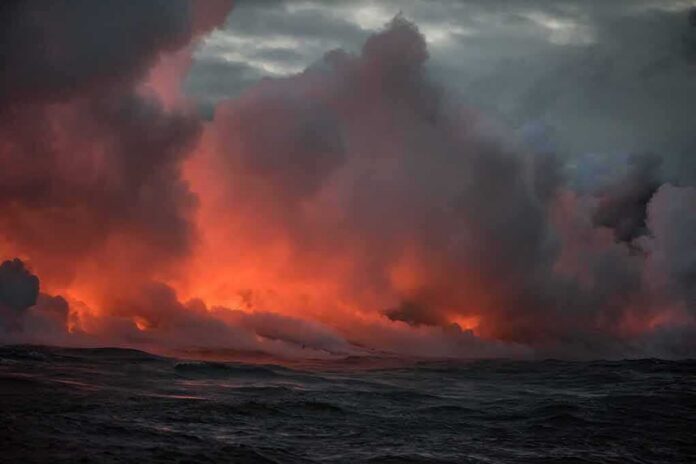
The same line of research points to a clear historical break from about 1810 to 1850. A cluster of large tropical volcanic eruptions cooled the planet and disrupted the normal bridge between the Pacific and Indian Oceans. That break faded as volcanic effects waned, and the link recovered. Today’s weakening, the authors argue, is not from eruptions but from long-term human-caused warming, which changes ocean heat patterns and winds in a more lasting way.
Peer reports note the paper’s title centers on nineteenth century volcanism, yet the modern shift is pinned on greenhouse gas warming. That framing helps separate short, shock-like breaks from long, forced trends. It also cautions modelers and planners: if the driver is ongoing warming, then the weakened link may persist or deepen. That could force updates to risk tools that assumed a steady Pacific-to-Indian influence for seasonal forecasts.
Why Forecasting And Planning Get Harder Now
Seasonal outlooks already show the Indian Ocean Dipole signal moving toward average this year. That kind of shift, paired with a looser tie to the Pacific, can dull old forecasting rules of thumb. Agencies that guide farmers, shippers, and emergency managers will need sharper tools that account for a changing baseline. Clearer models mean fewer surprises in rain timing, storm tracks, and heat waves that hit power grids and food supply chains.
Global reviews describe the Pacific–Indian link as a core part of tropical climate behavior. Winds, pressure, and ocean pathways normally act like bridges between basins. When those bridges weaken, teleconnections change, and so do the knock-on effects for Asia, Africa, and even weather in parts of the United States. That is why this research has real stakes for water storage, crop choices, and insurance pricing that depends on stable climate signals.
What This Means For American Families And National Readiness
Farmers, truckers, and families feel the cost when overseas crop failures and storm shifts raise prices at home. A weaker ocean link can bring new monsoon patterns, which can cut rice and palm oil output and lift grocery bills. Energy markets also react when heat and drought stress hydropower and spike fuel demand. Better forecasting protects wallets and helps the United States plan food and fuel flows before prices jump on short notice.
Insightful meeting with Kate Thwaites, Member of Parliament, Australia and Special Envoy for Climate Change Adaptation and Resilience. We discussed the intersection of climate change, health and resilience in the Indo-Pacific region and we discussed Australia’s leadership in… pic.twitter.com/LUsFW6Wo63
— Dr Sania Nishtar (@SaniaNishtar) September 15, 2026
Supply chains tied to the Indo-Pacific need steady planning, not guesswork. U.S. ports, rail, and trucking companies win when seasonal risks are flagged early and clearly. The administration can back common-sense steps: invest in improved ocean monitoring, support accurate seasonal outlooks, and press global partners to share data fast. Stronger, facts-first forecasting helps families, protects small businesses, and keeps America ready when weather patterns shift in new ways.
Sources:
sciencedaily.com, allatra.media, technews.tw, yahoo.com, wmo.int, link.springer.com