
Iran’s “one million fighters” headline isn’t just a number—it’s a deterrence message aimed at making any U.S. ground plan feel politically and physically impossible.
Quick Take
- Iranian state-linked outlets claim more than one million ground fighters have been organized for a possible fight with the United States.
- Iran frames the surge as voluntary, youth-driven enlistment across the Basij, IRGC, and regular army—designed to project national unity.
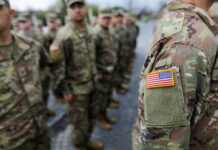
- U.S. force posture in the region has reportedly climbed to around 60,000 personnel, with additional units moving in.
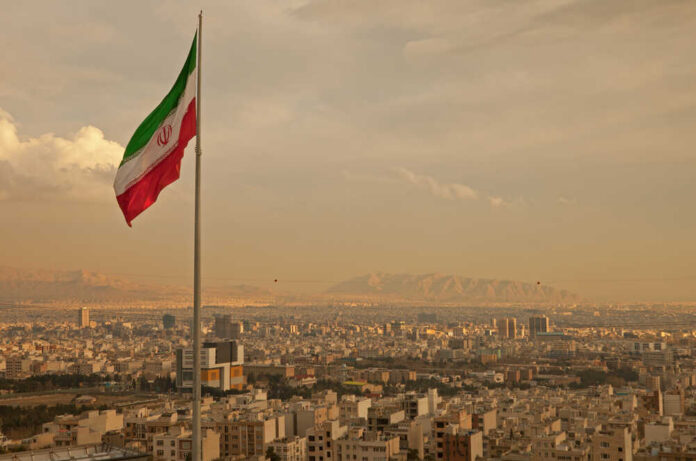
- The Strait of Hormuz remains the pressure point: Iran signals it can keep it closed; the U.S. signals it won’t tolerate that.
The “One Million” Claim: A Battlefield Number and a Television Script
Iranian state media has blasted a specific figure—over one million ground fighters “mobilized and organized”—and paired it with language about turning Iran into “hell” for American forces. The phrase matters as much as the count. Tehran sells the story as defensive: volunteers rushing recruitment centers, commanders warning that a ground war would bleed any invader, and the public acting as a national shield. Independent verification of the true readiness level remains limited.
Iran’s leadership knows American audiences and decision-makers remember Iraq and Afghanistan in visceral detail. A big round number on TV is a psychological weapon: it invites U.S. planners to imagine endless checkpoints, ambush corridors, booby-trapped villages, and a fight where technology can’t fully solve manpower. Even if the “million” includes part-time reservists and Basij affiliates, the messaging tells Washington: you won’t face only professionals; you’ll face a society mobilized for attrition.
Why Hormuz Keeps Dragging Everyone Toward the Edge
The Strait of Hormuz isn’t a talking point; it’s the narrow valve for energy markets and global shipping nerves. Iranian-linked reports emphasize readiness to keep the passage closed and paint any U.S. attempt to open it as reckless or self-destructive. That framing is strategic: it makes Iran look like the guardian of sovereignty while placing the burden of escalation on Washington. If tankers stall and prices jump, Iran bets political pressure spreads far beyond the Middle East.
American conservatives tend to ask the simplest question first: what is the national interest, and what is the end state? Hormuz forces clarity. If the mission becomes “keep the strait open,” the U.S. can do that with naval and air power—up to a point. If the mission evolves into “change Iran’s behavior” or, worse, “occupy,” Iran’s million-fighter narrative becomes a cost-inflation tool. Tehran doesn’t need to win conventionally; it needs to make American voters hate the bill.
The U.S. Build-Up and the Problem of Expensive Munitions
Reporting around the current escalation points to significant U.S. deployments—tens of thousands in the region—and additional forces moving in, including paratroopers. At the same time, some coverage highlights intense early consumption of munitions, with costs counted in the tens of billions and suggestions that stocks are tightening. That combination creates a strategic tension: Washington can surge force, but long campaigns punish inventories, budgets, and public patience—especially if objectives stay fuzzy.
Iran watches that math closely. Tehran’s playbook historically leans on asymmetric friction: drones, missiles, proxies, and threats to shipping—actions that force an opponent to spend high-end interceptors and precision weapons. If U.S. commanders start worrying about stockpiles, they face a grim choice between restraint (which can look like weakness) and escalation (which can look like recklessness). Iran’s mobilization story slots neatly into that dilemma: it whispers that even “winning” could become a long, ugly drain.
Volunteer Patriotism, Basij Optics, and What “Mobilized” Can Mean
Iran’s claim stresses volunteers “flocking” to Basij and other recruitment channels. In practical terms, “mobilized” can cover a wide spectrum: trained units ready to move, local defense formations, and ideological cadres prepared for internal security or guerrilla-style resistance. Tehran doesn’t need Western analysts to accept every detail. It needs the perception of depth: layered manpower that can absorb strikes, replace losses, and keep fighting after infrastructure takes hits.
Common sense also requires skepticism. Authoritarian systems often use state media to amplify strength, shape morale, and deter enemies. A million organized fighters is a claim that can’t be audited from a studio desk. Still, dismissing it outright would be equally foolish. Iran has large security institutions, a history of mass mobilization narratives, and terrain advantages that favor defenders. Prudence for U.S. policymakers means planning around capability, not bravado—while avoiding the trap of taking bait.
Diplomacy in Public, Diplomacy in Private, and the Election-Season Fog
Publicly, Iran rejects Washington’s approach and threatens serious retaliation if American troops land on Iranian soil. Publicly, the Trump administration has claimed Iran wants a deal, even hinting at a “significant prize” linked to Hormuz. Reports also describe indirect channels continuing through intermediaries. That mix is classic crisis theater: both sides posture for domestic audiences while keeping a back door open to prevent accidental catastrophe.
American conservatives usually prefer strength paired with clarity: negotiate from leverage, avoid endless wars, and don’t confuse theatrics with strategy. Iran’s million-fighter headline is theater with a purpose—raise the perceived price of entry. The U.S. counter-message should not be emotional slogans. It should be a defined objective, credible deterrence, and disciplined escalation control. If Washington can’t articulate what “success” looks like without a ground quagmire, Tehran’s television number has already scored a win.
Sources:
Iran claims over one million fighters ready as US threatens ground invasion: Report
Iran to mobilize a Million Fighters for a possible ground battle with US
One million Iranians have been put on alert in case of a US ground operation
Thousands of U.S. troops deploy to Middle East and the latest on DHS funding talks
Iran mobilises million fighters to respond to possible US ground invasion