A federal health agency line turning into “Thank you for calling Domino’s Pizza” shows how quickly bureaucratic contempt can surface when taxpayers demand answers.
Quick Take
- An HHS phone line briefly played a Domino’s-style greeting after activists flooded the agency with calls over NIH-funded animal experiments.
- HHS said the change was an “unauthorized action” by a “rogue employee” and not representative of the department.
- White Coat Waste Project (WCWP) recorded and circulated the message while pressing HHS and Secretary Robert F. Kennedy Jr. to cut funding tied to kitten and beagle testing.
- Sen. Joni Ernst condemned the prank after hearing the recording during a Senate hearing, calling it “not okay.”
A Domino’s Greeting on a Government Line Sparks a Bigger Trust Problem
HHS acknowledged that an agency voicemail greeting was altered to mimic a Domino’s Pizza message after an influx of protest calls linked to taxpayer-funded animal research. The calls followed WCWP’s campaign urging supporters to pressure HHS leadership—particularly Secretary Robert F. Kennedy Jr.—to cut NIH-related funding connected to kitten and beagle experiments, including work tied to a University of Missouri lab. HHS later restored the line and blamed a single employee.
BREAKING:
Behind-the-scenes video reveals the moment we played HHS’s “Domino’s Pizza” voicemail trolling taxpayers who called to ask them to shut down NIH-funded kitten experiments.
Senator Ernst: “That’s not okay.”
“Actually makes my stomach turn.”
Here’s the scoop:… https://t.co/K3uBwjUbdM pic.twitter.com/3iQcxc4yOM
— White Coat Waste (@WhiteCoatWaste) March 19, 2026
The narrow facts matter. The department described the incident as unauthorized, distancing leadership from the prank. The activist group described it as mockery of citizens raising moral and fiscal objections, especially because the pressure campaign targeted taxpayer spending decisions. Even if it was one staffer acting alone, the episode highlights how quickly public oversight efforts can run into a wall of institutional defensiveness—an old frustration for voters who want accountability in Washington.
What WCWP Wanted: End Funding for Specific Experiments
WCWP’s campaign focused on NIH-supported animal testing and urged supporters to call HHS to demand an end to particular experiments involving kittens and beagles. According to reporting, the group circulated phone numbers and explicitly named RFK Jr. in its call-to-action. For a time, callers reportedly reached human operators before the volume pushed the line to voicemail. By the Tuesday before the story broke, the automated greeting shifted to the Domino’s-style message.
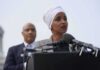
WCWP recorded the altered greeting and shared it publicly, then elevated the dispute beyond social media by bringing it into the policy arena. At a Senate Committee on Small Business and Entrepreneurship hearing, WCWP’s Justin Goodman criticized the prank and argued the underlying issue is serious, not a punchline. Sen. Joni Ernst, a Republican from Iowa, reacted sharply to the recording, saying the incident was “not okay” and that it made her stomach turn.
HHS Response: “Rogue Employee,” Voicemail Restored, Discipline Unknown
HHS spokesperson Andrew Nixon said the prank was the work of a “rogue employee” and “not representative” of the department. The voicemail was returned to normal after the incident gained attention. What remains unclear—is whether the employee was disciplined or is still employed. That missing detail may seem small, but it affects public confidence: when agencies label misconduct “unauthorized,” the public reasonably expects transparency about consequences.
Competing Claims: Animal Welfare Reform vs. Biomedical Research Arguments
The dispute sits inside a broader policy clash: activists argue taxpayers should not bankroll what they view as cruel or wasteful experiments, while some researchers argue animal testing remains essential to medical progress. Reporting cited biomedical researcher Deborah Fuller, who has defended the role of animal testing—particularly non-human primates—in moving interventions toward human use. That tension is real, and it complicates simple slogans. It also raises a basic governance question: who decides when “necessary” crosses into “unacceptable.”
Why This Matters Politically Under Trump’s Second Term
The incident landed at a sensitive moment because it touches two hot-button issues for many conservatives: government accountability and taxpayer spending. WCWP framed the episode as evidence of entrenched institutional attitudes that persist even when voters demand reform. HHS, for its part, emphasized that the prank was not policy and pointed to broader efforts under RFK Jr. to shift away from certain testing models. With oversight pressure building, Congress and the administration will likely face louder calls to document what is funded, why, and what alternatives exist.
For citizens watching Washington closely, the most concrete takeaway is straightforward: public engagement works only when agencies treat the public like stakeholders, not nuisances. A prank voicemail does not prove an agency-wide conspiracy, and the reporting does not establish that. But it does demonstrate how thin the line can be between bureaucracy and contempt—especially when taxpayers demand that spending align with basic decency and transparent priorities.