With Taiwan’s security and America’s semiconductor lifeline on the table, President Trump’s Beijing summit with Xi is shaping up as a test of whether U.S. deterrence is negotiable.
Quick Take
- President Trump is meeting China’s Xi Jinping in Beijing as Taiwan becomes a central pressure point in broader U.S.-China talks.
- Trump approved an $11 billion arms package for Taiwan but deliveries have reportedly been delayed, while a separate $14 billion package is still awaiting approval.
- Trump’s comments about consulting Xi on arms sales break from long-standing U.S. practice meant to prevent Beijing from gaining veto power over Taiwan’s defense.
- Secretary of State Marco Rubio has said U.S. policy toward Taiwan has not changed, even as China signals it wants reduced U.S. support.
Beijing summit puts Taiwan at the center of a wider bargain
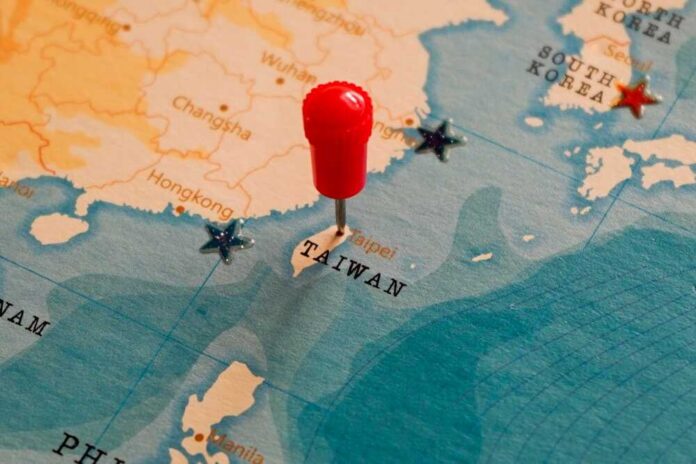
President Donald Trump is traveling to Beijing for a two-day summit with Chinese President Xi Jinping, and Taiwan is emerging as one of the most sensitive items on the agenda. Reporting indicates the talks are also expected to cover global trade, Iran, artificial intelligence, nuclear issues, and critical minerals—issues where Beijing has leverage and Washington has major economic and security interests. China’s government has telegraphed that Taiwan is not a side issue, but a top demand.
China frames Taiwan as an internal matter and insists “reunification” is inevitable, while Taiwan operates as a self-governing democracy that relies heavily on U.S. support for deterrence. Trump’s second-term approach has been described as more openly transactional, including public commentary suggesting Taiwan should pay more for its own defense. That posture may appeal to voters who want allies to carry more burdens, but it also invites questions about what, if anything, is up for trade.
Arms sales, delays, and a precedent Washington usually avoids
U.S. arms transfers are one of the clearest signals of commitment under the Taiwan Relations Act framework, and recent reporting describes unusually high-dollar packages in motion. Trump authorized an $11 billion arms sale to Taiwan in December, but delivery has been delayed. Another $14 billion package has been reported as pending and awaiting Trump’s approval. The timing matters because Taiwan’s strategy depends on credible, visible capability improvements—not just announcements.
Trump has also publicly suggested he might consult Xi about Taiwan arms sales, a step that would depart from longstanding U.S. practice. For decades, Washington has tried to deter Beijing without granting it formal influence over U.S. support to Taipei. The Reagan-era “Six Assurances” are widely cited as rejecting consultation with China on arms sales to Taiwan, precisely to avoid turning Taiwan’s defense into a bargaining chip. Even hinting at consultation can change the perceived balance.
Rubio’s reassurance vs. China’s pressure campaign
Secretary of State Marco Rubio has said U.S. policy toward Taiwan remains unchanged, an important message for allies watching for signs of retreat. At the same time, China has continued to elevate Taiwan in senior-level diplomacy, including a pre-summit call in which Foreign Minister Wang Yi pressed Washington to make what China calls the “right choices” on Taiwan. Beijing’s goal, according to reporting, is to loosen U.S.-Taiwan ties by curbing arms sales and limiting official contact.
The practical tension is that reassurance alone cannot substitute for capability and clarity when adversaries are testing limits. If the summit produces only broad language while arms deliveries remain stalled, Taiwan could be left with more uncertainty than security. On the other hand, if Trump pairs tough trade demands with concrete follow-through on defense deliveries, the summit could reinforce deterrence while still pursuing an America First economic strategy.
Semiconductors, supply chains, and why U.S. leverage cuts both ways
Taiwan’s outsized role in advanced semiconductor manufacturing keeps the island at the heart of U.S. economic and national-security planning. Trump has criticized Taiwan for “stealing” semiconductor business and has pressed for more production to be brought back to the United States. That push reflects a broader conservative concern about globalism and supply-chain dependence. Yet the near-term reality is that disruption in Taiwan would hit U.S. consumers, defense production, and the AI sector hard.
The Trump-Xi summit in China has high stakes for Taiwan https://t.co/GkkFL1MYFJ
— The Algiers Herald (@AlgiersHerald) May 11, 2026
Some analysts warn Taiwan could end up “on the menu” in high-level talks, while others argue Trump is unlikely to fully sacrifice Taiwan because doing so would undermine U.S. credibility and trigger major economic fallout. The available reporting does not prove any pre-decided concession, but it does show elevated risk created by mixed signals: delayed deliveries, public talk of consultation, and a bargaining style that treats security commitments as leverage. The summit’s final statements—and subsequent actions—will matter more than rhetoric.
Sources:
Trump-Xi summit comes with high stakes for Taiwan, the island democracy that China claims as its own
Taiwan, Trump summit, China, Xi Jinping