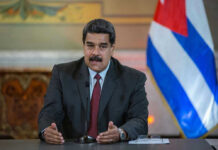
A U.S. military strike on Caracas has resulted in the capture of Venezuelan President Nicolás Maduro and his wife, igniting a fierce international controversy. The unprecedented action, confirmed by President Trump, signals an intent for the U.S. to administer Venezuela indefinitely, drawing immediate condemnation from global powers, including China, which has demanded Maduro’s release and labeled the operation a grave violation of international law and sovereignty. This escalation, underpinned by Venezuela’s vast oil reserves and simmering geopolitical tensions, raises significant concerns about the future of the global order.
Story Highlights
- China demands immediate release of Maduro, citing international law violations.
- President Trump confirms the U.S. plans to administer Venezuela indefinitely.
- U.S. action meets global condemnation, raising concerns of sovereignty erosion.
- Venezuela’s oil reserves and geopolitical tensions underpin the crisis.
China’s Demand for Maduro’s Release
In a bold move, China has demanded the immediate release of Venezuelan President Nicolás Maduro and his wife following their capture by U.S. forces during a military strike on Caracas. The Chinese Foreign Ministry labeled the operation a violation of international law and sovereignty, raising alarms about the implications for global stability.
The U.S. conducted the military operation in the early hours of January 3, 2026, capturing Maduro and his wife and flying them out of Venezuela. President Trump announced the operation on Truth Social, emphasizing it was conducted with U.S. law enforcement and signaling an intent to administer Venezuela for an indefinite period. This unprecedented action shifts the focus from traditional sanctions to direct intervention.
BREAKING:
China calls on the US to immediately release Nicolás Maduro and stop violating other countries’ sovereignty and security. pic.twitter.com/aDAdiIdTJk
— Globe Eye News (@GlobeEyeNews) January 4, 2026
Geopolitical Tensions and Global Reactions
The incident has drawn widespread condemnation from international actors, including the UN and several key geopolitical players. France and the African Union have joined China’s call for dialogue over coercion, warning of serious implications for the global order. The UN has urged restraint, stressing the need for adherence to international norms.
Venezuela’s vast oil reserves have long been a point of contention, with the U.S. and China both having strategic interests in the region. The current situation amplifies these tensions, with China protecting its investments and advocating for a multipolar world order. The U.S., on the other hand, frames its actions as justified under claims of combating narco-terrorism.
Implications for International Law and Sovereignty
The capture of a sitting head of state by military force sets a precedent that could challenge existing norms of sovereignty and international law. This action bears similarities to past U.S. interventions, such as the Panama invasion in 1989 and the 2011 Bin Laden raid, yet marks an escalation by targeting a recognized leader in his capital city.
As the situation unfolds, the potential for regional instability grows, with risks of civil unrest in Venezuela and refugee surges into neighboring countries. The energy sector faces volatility due to the disruption of Venezuelan oil output, affecting global markets. Political analysts warn that the erosion of sovereignty norms could lead to further geopolitical conflicts, particularly between the U.S. and China.
Watch the report: China | Beijing declares US attacks against Venezuela violate international law
Sources:
China Calls on US to ‘Immediately Release’ Maduro
China Demands US to Release Venezuela’s Maduro
World Condemns Venezuela Strike, Fears Global Order
China Demands US Release Venezuelan President Maduro