
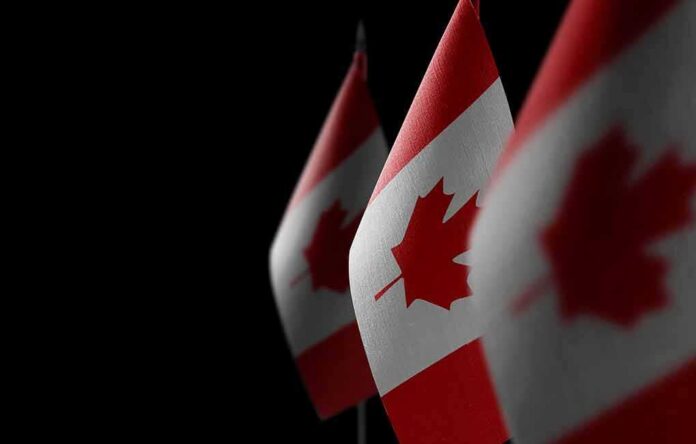
Canada and the European Union moved to tighten a sweeping “future” alliance, and they are openly framing it as a hedge against President Trump’s America-first trade stance.
Story Highlights
- Canada and the European Union announced a deeper strategic partnership spanning trade, security, and technology.
- European Union leaders floated unprecedented “associate member” language for Canada, which has no current legal basis in European Union treaties.
- The effort is pitched as values-based and rules-focused, with a signed Security and Defence Partnership framework.
- Coverage links the push to Trump’s tariffs and tougher line on Europe, raising cross-Atlantic tensions.
Canada and the European Union Advance a Broader Strategic Tie-Up
Prime Minister Mark Carney and European Union leaders announced a plan to deepen cooperation across trade, security, digital policy, and climate, building on a “Strategic Partnership of the Future” first set out in June 2025. The Canadian government said both sides signed a Security and Defence Partnership to guide dialogue and cooperation on shared priorities. Leaders framed the effort as rooted in shared values and the rules-based order, with the goal of aligning policies and strengthening supply chains across key sectors.
European Commission President Ursula von der Leyen said she wants the relationship moved to “the highest level possible,” and she publicly raised making Canada the first “associate member” of the European Union, a label that signals unusual ambition. Reporting notes there is no associate member status in European Union law, and any new model would require broad approval, so the concept remains exploratory, even as talks and high-level meetings continue.
From Trade Gains to “Alliance for the Future” Branding
Canadian and European trade already runs deep under the Comprehensive Economic and Trade Agreement, with tariffs largely gone and commerce rising since 2016, which helps explain why both sides see room to expand ties. Leaders now talk about cooperation across the Arctic, energy, critical minerals, batteries, and advanced technology to harden supply chains and reduce risk in a tense world. The new branding points beyond trade toward security and technology rules that could shape standards outside the United States’ lead.
Officials cast the partnership as a practical path to protect jobs and industry by finding common rules and faster approvals. Advocates say shared rules can speed projects and reduce costs for companies that sell across the Atlantic. The Security and Defence Partnership offers a venue to coordinate exercises, cyber priorities, or procurement dialogue, though the public text so far outlines frameworks rather than specific budgets, timelines, or force commitments. That leaves operational details to future negotiations and minister-level work plans.
Trump’s Tariff Pressure Sets the Political Backdrop
Media coverage in Canada and Europe ties the timing to President Trump’s tariff push and tougher stance toward European trade policies, which is pushing Ottawa and Brussels closer together. European leaders described an “openly hostile world” and suggested deeper cooperation can reduce exposure to outside pressure, including tariffs that raise costs for families and small businesses on both sides of the ocean. The framing puts the United States outside the room while partners design rules that could affect American producers.
President Trump has warned Europe about heavy tariffs if the European Union advances the associate-member idea, calling the proposal “laughable” in some coverage, which signals a hard line to protect American workers and industry. The message is simple: the United States will not subsidize policies that sideline American interests or mask protectionism as “values.” Supporters of the alliance argue it is not a rival bloc, but the rhetoric and timing make it look like a hedge against U.S. leverage during trade disputes.
Sectors in Focus: Minerals, Energy, Arctic, and Digital Rules
European Union officials highlighted cooperation in energy, critical minerals, and batteries, where Canada brings resources and the European Union brings demand and industrial policy tools. Deeper ties in these areas can shift supply chains away from China and Russia, but they can also set standards that companies must meet to sell into those markets. The Arctic adds a strategic layer involving shipping routes, research, and surveillance, while digital and artificial intelligence rules could shape how data and algorithms are governed across the Atlantic.
For American readers, the stakes are clear. If Canada and the European Union write rules without the United States, our exporters could face new hurdles, and our energy edge could dim if standards lock out U.S. projects. President Trump’s firm stance pressures partners to bargain fairly and avoid ganging up on American workers through backdoor regulatory walls. The Canada–European Union initiative is real in scope, yet its most novel label, “associate member,” remains undefined in law and subject to tough approvals.
Sources:
cnn.com, cbc.ca, reuters.com, pm.gc.ca, euronews.com