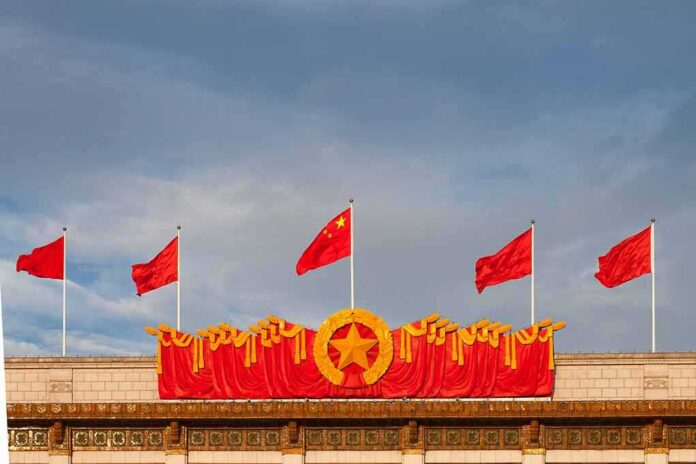
China says it wants peace in the Iran war while pledging to “unwaveringly” back Tehran’s sovereignty and security — a stance that raises hard questions for America’s safety and interests.
Story Snapshot
- Xi Jinping pledged deeper cooperation with Iran and backed its sovereignty and security.
- Beijing pushed ceasefire language while expanding ties that favor Tehran.
- U.S. intelligence reporting says China is leveraging the war to gain advantage over America.
- Reports allege Chinese satellite imagery and advanced systems were considered for Iran.
What Xi Promised Tehran, and Why It Matters
Chinese leader Xi Jinping told Iran that China would “unwaveringly” deepen cooperation and support Iran’s sovereignty, security, and dignity. Xi made those points in meetings with Iranian President Masoud Pezeshkian on the sidelines of a BRICS gathering and later through official statements. These words signaled firm political cover for Tehran during a volatile war. They also showed Beijing’s choice to stand close to Iran as it seeks leverage in the region and with Washington.
China’s public diplomacy has also leaned on “peace” branding. Beijing called for a comprehensive ceasefire in talks with Iran’s foreign minister in Beijing. Chinese officials stressed that force is not the right path and that dialogue is the way forward. These messages present China as a stabilizing actor. They also build a public record Beijing can point to when pressed about its real role in the conflict and its ties with Tehran.
De-Escalation Talk Versus Strategic Posture
Major outlets reported that Beijing is not the formal mediator in the Iran war, even as many players say it has helped de-escalate tensions. That means China’s influence is mostly informal, routed through meetings, press lines, and partners like Pakistan. This approach lets China claim a peace mantle while keeping close alignment with Iranian interests. It also leaves few public results, such as signed frameworks or verified deal texts, that prove durable mediation success.
The gap between rhetoric and records remains large. Reports praise China’s “dialogue” push, but offer limited evidence that Beijing changed Iran’s battlefield behavior in a measurable way. Analysts highlight that ceasefire calls do not equal enforcement. Without documents, milestones, or transparent monitoring, it is hard to credit Beijing with concrete wins. This is why even supportive coverage notes China is helpful but not central, and that its peace posture rides on declarations, not demonstrable constraints on Tehran.
U.S. Concerns: Intelligence and Military Edge
American officials see a different risk. A confidential U.S. intelligence analysis said China is exploiting the Iran war to gain advantage over the United States across military, economic, and diplomatic fields. That assessment tracks with China’s long strategy to weaken U.S. influence and expand its own. If true, Beijing’s peace talk could mask a larger plan: shape the battlespace, lock in oil flows, and pressure U.S. partners without paying the cost of open conflict.
U.S. officials also told reporters that China considered sending X-band radar to Iran and weighed transferring air defense systems, perhaps through third countries. They said intelligence indicated Tehran used Chinese satellite imagery during the conflict. These claims, while attributed to unnamed officials, add to a pattern of alleged support that would aid Iran’s targeting and defense if verified. Such activity would collide with Beijing’s peacemaker label and alarm U.S. commanders.
Beijing’s Message: Ceasefire Now, Talk More
China counters that it supports mediation by partners like Pakistan and wants hostilities to end. Its foreign minister urged an immediate halt to fighting and pressed for negotiations. This framing appeals to countries tired of war costs and energy shocks. It also lets China pose as a level-headed power. Yet the same message sits next to promises to back Iran’s sovereignty and security, which makes Beijing look less neutral and more like a shield for Tehran’s core goals.
For American readers, the stakes are simple. If China builds influence by backing Iran while talking “peace,” U.S. troops, allies, and shipping lanes face higher risk. If Beijing’s support helps Tehran harden its air defenses and sharpen strikes, the cost lands on our service members and our wallets. President Trump’s team must keep pressure on any network that moves sensors, imagery, or dual-use goods to Tehran. Clear red lines, tighter sanctions, and rapid interdiction can blunt these threats without dragging America into another long war.
Sources:
theamericanconservative.com, arabnews.com, caspianpost.com, us.china-embassy.gov.cn, bbc.com, theweek.in, uscc.gov