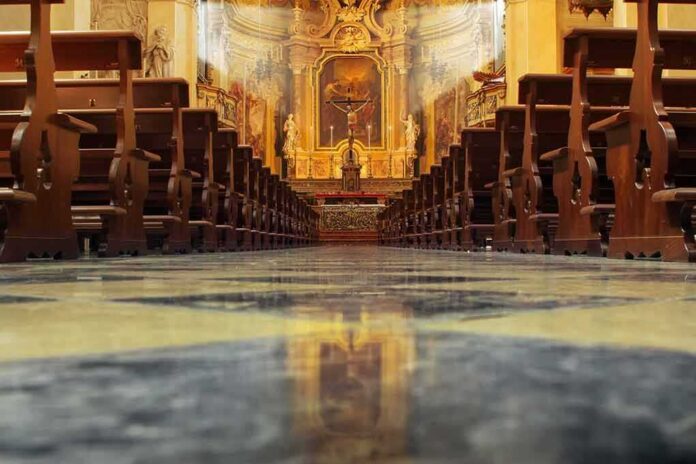
A Brazilian bishop allowed a creed at Mass that called God a “God/Goddess” and praised “all sexual diversity,” igniting a direct challenge to Catholic doctrine.
Story Highlights
- A Sept. 7 Mass in Brazil featured a “Creed of the Ecclesial Base Communities.”
- The creed invoked a “God/Goddess” and affirmed “all sexual diversity.”
- The event tied to the national “Cry of the Excluded” demonstrations.
- Supporters frame base communities as faith groups focused on social justice.
Contested Creed Used Publicly at a National Event
Reporters documented that on Sept. 7 a bishop in Brazil included the “Creed of the Ecclesial Base Communities” during a Mass linked to the “Cry of the Excluded.” The text was developed in 2016 and was read as part of the liturgy before a public audience. The creed’s use at a national demonstration makes the incident more than a local dispute. It signals a wider push to reshape language inside worship settings.
The “Cry of the Excluded” is a recurring series of demonstrations around Brazil’s Independence Day. Organizers say the events highlight the poor and those pushed to the margins. Past coverage describes the Cry as a process joined by groups active in social causes. This backdrop explains why a politicized creed could surface at a Mass. It also shows how worship and activism are being blended by some church actors.
Problematic Wording: “God/Goddess” and “All Sexual Diversity”
Accounts of the creed quote lines that call God a “God/Goddess present in the diverse experiences of the communities.” The text also says the community is free from “rules governing love,” embracing “all sexual diversity.” These phrases deviate from the standard Catholic creeds prayed at Mass. They move from received doctrine into activist slogans about identity and sex. Readers do not need a theology degree to see this is not the Nicene-Constantinopolitan Creed.
Further reporting quotes another section that celebrates a “Great Homeland” beyond racism and norms on love. The wording treats sexual ethics as open-ended and places experience over clear moral teaching. Catholic teaching about God’s revealed names and about marriage and chastity has fixed content. This creed’s phrasing clashes with that content at key points. That is why critics call it heretical and unfit for the liturgy.
Supporters Cite Base Communities and Inclusive Language Trends
Writers who study basic ecclesial communities say these small groups mix prayer, Bible reading, and action to improve daily life. They link the communities to social uplift and neighborhood needs. Advocates claim this setting makes faith “existentially visible” for the poor. That history explains the movement’s emphasis on inclusion and justice. But history does not make the creed’s new language fit the Church’s rule of prayer.
Some church-related publications outside Rome’s authority promote “inclusive language” for people in worship texts. Those guides stress sensitivity in public prayer. Even those supporters usually warn that wording about God must stay theologically accurate. The controversial creed crosses that line by naming God as “God/Goddess” and by redefining sexual morality in sweeping terms. That goes far beyond human-inclusive phrasing and into doctrinal revision.
Why This Matters for Faithful Catholics and American Families
Parents want churches to teach clear truth and give kids moral anchors. When a bishop lets activist language replace a creed, it confuses the flock. This is not a debate over style or culture. It touches the very words Catholics say they believe. If leaders can swap the creed with a political poem, what else can be changed next week? Vigilance is wise when elites try to reshape faith to fit the latest trend.
American readers should also spot the pattern. The same push shows up in schools, media, and agencies at home. Activists redefine words, then demand everyone comply. Whether it is “gender” policy in classrooms or speech rules in the workplace, the method is the same: change language to change belief. Defending fixed truths—about God, family, and moral law—starts with clear words. That is common sense and it protects freedom of religion for all.
Sources:
lifesitenews.com, pmc.ncbi.nlm.nih.gov, montfort.org.br, catholicworldreport.com, stmikescanoncity.org, americamagazine.org, cambridge.org, archive.org