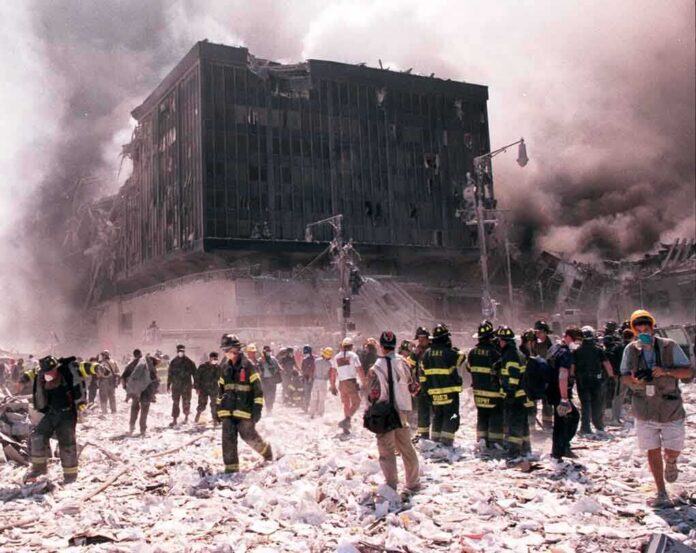
At Ground Zero three days after 9/11, President George W. Bush’s bullhorn vow—“I can hear you”—rallied a shaken nation and set a clear course of resolve.
Story Highlights
- Bush’s “I can hear you” pledge at Ground Zero unified rescuers and viewers nationwide.
- The bullhorn remarks tied grief to action and promised justice for the attackers.
- The George W. Bush Presidential Library preserves the actual bullhorn as an artifact.
- Footage and transcripts confirm the crowd’s “U.S.A.” chants and the full exchange.
What Happened on September 14, 2001 at Ground Zero
President George W. Bush traveled to Lower Manhattan on September 14, 2001, to meet firefighters, police, and rescue crews working amid the ruins. Standing on rubble beside retired firefighter Bob Beckwith, Bush used a bullhorn to address the crowd. When someone called out that they could not hear, Bush replied, “I can hear you. The rest of the world hears you,” drawing loud chants of “U.S.A.” from the workers. The short exchange became the defining public moment of that week.
The White House record of the remarks shows Bush thanking responders, offering prayer for the fallen, and promising that those who “knocked these buildings down will hear all of us soon”. The archived September 11 response page later highlighted that single vow as a statement of national resolve. The power of the moment came from plain words, delivered on-site, that joined sorrow with duty. That mix matched what many Americans felt yet struggled to say.
Why the Bullhorn Moment Endured
Video from the scene captured the setting, the broken skyline, and the raw cheers that followed the line, which helped fix the moment in American memory. Museums and archives then reinforced that memory by preserving the quote and the setting. The George W. Bush Presidential Library lists the bullhorn itself as a featured artifact tied to the speech, anchoring the story in a real object people can see. That keeps the meaning tangible for families, students, and veterans.
The memory lasted because it met core American values during a crisis: strength, unity, and justice. The words did not indulge politics or blame ordinary citizens. They honored first responders and promised action against enemies who attacked our homeland. Conservatives heard a leader speak for the country, not for a party. The message respected faith, community, and duty—principles that hold when fear and anger could have split people apart.
A Line That Linked Grief to Action
The transcript shows Bush first set a tone of prayer and solidarity, naming New York, New Jersey, and Connecticut families who mourned. Then he used the bullhorn answer to channel the crowd’s energy into a promise that the attackers would face consequences. That sequence mattered. It said the nation could grieve and act at the same time, without losing its moral center. The moment helped align public will behind recovery, security, and the hunt for those responsible.
For many on the right, this remains a model for crisis leadership. Speak clearly. Stand with those on the front line. Pledge justice, not theater. Today, as threats evolve and families want safe streets, secure borders, and strong defense, that simple standard still applies. The Ground Zero vow reminds leaders to put country first and to match words with action. It also reminds citizens that unity is strongest when it serves liberty and the rule of law.
Sources:
townhall.com, georgewbushlibrary.gov, georgewbush-whitehouse.archives.gov, youtube.com