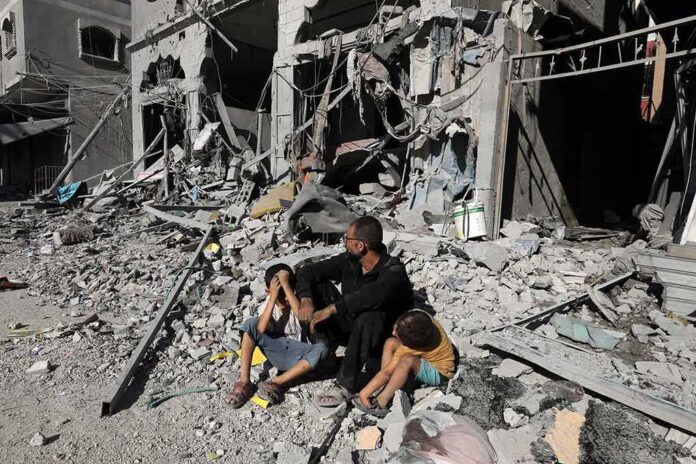
A United Nations report says nine in ten people in Gaza face unstable access to safe water, putting families at daily risk.
Story Highlights
- United Nations reporting finds 90% of Gaza’s people face frequent breaks in clean water access.
- Gaza City is the worst hit, with over nine in ten households water insecure.
- Aid groups warn that military operations and movement limits disrupt food and water deliveries.
- World Food Programme says all of Gaza has faced acute food insecurity, with hundreds of thousands at catastrophic levels.
United Nations Data Show Widespread Water Insecurity
The United Nations Office for the Coordination of Humanitarian Affairs reported on August 14, 2026, that 90 percent of Gaza’s people face frequent, unpredictable breaks in safe, clean water access. The agency cited worsening water insecurity hitting daily drinking, cooking, and hygiene. The same reporting identified Gaza City as the hardest hit. It said 92 percent of households there are moderately to highly water insecure. Khan Younis followed at 90 percent, and Deir al Balah at 87 percent.
The United Nations said most people remain displaced and live in harsh conditions. From August 1 to August 9, partners provided food assistance to about 58,000 households, roughly 189,000 people. That scale still falls short of the broader need. The report linked the shortages to a mix of damage, access limits, and insecurity shaping aid routes and deliveries. It framed the situation as a continuing crisis rather than a short disruption.
Operations and Movement Limits Disrupt Aid Delivery
The United Nations’ July 16, 2026 update said ongoing military operations, movement restrictions, and insecurity continue to drive new displacement. Those same factors disrupted humanitarian work and limited access to food, water, shelter, and health care. The report quantified water gaps: 63 percent of assessed households had under six liters of drinking water per person per day. It also found 34 percent had under nine liters of domestic water per day.
A June 5, 2026 situation note warned that the phase-out of certain trucking activities left over 330,000 people at roughly 250 sites at risk of losing their main drinking source. That warning signaled how fragile the patchwork supply remained. When one mode slows or stops, families feel it fast. Loss of trucking means fewer reliable fill-ups for tanks and bladders in crowded sites, where lines are long and storage is limited.
Food Insecurity Tied to Water, Sanitation, and Health Collapse
The World Food Programme said in May 2025 that every person in Gaza faced acute food insecurity, while 470,000 people faced catastrophic hunger. The agency tied rising hunger to the collapse of clean water and sanitation. It warned that without safe water and basic health services, malnutrition would climb. The agency’s framing connects food and water: when water is unsafe or scarce, families skip cooking, get sick more, and children fall behind in growth.
United Nations news coverage on July 14, 2026 echoed the aid delivery problems. It said insecurity severely disrupted delivery of water, food, bread, hygiene support, and site management. A UNICEF-linked note said 1.1 million children face uncertain water access every day and reported that 82 percent of households are water insecure. Those figures show why child health risks rise when safe water cannot be counted on day to day.
Why This Matters to American Readers
American taxpayers and charities often fund water systems, medical teams, and food aid in crises. When aid cannot move, waste grows and costs rise. Clear rules, secure corridors, and smart oversight protect lives and cut fraud. That matches conservative goals: focus on results, demand accountability, and insist aid reaches families fast. Secure borders and stable supply lines are not just national issues. They are also how relief gets from a port to a child’s cup without delay or diversion.
What the Latest Numbers Do—and Do Not—Show
The reports give a strong picture of broad conditions across Gaza. They track disruption, displacement, and gaps in water and food access over time. They rely on assessed household samples, operational updates, and partner totals. They do not trace every shortage to one cause at one site. Still, the pattern is clear: most families face unstable access to safe water, and many face serious food stress. That pattern held across months of updates.
What Needs Watching Next
Planners need site-level water and sanitation tracking for Gaza City, Khan Younis, and Deir al Balah. That means hard counts of working wells, pumps, and tanks, plus fuel stocks and repair logs. Trucking schedules, crossing throughput, and warehouse inventories should be public and frequent. These steps support tight oversight, cut theft, and speed delivery. They also help leaders judge what works and what fails, so every dollar of aid does the most good as fast as possible.
Sources:
youtube.com, ochaopt.org, un.org, news.un.org