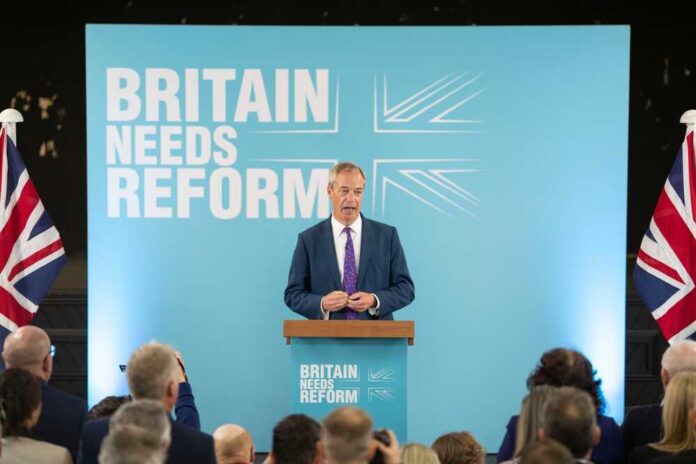
Farage’s sudden exit from Parliament turns his finances into a fresh political test, while TeraWulf’s new deal shows how fast the artificial intelligence boom is reshaping energy and crypto-linked businesses.
Quick Take
- Nigel Farage said he was resigning as the member of Parliament for Clacton and would stand again in the by-election.
- He denied wrongdoing and said he had done “nothing wrong” as scrutiny over his finances grows.
- The standards probe tied to the donation issue is paused while the by-election takes place.
- TeraWulf announced a long-term data center lease with Anthropic that Reuters-linked reporting says could bring in about $19 billion.
Farage Forces a New Vote
Nigel Farage said he is giving Clacton voters another chance to judge him after resigning his seat in Westminster. He said he will run in the by-election and cast the race as a direct choice between him and the political class. That move keeps the focus on his record, not on distant party managers or London insiders.
Farage also pushed back hard on the allegations driving the story. He said he had done “nothing wrong” and insisted he had not broken the law. The report says the parliamentary standards investigation tied to the donation issue is paused until after the by-election. That pause may look procedural, but it also gives him time to fight the case in public rather than under a permanent cloud.
Why the By-Election Matters
The by-election will matter because it turns a messy ethics fight into a straight vote. Farage has framed the contest as a test of trust, not just a local ballot. For readers who are tired of political games, the episode will look familiar: a high-profile figure tries to regain control by going straight to voters. His allies can call that confidence. Critics will call it damage control.
The established facts also show how much the wider establishment seems to want this story to stick. Reporting says the issue began with questions over undeclared benefits and a disputed gift from a Thailand-based British cryptocurrency investor. That is the kind of financial cloud that never goes away easily, especially when the media keeps repeating the same charge. Farage’s resignation does not end the dispute. It simply moves it to the ballot box.
TeraWulf Bets Big on Artificial Intelligence
While the Farage story centers on politics, TeraWulf’s announcement points to a different kind of power shift. The company said it signed a 20-year lease with Anthropic for data center infrastructure, and the deal is expected to produce roughly $19 billion in contracted revenue. The report says this marks a move away from Bitcoin mining and toward steady revenue from artificial intelligence clients. That is a major pivot for a company built around crypto mining.
The market liked the news. Reporting says TeraWulf shares jumped after the announcement. That reaction makes sense in a market where investors now reward companies that can sell power, space, and computing capacity to artificial intelligence firms. For conservatives who want real business growth instead of government hype, the message is plain: firms that build useful infrastructure can still create huge value without begging Washington for handouts.
What Readers Should Watch Next
The next step is simple. Watch whether Farage can turn the by-election into a renewal instead of a setback. Watch whether the standards probe resumes with more pressure after the vote. And watch whether TeraWulf can turn a headline-grabbing lease into durable profits, not just a short-term stock surge. Both stories show the same thing: public trust and hard numbers still matter more than spin.