A powerful new media push claims Trump’s G7 summit is “weakened” without China—but the facts tell a very different story.
Story Snapshot
- China is not a G7 member and has never been part of the club of leading democracies.
- Critics say leaving China out is a “costly mistake” that weakens the summit.
- Supporters argue China’s authoritarian system would act like a Trojan horse inside the group.
- Trump’s summit still centers on rebalancing trade and confronting Beijing’s unfair practices.
Why China Is Outside The Room, Not At The Table
G7 leaders from the United States, Canada, the United Kingdom, France, Germany, Italy, and Japan are meeting in Evian, France, while China remains on the outside looking in.[1] China has never been a member of the G7, which was built as a small club of major industrial democracies, not authoritarian powers.[2] Analysts say China’s absence now looks strange because its economy rivals or exceeds most G7 countries and shapes almost every topic on the agenda, from trade to security to energy.[1]
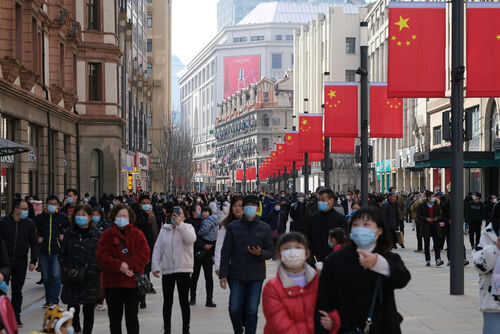
China’s economic size is huge. Its growth since the late 1970s has turned it from what one expert called “a tiny, benign, panda bear” into “a great global dragon.”[1] China now sells far more to the world than it buys and recently posted a record trade surplus of about $1.2 trillion, fueling major friction with other industrial powers over jobs and factories.[1] It also dominates key rare minerals and has fast-growing military and technology power that worries Western governments.[1]
Arguments From Critics: Is Excluding China A “Costly Mistake”?
Some commentators claim that holding a G7 summit without China is like hosting a soccer World Cup that bans five-time winner Brazil.[1] They argue that you cannot fix global challenges such as trade imbalances, supply chain shocks, climate change, and financial risks while leaving the world’s second-largest economy outside the main talks. One widely shared analysis warned that “G7 without China could be a costly mistake” because big problems become harder and more expensive to solve without Beijing’s direct involvement.
These critics also note that China already shapes the G7 agenda, even when it is not in the room.[2] A policy study describes China as the “central source” of global economic imbalances and a growing threat to the security, technology, and democracy of G7 members.[4] Because of that, leaders spend large chunks of every summit debating how to deal with China’s trade practices, industrial overcapacity, and security moves anyway.[2][4] To them, the question is simple: if China dominates every discussion, why not at least invite it to the table?
Why Many Experts Say Letting China In Would Break The G7
Other analysts, including long-time G7 scholar John Kirton, warn that formally including China could wreck the group’s cohesion and purpose.[1] They stress that the G7 is meant to be a gathering of advanced democracies with shared values, not a mixed group that includes one-party rule. Kirton describes China inside the G7 as a potential “Trojan horse” because its authoritarian government does not align with the others on Russia, Iran, human rights, or basic political freedoms.[1]
These experts say that if a Chinese leader sat at the table, some countries might chase side deals instead of unity.[1] They worry individual leaders would feel pressure to please Beijing to protect their own car plants, mineral supply deals, or technology firms. That could split the alliance, weaken common statements, and water down any tough stance on unfair trade, forced technology transfers, or military threats. A smaller, values-based club, they argue, gives countries like the United States more leverage to talk frankly and present a united front.[2][4]
Trump’s Summit Agenda: Countering Beijing From A Position Of Strength
As host France sets the schedule, the Evian summit still puts China squarely at the center of closed-door talks, even though no Chinese official is present.[1][2] Leaders plan to focus on rebalancing trade with China amid fears that a wave of cheap Chinese exports, including electric vehicles, could crush key G7 industries and workers.[1][4] A major evaluation of the summit lists “countering China” as a top priority, especially on economic imbalances, technology security, and supply chain resilience.[4]
Trump and other G7 leaders meet without China, prompting debate on whether excluding Beijing is a mistake. The article recalls China’s absence from initial 1975 economic gatherings and notes ongoing debates about China’s role in global economic leadershi… https://t.co/iTCNU9TQBO
— ClipFront (@clipfront) June 14, 2026
At the same time, the United States government under President Trump has not pushed for total isolation from Beijing. In earlier policy speeches, officials said China is the only country with both the intent and power to reshape the global order, but they also stressed America is “not looking for conflict or a new Cold War” and will engage “wherever we can” on issues such as climate and global health. That approach aims to keep America strong and free while refusing to let China rewrite the rules.
Media Narratives And The Battle Over Public Perception
Several media outlets frame the China-free summit as a failure or “retreat” for Trump, suggesting he looks weak by not inviting Beijing to join the club. Social posts repeat the line that excluding China is a “mistake,” giving the impression that common sense says “just include them and tensions will drop.” Yet the G7 itself has not issued a clear public rule that China is excluded only because it is authoritarian, leaving space for critics and globalist voices to spin their own stories.[3]
This messaging war matters. G7 members are deeply tied to China through trade and supply chains, which lets critics accuse them of hypocrisy when they talk tough while still buying Chinese goods.[4] At the same time, many Western leaders and experts plainly state that China’s system, its human rights record, and its stance on Russia and Iran put it at odds with a club built on democratic values.[1][4] For American conservatives, the core question is whether the United States is stronger when it stands firmly with allies who share its principles, and negotiates with Beijing from that position of unity, rather than giving China a veto over the world’s main democratic table.
Sources:
[1] Web – Why Trump and Other G7 Leaders Meeting Without China Might be a …
[2] Web – China Isn’t on the G7 Agenda, but It’s Still the Main Event – CSIS
[3] YouTube – Why Beijing Isn’t A Member But Dominates Every Summit Discussion
[4] Web – What did not happen at the G7 Summit in Canada (and why it matters)