
The Army is widening the front door to service just as Americans are arguing over another Middle East war—and what that could mean for a draft-by-default culture.
Quick Take
- The U.S. Army raised the maximum enlistment age from 35 to 42, with the change taking effect April 20, 2026.
- The Army also removed the waiver requirement for applicants with a single prior conviction for marijuana possession or drug paraphernalia.
- The policy shift is tied to recruiting realities after recent shortfalls and aligns the Army with other branches’ age limits.
- The update lands amid heightened Middle East tensions and public fatigue with “forever wars,” raising questions about manpower policy and Selective Service modernization.
Army’s New Rule: Older Recruits and Fewer Marijuana Paperwork Hurdles
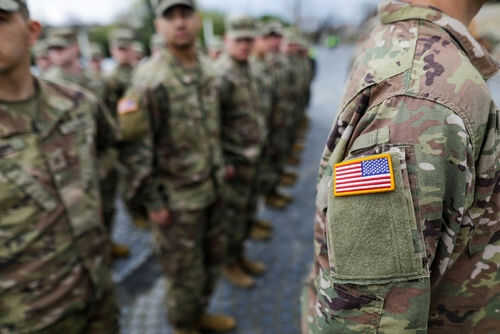
The U.S. Army updated Army Regulation 601–210 on March 20, 2026, raising the maximum enlistment age to 42 and eliminating the waiver requirement for applicants with a single prior conviction for marijuana possession or drug paraphernalia. The changes take effect April 20, 2026 and apply across the Regular Army, Army Reserve, and National Guard. The Army’s minimum age remains 17 with parental consent, or 18 without it.
The Army’s stated rationale is straightforward: expand the recruiting pool and reduce friction in processing otherwise-qualified applicants. Officials have pointed to alignment with Department of Defense standards and the reality that marijuana laws vary widely by state. For many conservative families, the headline tension is real—standards matter, but so does filling units during wartime without turning the country toward coercive solutions later.
Why the Army Is Doing This Now: Recruiting Math and a Changing Applicant Pool
The age change also fits a broader pattern after recruiting turbulence earlier in the decade. Reporting cited Army recruiting shortfalls in 2022 and continued pressure in 2023, followed by reforms that included new prep pathways and updated outreach. Data referenced in coverage indicates the average recruit age has been trending upward, reflecting a labor market where the Army increasingly competes for skilled adults, not just teenagers coming straight out of high school.
Raising the cap to 42 also brings the Army closer to other branches: the Air Force and Space Force already allow enlistment up to 42, while the Navy and Coast Guard sit at 41. The Marine Corps remains far lower at 28, though waivers can apply. From a policy standpoint, standardizing eligibility can simplify recruiting messages and help the Pentagon distribute manpower needs more predictably—especially when global commitments tighten and deployment cycles speed up.
What RAND and CNAS Say: Better Qualifications, But Higher Training Risk
Analysts have been explicit that the trade-offs cut both ways. RAND’s research cited in coverage found older recruits can outperform younger peers on tests and can be more promotable, with potential improvements in retention. At the same time, the reporting also flags a known downside: older recruits can face higher risk of early attrition and basic training challenges. That matters because an enlistment contract does not automatically equal a trained soldier available for deployment.
That practical reality is where many conservative voters are likely to focus: the country needs readiness, not slogans. If an age expansion brings in mature candidates with technical and leadership skills, units can benefit quickly—especially in specialties where civilian experience translates. If training pipelines become clogged by avoidable washouts, the Army can burn time and money while still coming up short on ready forces, which is the opposite of strategic discipline.
Iran War Backdrop and the Selective Service Question Americans Don’t Want Ignored
The timing inevitably hits political nerves. The rule change arrives amid heightened Middle East tensions involving Iran and broader U.S. military posture, while the FY 2026 NDAA includes provisions tied to modernizing Selective Service systems. Many voters who backed Trump for border security, energy sanity, and a less ideological government are also openly skeptical of open-ended foreign entanglements. That skepticism has only intensified as energy costs rise and war aims are debated.
Based on the available reporting, the Army’s policy update is not described as a step toward reinstating the draft, and it does not change the minimum enlistment age. Still, it signals that leaders are preparing for a wider recruiting market at a moment when Americans are asking hard questions about manpower, mission clarity, and constitutional boundaries. Limited data is available beyond the regulation change and expert commentary, so broader intent should not be assumed.
Sources:
US Army raises enlistment age to 42, drops marijuana waiver rule in major 2026 overhaul
Army raises maximum enlistment age to 42
Army raises maximum enlistment age to 42
Army enlistment age, marijuana waiver