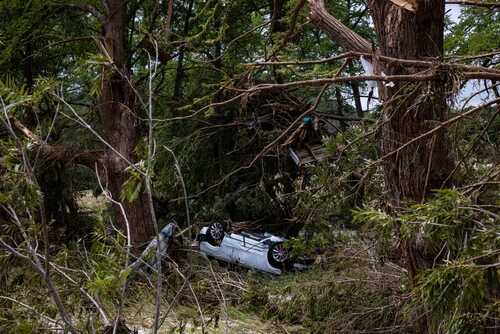
Newly released 911 tapes from the deadly July 4, 2025, Texas Hill Country floods reveal in harrowing real-time how children’s desperate pleas for rescue went unanswered as an overwhelmed emergency system buckled. The recordings, arriving five months after the tragedy that claimed 27 lives at the century-old Camp Mystic and over 130 statewide, intensify scrutiny of government preparedness, flood planning, and why a historic girls’ camp was left tragically vulnerable in a known flood corridor.
Story Snapshot
- 911 recordings from the July 4, 2025 Texas Hill Country floods capture terrified girls at Camp Mystic begging for help as water rapidly engulfs cabins.
- Dispatchers fielded more than 400 calls in a short window, forcing triage decisions that left some callers abruptly cut off while others waited on hold.
- The tragedy killed 27 people at the century‑old Camp Mystic and over 130 statewide, intensifying scrutiny of flood planning, land use, and camp safety rules.
- Families are demanding accountability for why a historic girls’ camp sat in a known flood‑prone corridor without stronger evacuation triggers or safeguards.
Harrowing 911 Audio From Camp Mystic’s Final Minutes
Newly released 911 calls from the July 4 holiday flooding in the Texas Hill Country capture the final, desperate minutes inside Camp Mystic as water swallowed a century‑old girls’ camp along a swollen river. Callers describe water rising from cabin floors to chests in minutes, while young voices plead for someone to come before buildings give way. Dispatchers, already inundated, rush to collect locations and headcounts, then move to the next ringing line, knowing some callers may not live.
The recordings arrive five months after the flood, when 27 campers and staff, including the camp owner, died at Camp Mystic and more than 130 Texans were killed statewide as rivers and creeks exploded out of their banks. The audio confirms what families feared: the water rose far faster than most had been led to expect, emergency routes were cut off, and by the time some campers reached second stories and attics, there was nowhere higher to go.
Hundreds of 911 calls placed during the Fourth of July Texas flood that killed over 130 people including 27 girls and staff at Camp Mystic have been released. Many of the callers didn't survive. @TrevorLAult has more. https://t.co/h0gm92bjrJ pic.twitter.com/iE9SUBad9V
— World News Tonight (@ABCWorldNews) December 6, 2025
Overwhelmed 911 System and Limited Rescue Options
Kerr County and neighboring dispatch centers, built for normal rural call volumes, were slammed with more than 400 emergency calls in a compressed window as storms stalled over the Hill Country. Operators had seconds per caller, often forced to interrupt panicked descriptions with focused questions about addresses, cross streets, or cabin names before ending conversations to answer the next ringing line. In some cases, callers were told that crews would come “as soon as they can,” even as roads were already washed out.
First responders on the ground faced a battlefield shaped by terrain and timing rather than intent. Narrow canyon roads disappeared under torrents, low‑water crossings became impassable, and nightfall turned the landscape into a black wall of moving debris. Even high‑profile vehicles and boats had limited access in the worst hours. The combination of darkness, current speed, and sheer distance between trapped families meant that, despite heroic individual rescues, many pleas captured on the tapes could never be answered in time.
Historic Camp in a Known Flood Corridor
Camp Mystic, a beloved girls’ camp with a hundred‑year legacy near Kerrville, sits along a river in one of North America’s most flash‑flood‑prone regions. The same steep hills and rocky soils that make the Hill Country beautiful also channel water into deadly surges when intense storms park overhead. Past Texas floods in similar corridors had already shown how quickly small creeks can become walls of water, destroying homes, crossings, and camps in a matter of minutes rather than hours.
Over decades, development up and down these rivers has pushed more homes, resorts, and youth camps into low‑lying areas to capture waterfront views and recreation. Regulatory frameworks for youth camps emphasize health, staffing, and basic safety, but flood‑specific standards – such as required vertical escape routes, mandatory evacuation triggers for forecast river levels, or minimum elevation for sleeping quarters – have often been left to local discretion. That patchwork left Camp Mystic operating in a high‑risk corridor with protections that, in hindsight, were tragically inadequate for a holiday weekend at full capacity.
Accountability, Preparedness, and Conservative Concerns
The release of the 911 calls is now fueling calls for a hard review of who knew what, and when, about the storm’s potential and the camp’s vulnerability. Families are pressing to reconstruct a minute‑by‑minute timeline of weather warnings, county alerts, internal camp decisions, and rescue attempts. They want to know why a riverfront camp full of minors remained occupied in the hours before floodwaters surged, and whether earlier evacuation could have moved girls to higher, safer ground before roads vanished.
For constitutional conservatives, the tragedy underscores a familiar tension: Washington and blue‑state bureaucracies endlessly fund climate conferences, diversity offices, and pet projects, yet frontline systems like rural 911 centers, disaster‑grade communications, and flood‑resilient infrastructure remain underbuilt. Limited, competent government means prioritizing core duties – public safety, clear land‑use standards, and transparent risk information – over ideological agendas, so parents are not left trusting institutions that fail them when seconds matter.
Lessons for Camps, Communities, and Policymakers
The Camp Mystic flood is likely to reshape how camps across Texas and beyond handle riverfront property, severe weather, and duty of care to minors. Expect tougher demands from insurers and parents for formal flood‑risk assessments, written evacuation plans, and physical escape options to truly higher ground, not just a second story above a floodplain. Other camps will study these tapes as a checklist of what must be in place before the next stalled storm system targets a canyon full of sleeping children.
Emergency managers are also examining how to keep 911 from collapsing under the weight of hundreds of simultaneous calls. Potential reforms include regional overflow routing, better automatic location tools that reduce time spent confirming addresses, and mass alert systems that deliver targeted instructions without forcing every scared resident to dial for help. Done correctly, those upgrades can strengthen local control and resilience without inviting heavy‑handed federal overreach into every dispatch center and private camp decision.
Watch the report: Camp Mystic 911 calls released from night of Texas flood | Morning in America
Sources:
911 calls reveal chaos as Texas floods swept Camp Mystic and beyond | New York Post
911 calls reveal terror of July 4 floods as those trapped in attics and camp cabins beg for help