

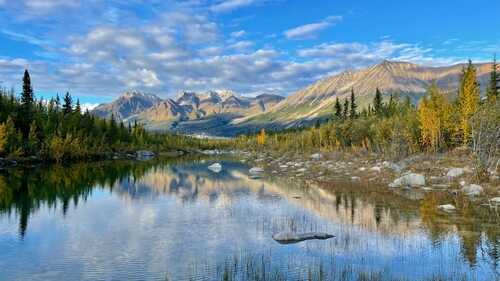
A sprawling expanse in Alaska is the nation’s largest national park, yet its remoteness and low profile leave it overlooked by most travelers.
At a Glance
- Wrangell–St. Elias National Park and Preserve spans approximately 13.2 million acres, making it the largest park in the U.S.
- Nearly 60 percent of Alaska’s glacial ice resides within its boundaries.
- The park alone covers more area than the combined size of the 47 smallest US national parks.
- It contains the world’s largest piedmont glacier and longest valley glacier.
- Visitation remains low—fewer than 80,000 visitors in recent peak seasons, despite its vast scale.
Monumental Scale and Glacial Majesty
Wrangell–St. Elias encompasses over 13 million acres—larger than Vermont, New Hampshire, and Rhode Island combined. Its park area alone exceeds the combined acreage of the 47 smallest U.S. national parks. Nearly two‑thirds of the park is designated wilderness, making it the nation’s largest continuous wilderness landscape.
This is a world of extremes: more than 60 percent of Alaska’s ice lies here, including Malaspina Glacier (North America’s largest piedmont glacier), Hubbard Glacier (the longest tidewater glacier in Alaska), and Nabesna Glacier (the world’s longest valley glacier).
🎥 Watch now: Wrangell–St. Elias National Park – America’s Largest Park · YouTube
The landscape includes some of North America’s highest peaks—Mount Saint Elias, Mount Blackburn, Mount Bona and Mount Sanford—all towering above 16,000 feet.
Remote Access, Rich History, Overlooked Beauty
Despite its scale, the park is difficult to reach. Visitors typically use two rough gravel routes—McCarthy Road (60 miles from Chitina) or Nabesna Road from the north—or charter small aircraft to remote airstrips. Many areas, especially along the Yakutat coast, are accessible only by boat or flight.
Historic Kennecott, accessible via the McCarthy Road, preserves one of the richest copper mining operations ever and its abandoned buildings are designated as a National Historic Landmark district.
Even in summer, visitation stays modest—around 79,000 in 2018—compared to parks in the contiguous U.S., making it one of the least-visited national parks despite its significance and scale.
Why It Deserves More Attention
Wrangell–St. Elias delivers unmatched wilderness immersion: immense glaciers, towering volcanic peaks, braided rivers, and dense subalpine ecosystems. Wildlife includes grizzly and black bears, caribou, Dall sheep, timber wolf, and migrating whales along the coast.
Its UNESCO-recognized landscape forms part of an international World Heritage Site shared with parks in Canada and Alaska, connected through glacial and ecological continuity.
Yet the park’s remote nature and rough access routes keep it off most travelers’ radars, preserving both its pristine character and relative anonymity.