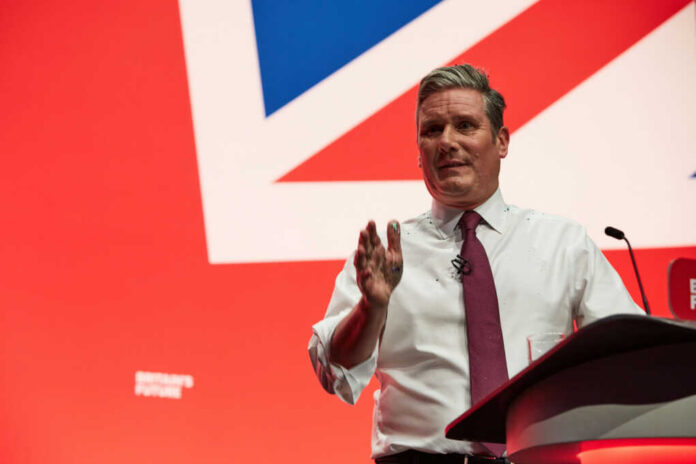
A UK prime minister is fighting for political survival after admitting he approved a top ambassador appointment even though security vetting had flagged a relationship with Jeffrey Epstein.
At a Glance
- Prime Minister Keir Starmer confirmed he knew Peter Mandelson’s Epstein relationship had been raised during vetting when Mandelson was appointed U.S. ambassador in 2025.
- Mandelson was sacked in September 2025 after emails surfaced alleging he shared government information with Epstein while in office years earlier.
- Opposition leaders are demanding transparency, including release of vetting documents, while police have warned disclosures could affect an active investigation.
- The UK’s Ministerial Code and the Independent Adviser’s authority are central as pressure builds for an investigation into Starmer’s judgment.
Starmer’s admission turns an appointment scandal into a credibility crisis
Prime Minister Keir Starmer told the House of Commons on February 4, 2026, that he knew Peter Mandelson’s relationship with Jeffrey Epstein had been flagged in the vetting process when Mandelson was appointed as the UK’s U.S. ambassador in 2025. That admission shifted the controversy from a personnel mistake into a direct test of Starmer’s decision-making and candor. The government’s core defense is that Mandelson misrepresented the relationship during due diligence.
Peter Mandelson was dismissed from the ambassador role in mid-September 2025 after incriminating emails were discovered. Reports cited in the available research say Downing Street held those emails for roughly 48 hours before acting. Mandelson later resigned from the House of Lords, and the government began steps toward legislation to strip his life peerage. A criminal investigation for misconduct in public office is underway, though public details about the evidence remain limited.
What the emails allegedly show, and why “vetting” now matters
The most serious allegations center on Mandelson’s time as a senior minister during the financial crisis era. According to the research summary, emails from 2009 indicate Mandelson shared market-sensitive government material with Epstein, including aspects of the UK’s economic plan, European bailout terms, and information connected to Gordon Brown’s resignation after the 2010 election. Those claims, if substantiated, would go beyond personal impropriety into the realm of confidentiality breaches and national security exposure.
The UK political fight is now focused on process: who knew what, when, and what was done about it. The government has agreed in principle to release vetting documents, but the Metropolitan Police has urged caution about disclosures that could undermine the ongoing criminal investigation. That tension—transparency versus investigative integrity—has become a political battleground. If documents are delayed or heavily redacted, public trust could erode further, regardless of what the files ultimately contain.
Ministerial Code pressure: can the Prime Minister be investigated?
A key question is whether Starmer’s conduct meets the UK Ministerial Code’s expectations for the “highest possible standards” in government. Constitutional scholar Mike Gordon wrote there is at least a plausible argument that appointing Mandelson while aware the Epstein relationship was flagged could fall short of those standards, even if the Code’s broad language leaves room for interpretation. The Independent Adviser on the Ministerial Code has the power to initiate investigations, raising the stakes for Starmer personally.
Recent UK history adds context for why this matters. The research notes the 2022 “partygate” episode, when Independent Adviser Lorraine Geidt criticized then-Prime Minister Boris Johnson over Ministerial Code accountability and later resigned, alleging pressure to approve breaches of the Code. That precedent underscores how the Code can become a constitutional flashpoint: it is not only about optics, but about whether standards apply consistently at the top. In the Mandelson case, the Adviser’s next steps could shape expectations for future prime ministers.
Opposition demands grow as UK governance questions pile up
Opposition leaders have framed the scandal as a national security and governance failure. Conservative leader Kemi Badenoch has demanded “full transparency” and broad release of “Mandelson-Epstein files,” while other figures have argued the affair reflects deeper problems in how elite appointments get waved through. Former Prime Minister Rishi Sunak described the vetting setup as a “totally mad system,” arguing that inadequate “developed vetting” can leave officials vulnerable to blackmail or compromise.
Even within Labour circles, the research describes a darkening mood as Starmer’s admission reverberates. Labour MP Wes Streeting publicly called Mandelson’s actions a “terrible betrayal” and “outrageous,” signaling internal damage control. Meanwhile, Liberal Democrat leader Ed Davey characterized the scandal as a grievous security breach and stressed accountability alongside justice for Epstein’s victims. With multiple parties aligned on transparency demands, Starmer faces sustained pressure rather than a short-lived media cycle.
For U.S. readers who lived through years of elites dodging consequences, the UK drama is a familiar warning: when politically connected figures get special handling, the public ends up paying the price in broken trust. The available research does not yet show how the criminal probe will conclude or whether the Independent Adviser will formally investigate Starmer. But the facts already on record—vetting flags acknowledged, an appointment made, and later dismissal after emails surfaced—ensure the scandal will keep testing UK institutions for months.
Sources:
Relationship of Peter Mandelson and Jeffrey Epstein