Trump’s Tariff Threat: Beijing’s Iran DILEMMA
Trump just put Beijing on the spot: keep bankrolling Iran’s regime—or face real economic consequences.
Quick Take
- President Trump told China’s Xi Jinping the U.S. is pressing Beijing and other trading partners to break from Iran as nuclear tensions rise.
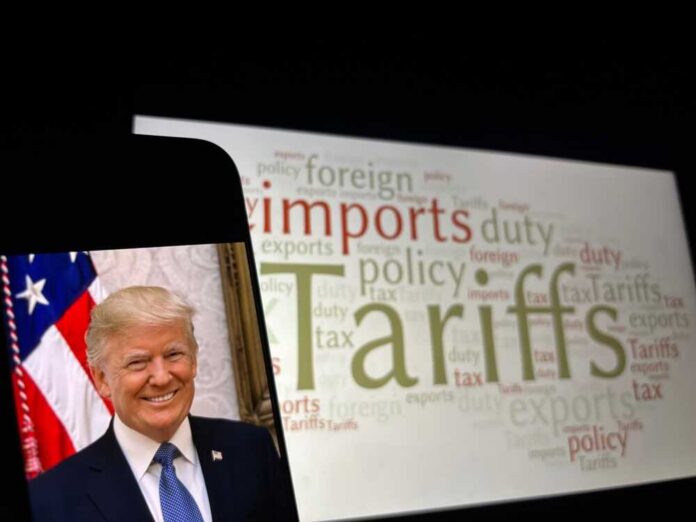
- The White House is tying Iran pressure to economic leverage, including a 25% tariff threat aimed at countries that keep trading with Tehran.
- China’s official readout notably omitted key U.S. points—especially Iran and a potential Trump visit—highlighting competing narratives.
- U.S.-Iran talks are scheduled for Feb. 6 in Oman, but U.S. officials signaled skepticism about a breakthrough.
Trump Elevates Iran Pressure in Direct Call With Xi
President Donald Trump used a wide-ranging Feb. 4 phone call with Chinese leader Xi Jinping to raise Iran “directly,” as the administration pushes to isolate Tehran economically while warning of consequences if Iran advances its nuclear program. U.S. reporting described the conversation as covering Iran, trade, and Taiwan, with Trump publicly emphasizing the importance of maintaining a workable U.S.-China relationship even amid sharp disagreements.
China’s public summary told a different story. Beijing emphasized overall ties and summit-style diplomacy, while omitting mention of Iran and other points highlighted in U.S. accounts, including talk of a possible Trump visit. That gap matters because the Iran file hinges on whether major buyers—especially China—keep Iran’s economy afloat. When official readouts diverge, it often signals unresolved friction behind the scenes.
POLYMARKET | IRAN x UNITED STATES DIPLOMATIC MEETING
CONTEXT
Trump held a strategy call with Xi Jinping today to consolidate maximum pressure ahead of any potential meeting (threat of 25% tariffs on those who trade with Iran)
Istanbul is the US preference but Iran is… pic.twitter.com/MOwlexWWNy
— Sirius (@SiriusTrader_) February 4, 2026
Tariffs and Trade as Leverage Against Tehran’s Lifeline
Trump’s approach pairs diplomacy with economic pressure. In January, the administration announced a 25% U.S. import tariff aimed at countries that continue trading with Iran, seeking to squeeze Tehran’s external revenue. The leverage is significant because China is described as Iran’s top trading partner, with U.S. reporting citing roughly $32 billion in China-Iran trade in 2024 even as sanctions remained in place.
The broader context is a region still on edge after major escalation in 2025. Reporting cited a June 2025 conflict involving Israel and Iran, and U.S. strikes on three Iranian nuclear sites, actions that reportedly delayed—rather than ended—Iran’s nuclear progress. The administration’s current push appears designed to convert military deterrence into diplomatic results by making Iran’s economic backers calculate the price of continued cooperation.
Oman Talks Set, but Public Signals Point to Low Trust
High-level U.S.-Iran talks are now scheduled for Feb. 6 in Oman, according to reporting that said the venue shifted from Turkey. The U.S. side publicly conveyed skepticism about the odds of success, a notable stance for negotiations at this level. Special envoy Steve Witkoff is identified in reporting as leading talks, with the administration seeking nuclear concessions as the immediate objective.
For American voters who watched years of confusing Iran policy and mixed messages from global institutions, the key detail is the administration is signaling clarity: pressure first, diplomacy second, and consequences if stalling continues. That posture also reduces the risk of open-ended concessions by insisting Iran’s leadership meet concrete benchmarks. The available reporting does not detail terms under discussion, limiting what can be confirmed beyond timing and participants.
China-Russia Coordination and the Strategic Clock on Nuclear Risk
The same week as the Trump-Xi call, Xi also spoke with Russia’s Vladimir Putin, reinforcing a Beijing-Moscow alignment that complicates U.S. objectives on Iran and beyond. The timing overlaps with the Feb. 5 expiration of the New START treaty, which ends caps on U.S.-Russia strategic arsenals. U.S. reporting said Trump has pushed for including China in future arms control arrangements, a major shift from earlier frameworks.
Vice President JD Vance’s push for mineral “self-reliance” adds another layer: Washington is pressing to reduce reliance on China-linked supply chains while confronting Iran’s network of trade partners. For a conservative audience wary of globalism, the through-line is straightforward—economic independence at home strengthens negotiating power abroad. The reporting suggests this is a coordinated posture, though it remains early in measuring results.
Sources:
https://www.fdd.org/analysis/2026/02/02/trump-administration-foreign-policy-tracker-february-2/
https://abcnews.go.com/US/wireStory/trump-discussed-iran-chinas-xi-us-pushes-beijing-129851945
https://www.brookings.edu/articles/three-potential-pathways-for-us-china-relations-under-trump/
https://www.cfr.org/articles/iran-is-a-test-of-trumps-national-defense-strategy
https://www.fmprc.gov.cn/mfa_eng/xw/fyrbt/202601/t20260113_11812020.html