German Catholic leaders are pressing Rome to rewrite who holds authority in the Church—and the fight over lay preaching and governance is quickly becoming a stress test for unity.
Quick Take
- Germany’s bishops approved statutes for a permanent “Synodal Conference” that would formalize bishops-and-laity cooperation at the national level.
- The same February 2026 meeting also backed a framework to allow commissioned lay men and women to deliver homilies at Mass, despite a prior Roman rejection.
- New German bishops’ conference president Bishop Heiner Wilmer said he would personally bring both proposals to Rome for formal approval under canon law.
- Vatican officials have previously warned Germany it cannot create a body that overrides bishops’ authority or creates parallel governance.
What Germany Actually Sent to Rome—and Why It Matters
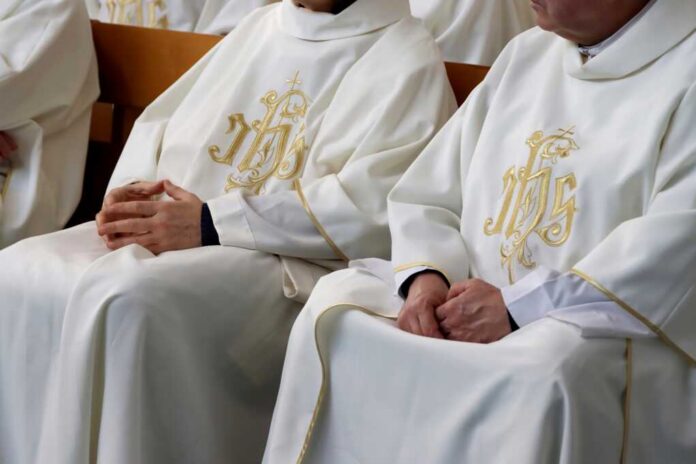
German bishops meeting in Würzburg from Feb. 23–26, 2026 approved two documents they intend to submit to the Vatican for recognitio, the canonical “green light” required for certain national rules. The first is a statute establishing a permanent Synodal Conference—an ongoing national structure involving bishops and lay representatives. The second is a regulatory framework that would permit “spiritually qualified” lay people, commissioned by bishops, to preach homilies during Mass.
Bishop Heiner Wilmer, newly elected president of the German Bishops’ Conference, said he would personally deliver the texts during an upcoming Rome visit, presenting the move as transparent and aligned with the Church’s broader conversation about synodality. That framing matters because, in church law, the terms sound similar while the stakes are wildly different: consultation can be encouraged, but decision-making power is reserved to bishops in communion with the pope.
Rome’s Core Objection: Parallel Authority and “Binding” Structures
The Vatican’s resistance is not new, and it is not vague. In 2022 and 2023, Rome warned German leaders they lacked authority to establish national bodies that could make binding decisions over bishops, or effectively supervise episcopal governance. A 2023 intervention rejected the concept of a permanent Synodal Council that could be interpreted as standing above bishops’ authority. That history hangs over today’s “Synodal Conference” proposal, even if Germany argues the new text is more carefully drafted.
From a conservative standpoint, the heart of the dispute is clarity about who is accountable to whom. In Catholic structure, bishops are not CEOs hired by a board; they hold office through apostolic succession and govern their dioceses in hierarchical communion with the pope. When national structures blur that line—especially with equal voting blocs or compliance mechanisms—Rome reads it as a constitutional problem inside the Church. That is why German assurances that synodality “strengthens” bishops still run into legal limits.
Lay Homilies: A Test Case for Canon Law and the Meaning of “Ordained”
The lay-homily plan is the more visible flashpoint because it touches the Mass itself, not just internal governance. Rome previously rejected a similar proposal in 2023, and canon law places specific guardrails around preaching at Mass. Germany’s new framework emphasizes that lay men and women would be commissioned by bishops and described as “spiritually qualified,” an attempt to show pastoral care rather than rebellion. But the fundamental question remains: can a national conference normalize what Rome has already said no to?
Supporters argue that allowing well-trained laity to preach could address shortages, improve catechesis, and reflect the gifts of the baptized—especially after abuse scandals damaged trust in clerical leadership. Critics counter that changing liturgical norms through national pressure campaigns risks turning worship into a political battleground, with doctrine and sacramental roles negotiated like policy. Even if the goal is better preaching, the Vatican is likely to measure the proposal against universal law, not local frustration.
Why This Isn’t Just “German Church Drama”
Germany’s church has faced intense membership decline and public credibility loss, and leaders have argued that structural reform is necessary to stabilize parish life. The German Synodal Way launched in 2019 in direct response to the abuse crisis, then produced votes through 2023 that mandated ongoing synodal structures. Those votes created momentum that is now being translated into statutes and rulebooks. The Vatican, however, has repeatedly signaled that crisis response cannot become a justification for national autonomy.
The next major milestone is the planned May 2026 Katholikentag in Würzburg, where Cardinal Mario Grech is expected to appear—an optics-heavy moment for “universal and local” synodality. But the practical decision remains in Rome: recognitio can be granted, amended, or denied. If approval comes only with strict limits—advisory-only authority, no binding votes, no blurred lines on homilies—Germany could face internal backlash. If Rome refuses again, tensions could deepen with real consequences for unity.
Sources:
Vatican rejects proposed governing council of bishops and laity in Germany
German Bishops Ask Vatican to Allow Lay People to Give Homilies Despite Rejection in 2023
German bishop dismisses Vatican concerns over a permanent synodal council
German bishops adopt text of ‘Synodal Conference’
German bishops to ask Rome to permit lay homilies
German Bishops to Ask Rome to Permit Lay Homilies