
Secretary of War Pete Hegseth has ended decades-old gun-free zone policies on military bases, finally allowing our trained service members to exercise their Second Amendment rights where they live and work—a common-sense move that should never have required a fight in the first place.
Story Snapshot
- Hegseth signed a memorandum on April 2, 2026, authorizing off-duty service members to carry privately owned firearms on military installations across the United States
- The policy establishes a presumption of approval for carry requests, with commanders required to provide written justification for any denials
- Secretary invoked past active-shooter incidents at Fort Stewart, Holloman Air Force Base, and Pensacola Naval Air Station as evidence that gun-free zones left personnel vulnerable
- The move comes amid broader Pentagon leadership shakeups and ongoing military operations in the Iran war
Ending Gun-Free Zones on Military Property
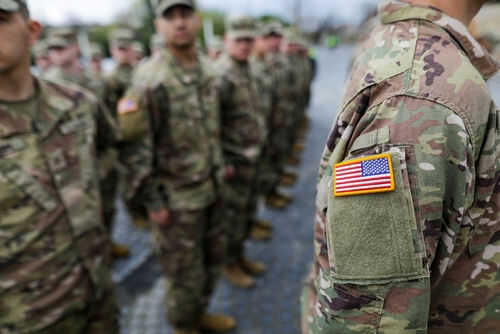
Secretary Hegseth’s memorandum, titled “Non-Official Personal Protection Arming on Department of War Property,” directs installation commanders nationwide to process requests from uniformed service members seeking permission to carry personal firearms while off-duty on base. The policy explicitly invokes Second Amendment protections and establishes a default approval posture, requiring commanders to provide detailed written rationale for any denial. This reverses longstanding restrictions under War Department Manual 5200.08 that made personal firearm carry virtually impossible, even for highly trained military personnel on their own installations.
“Our military installations have been turned into gun-free zones—leaving our service members vulnerable and exposed. That ends today,” Hegseth declared in a social media video announcing the policy change. The Secretary’s statement underscores a fundamental frustration many conservatives share: why should America’s most rigorously trained warriors be disarmed in their own workplaces while threats persist? The policy draws authority from Section 526 of the FY2016 National Defense Authorization Act, which authorized service secretaries to permit personal carry when deemed necessary for protection—a provision largely ignored until now.
Learning From Tragedy and Targeting Vulnerability
The memorandum cites specific active-shooter incidents at Fort Stewart, Holloman Air Force Base, and Pensacola Naval Air Station as evidence that response delays cost lives when trained personnel cannot immediately counter threats. These tragedies illustrated what Hegseth described as the reality that “minutes are a lifetime” during attacks on gun-free zones. Post-1990s Department of War policies prioritized centralized force protection over individual rights, driven by bureaucratic concerns about accidents or theft rather than constitutional principles or operational readiness during emergencies.
The timing of this policy shift matters beyond Second Amendment restoration. It emerges amid what officials describe as sustained military operations in the Iran war and sweeping Pentagon leadership changes, including Hegseth’s concurrent order for Army Chief of Staff Gen. Randy George to step down. These developments signal a broader recalibration of military priorities under the current administration, moving away from Obama-era risk-aversion policies toward empowering warfighters. For service members stationed at installations now aligned with state firearm laws, the policy provides both personal protection capability and recognition of their professional competence.
Constitutional Rights Restored, Questions Remain
The policy requires the Undersecretary of War for Intelligence and Security to update relevant security manuals, with implementation proceeding as commanders begin processing carry requests under the new approval presumption framework. Installation permitting officials must conduct what the memo terms “dispassionate” reviews, balancing force protection with constitutional rights. Pentagon Force Protection Agency personnel also gain authority to approve firearm storage in vehicles on the Pentagon Reservation per federal regulations, extending protections to the department’s headquarters.
This represents a long-overdue correction that treats service members as trusted professionals rather than potential liabilities. The policy affirms that Americans in uniform retain their constitutional rights even on federal property, setting a precedent that could influence broader debates about gun-free zones elsewhere. While bureaucrats may have preferred leaving our warriors defenseless for decades, Hegseth’s directive prioritizes both their safety and their liberties—principles that should never have been in conflict.
Sources:
US Ends Gun-Free Zones on US Bases, Invoking Second Amendment – Turkiye Today
Service Members Can Now Carry Personal Weapons on Military Bases, Hegseth Says – Fox 13 News