CBS pressed Florida’s Byron Donalds to defend Haitian Temporary Protected Status workers, and he answered with the law, the facts, and a plan.
Story Highlights
- Donalds said Haitian Temporary Protected Status was always temporary and cited federal terminations.
- CBS framed Haitian workers as vital to Florida healthcare and asked about replacements.
- Donalds pointed to internships, apprenticeships, and training for Florida students.
- Federal records confirm Haiti’s Temporary Protected Status ended in 2025–2026.
What Donalds Said On Air And Why It Matters
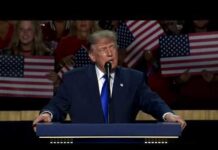
Rep. Byron Donalds told CBS host Margaret Brennan that Haitian Temporary Protected Status is, by law, temporary, and should not become a permanent pipeline into Florida’s workforce. Brennan asked if Florida could replace “100,000 Haitians who work in healthcare” if deportations follow. Donalds answered that Florida must train its own people through internships and apprenticeships in fields like healthcare, not outsource labor planning to a temporary program. His remarks matched the statute’s design and recent federal actions ending Haiti’s Temporary Protected Status.
The exchange did more than spar over numbers. It drew a clear line between media claims about labor disruption and the legal framework Congress wrote. Temporary Protected Status lets people stay and work for short periods during crises. It is not a backdoor to permanent residence. Donalds argued Florida should not hinge critical services on a status Washington can end. He said the state should expand vocational pathways so graduates can step into jobs across key sectors.
The Law: Temporary Means Temporary
Federal notices and court coverage back the core point. The Department of Homeland Security terminated Haiti’s Temporary Protected Status after deciding the country no longer met the conditions for the designation. A July 2025 Federal Register notice announced termination, and United States Citizenship and Immigration Services later confirmed the end took effect in 2026. The design of Temporary Protected Status gives the executive branch the power to end it when conditions change. That is why leaning on it for staffing is risky policy.
Legal analysis of recent Supreme Court rulings explains that Congress barred courts from second-guessing these Temporary Protected Status designation and termination calls. That means the executive can extend or end designations without judicial review, further proving the status is a discretionary tool, not a permanent entitlement. When the government ends a designation, work authorization tied to it ends, too. That reality supports state plans that build local talent rather than depend on a federal switch that can flip off.
Florida’s Workforce Question And The Media Framing
CBS and local reporting stressed that Haitian workers are active in Florida healthcare and warned of strain if Temporary Protected Status ends. Brennan cited large headline figures and asked Donalds to explain how Florida would fill roles if those workers lose work authorization. Local officials also tied Temporary Protected Status to nursing homes, home health care, and hospitals. Donalds answered by outlining internships, apprenticeships, and targeted training to move Florida students into those jobs, showing a concrete path instead of panic.
Some estimates in the public debate vary. A Florida industry group cited about 35,000 Haitian immigrants working in the state’s healthcare system, many in long-term care roles. Those figures underscore a real staffing challenge. They also prove Donalds’s point that Florida needs steady pipelines that do not depend on a federal program designed to end. Training certified nursing assistants, medical assistants, and technicians can reduce risk over time if the state aligns schools, employers, and fast-track credentials.
Haiti Stabilization And Next Steps
Donalds said he met with Haiti’s transitional government and its ambassador to discuss security and stabilization. He tied that work to the rationale for ending Temporary Protected Status and encouraging safe return when possible. This shows he is not only criticizing policy at home; he is engaging the root problem abroad. If Haiti improves stability and services, fewer people will need emergency status in the United States, and Florida can plan its workforce without constant Temporary Protected Status cliffhangers.
Limits remain. Public sources do not supply sector-by-sector counts for how many Florida jobs depend on Haitian Temporary Protected Status or how fast training can close gaps. But the law is clear: Temporary Protected Status is temporary and subject to termination. Federal records confirm Haiti’s Temporary Protected Status has ended. Against that backdrop, Donalds’s answer favors common sense: invest in Florida workers, protect state services, and stop letting Washington’s on-again, off-again designations dictate who staffs our hospitals and nursing homes.
Sources:
townhall.com, cbsnews.com, thehill.com, nafsa.org, scotusblog.com