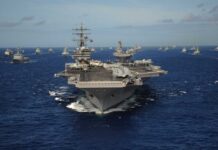
Operation Southern Spear marks a new chapter in the U.S. military presence in the Caribbean, reigniting discussions about American power and sovereignty. The U.S. military has deployed one of its most significant forces near the Venezuelan coast in decades, including the USS Gerald R. Ford Carrier Strike Group. Officially a massive counter-narcotics mission targeting “narco-terrorists,” the operation’s proximity to Venezuela and its alignment with aggressive rhetoric from the Trump administration have stirred regional tensions and carry significant strategic implications for U.S.-Latin American relations.
Story Overview
- U.S. military buildup in the Caribbean, near the Venezuelan coast, aims to combat drug trafficking.
- Operation Southern Spear involves one of the largest U.S. forces in decades, emphasizing counter-narcotics.
- Deployment includes advanced assets like F-35C fighters, signaling readiness against regional threats.
- The operation’s proximity to Venezuela stirs tensions, as it aligns with President Trump’s aggressive rhetoric.
Massive Military Deployment in the Caribbean
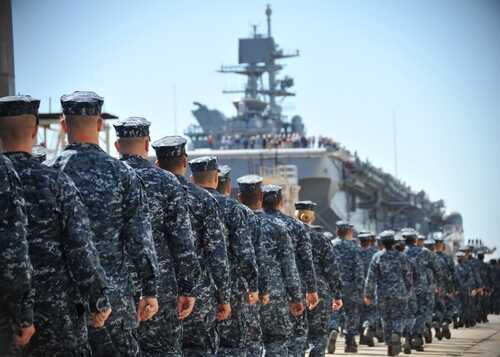
The U.S. military has deployed one of its most significant forces near the Venezuelan coast in decades, bringing the USS Gerald R. Ford Carrier Strike Group and the USS Iwo Jima Amphibious Ready Group into the Caribbean. This operation, known as Operation Southern Spear, aims to target “narco-terrorists” as part of a counter-narcotics mission. The deployment includes over 2,200 Marines from the 22nd Marine Expeditionary Unit, marking a significant escalation in the region.
This military buildup highlights the Trump administration’s aggressive stance on countering drug trafficking from Venezuela. By positioning U.S. forces just seven miles off the Venezuelan coast, the U.S. aims to demonstrate readiness against regional threats while explicitly avoiding any suggestion of an invasion. This operation represents the heaviest U.S. naval concentration in the Caribbean since the Cold War.
Strategic Implications of Operation Southern Spear
Historically, U.S. military engagement in the Caribbean has roots in Cold War-era interventions and post-9/11 counter-narcotics operations. Operation Southern Spear builds on this legacy, with U.S. Southern Command overseeing operations in South America and the Caribbean to ensure stability and drug interdiction. The current situation has escalated from months of drug-trafficking vessel interdictions, which led to military strikes destroying 23 alleged drug boats.
The operation’s proximity to Venezuela, under President Nicolás Maduro, who has been accused of enabling narco-terrorism, adds a layer of complexity to the strategic implications. The region faces hybrid threats from cartels, illegal arms, and drug flows, making the U.S. presence a critical factor in regional stability.
Massive US Marine Buildup in Caribbean Just 7 Miles from Venezuela’s Coast : r/AirForce
Impact and Reactions
The deployment of ~12,000 sailors and Marines, along with land-based assets, has significant implications for U.S.-Latin America relations. In the short term, it heightens deterrence against Maduro and cartels. However, there is a risk of escalation and miscalculation, given the operation’s scale and proximity to Venezuelan territory. In the long term, this move reshapes U.S. relations with Latin America toward a more aggressive posture, sustaining counter-narcotics efforts but possibly inviting retaliation.
Economic impacts include disrupting narco-trafficking revenues and boosting local economies through U.S. base operations. Socially, the operation reduces drugs and arms flow in partner nations like Trinidad and Tobago, although civilian casualty concerns persist. Politically, the operation strains U.S.-Venezuela ties, with increased congressional oversight signaling a shift in the Trump doctrine.
Watch the report: Trump’s escalating military campaign in the Caribbean Sea
Sources:
Massive US Marine Buildup in Caribbean Just 7 Miles from Venezuela’s Coast
Combat Rescue Aircraft, Tankers Arrive in Caribbean as U.S. Military Buildup Accelerates
Commander of U.S. Military Forces in Caribbean Relinquishes Command
US Hard Power Turns to Latin America and Caribbean