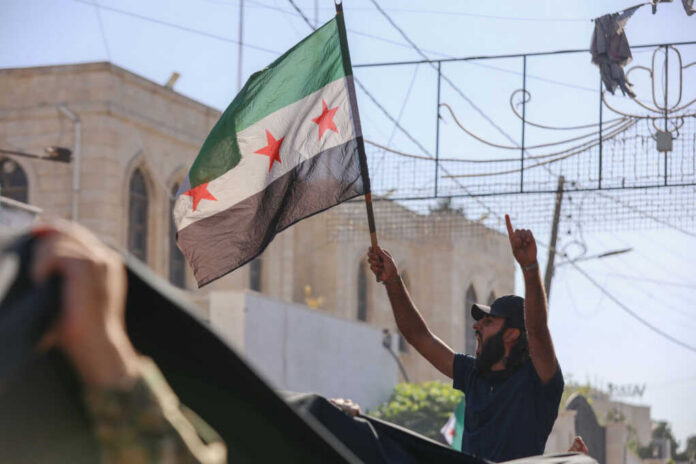
President Trump is ending a decade-long U.S. troop mission in Syria—but the real test is whether Washington can leave without creating the next ISIS vacuum.
Quick Take
- Reports say the U.S. is preparing to withdraw roughly 1,000 remaining troops from Syria within about two months.
- U.S. forces have reportedly begun handing over key sites, including positions tied to Al-Tanf and Shaddadi, as the footprint collapses.
- The drawdown follows a ceasefire and phased integration deal aimed at folding the Kurdish-led SDF/YPG into Syrian state structures.
- Officials cited in reporting argue the mission is no longer necessary, while analysts warn the security arrangement remains fragile.
Trump’s Complete Withdrawal Order and the Two-Month Clock
Reporting dated Feb. 19, 2026, says President Donald Trump has ordered a complete U.S. military withdrawal from Syria, targeting a full pullout within roughly two months. The remaining force is described as about 1,000 troops, a number that has varied slightly across prior estimates. The exit is portrayed as the end of a decade-long mission that began as a counter-ISIS campaign and later expanded into broader regional deterrence.
Base handovers are central to why this withdrawal appears different from the stop-and-start drawdowns of the past. Reports describe the transfer of key facilities—including locations associated with Shaddadi in northeastern Syria and the strategic Al-Tanf area—back to Syrian government control. Operationally, those handovers signal that U.S. forces are not merely repositioning inside Syria; they are dismantling the posture that enabled sustained partnering, detention operations, and rapid strike support.
How a Counter-ISIS Mission Drifted Into an Open-Ended Deployment
U.S. forces entered Syria in 2014–2015 under Operation Inherent Resolve to fight ISIS alongside local partners, particularly the Kurdish-led Syrian Democratic Forces and its YPG component. After ISIS lost its territorial “caliphate” by 2019, the mission continued with added goals described in reporting and analysis: preventing an ISIS resurgence, supporting Kurdish partners, and checking Iranian and Russian influence. Critics highlighted that this evolving mission lacked clear congressional authorization.
The political context shifted sharply after the Assad government was ousted in 2024 and an interim administration under Ahmed al-Sharaa took power, according to reporting. That regime change altered the basic U.S. rationale for staying embedded with the SDF as a quasi-state security partner in the northeast. The new approach described by multiple sources relies on Damascus taking over responsibilities that Washington previously helped shoulder—especially the management of detention sites and counterterror operations.
The SDF/YPG Integration Deal That Made Exit Possible—And Why It’s Still Risky
A key enabling factor cited in research is the series of ceasefire and integration steps between the SDF and the Syrian Army. Analysts point to a Jan. 18, 2026, ceasefire and a broader Jan. 30, 2026, agreement outlining phased integration of SDF/YPG elements into Syrian state structures, with U.S. pressure helping move the process forward. U.S.-linked reporting also claims the PKK/YPG threat is now “neutralized,” lowering the stated need for a U.S. backstop.
Outside analysis urges caution. The Newlines Institute argues the arrangement is fragile and lacks full consensus, warning that reduced U.S. deterrence can invite renewed violence or exploitation by ISIS remnants. That warning matters because Syria’s northeast has been defined for years by overlapping control, shifting alliances, and unresolved questions over command authority, territory, and resources. If the integration proves more paper than practice, the region could slide toward the same instability U.S. troops were meant to contain.
ISIS Detainees, Coalition Optics, and the Burden Shift to Damascus and Iraq
Detention and displacement issues sit at the center of the security debate. Reporting indicates the U.S. transferred 150 ISIS fighters to Iraq in early 2026, with the prospect of additional transfers, while other assessments note large detainee and camp populations tracked as recently as mid-2025. Meanwhile, reporting says Syria joined the Global Coalition to Defeat ISIS in November 2025, a symbolic step that supports the argument that Damascus is now positioned to take on counter-ISIS responsibilities.
From an America First perspective, the constitutional and fiscal question is simple: can the U.S. stop policing Syria without repeating the mistakes that turned limited counterterror missions into indefinite nation-building? Defense Priorities argues it is time for U.S. troops to leave and shift responsibility to regional actors, emphasizing that ISIS has been defeated territorially and that local stakeholders must own border security and governance outcomes. The counterpoint from other analysts is that capability gaps may surface quickly once U.S. air support and logistics are gone.
For Americans frustrated by years of globalist interventionism and open-ended deployments, the withdrawal is a clear strategic pivot: U.S. forces are being brought home, and Syria’s government is being told to carry the load. The unresolved issue is enforcement. The research shows no public, detailed plan for how detention security, strike authorities, and intelligence sharing will function after the last U.S. troops depart. With that uncertainty, the success or failure of this exit will be judged by one measurable outcome: whether ISIS reconstitutes in the vacuum.
Sources:
US Preparing to Withdraw All 1,000 Troops from Syria, Ending Decade-Long Mission
Trump orders complete withdrawal all troops from Syria within two months: report
The U.S. Is Moving Quickly to Leave Syria
End of YPG in Syria and the unfinished war with Daesh
It is time for US troops to leave Syria