

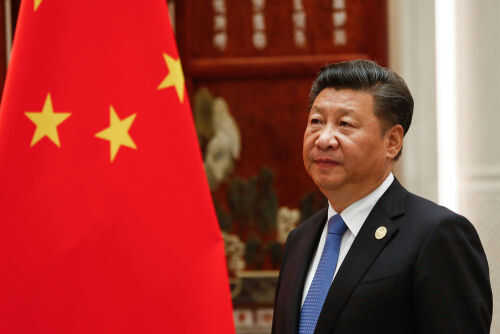
Operation Epic Fury didn’t just topple Iran’s leadership—it exposed how fast China can wrap a crisis in propaganda to protect its global ambitions.
Quick Take
- U.S. and Israeli strikes in late February 2026 reportedly killed Iran’s Supreme Leader and hit more than 1,000 targets in the first day, with AI-assisted decision-support playing a major role.
- Analysts say the operation undercut Beijing’s long-held narrative of U.S. decline and weakened China’s Iran-centered Middle East strategy.
- China’s response has leaned heavily on narrative management—UN-focused condemnations, controlled domestic coverage, and messaging aimed at Gulf and Belt-and-Road partners.
- The PLA appears to be studying AI-enabled U.S. operations while China’s broader influence machine tests “cognitive warfare” tactics in real time.
Epic Fury’s Shockwave Reached Beijing Within Hours
U.S. and Israeli forces began Operation Epic Fury (also described as Operation Roaring Lion) on February 28, 2026, launching a high-tempo air and missile campaign across Iran. Open-source describes leadership decapitation strikes that killed Iran’s Supreme Leader Ali Khamenei and follow-on waves that degraded air defenses, missile forces, and command structures. Analysts also highlighted the unusual scale and speed of targeting, enabled by AI decision-support tools used operationally.
China’s strategic problem is not only the battlefield result; it is the narrative collapse. Beijing spent years treating Iran as a durable counterweight to U.S. influence and as an energy and infrastructure partner tied to Belt and Road ambitions. When Iran’s leadership and systems were hit so rapidly, key assumptions behind China’s “East is rising, West is declining” storyline faced a public stress test. That kind of shock forces immediate information control at home and reputational triage abroad.
How Beijing Shapes Perception: Condemnation Abroad, Control at Home
Chinese officials publicly condemned the killing of Khamenei and emphasized sovereignty and the UN Charter, calling for an end to military action and a return to negotiations. That posture fits Beijing’s standard script: frame the U.S. as reckless and unilateral while presenting China as the “responsible” actor. Analysts observed, however, that the rhetoric did not obviously translate into concrete action—no visible military moves and limited high-profile diplomacy beyond statements and UN-style messaging.
Domestic narrative management appears designed to prevent Chinese audiences—especially elites—from fixating on American operational dominance. It describe tightly controlled coverage that minimizes U.S. effectiveness while highlighting instability, civilian risk, and the alleged illegitimacy of AI-enabled warfare. This is the practical side of “cognitive domain operations”: shape what people think happened, what it means, and what conclusions they are allowed to draw about U.S. power and China’s position.
Why the Gulf Information Fight Matters to China’s Wallet
China is economically exposed in the Gulf and surrounding energy corridors, where retaliation and spillover can threaten ports, oil infrastructure, and shipping confidence. Analysts argue that Epic Fury risks rocking China’s industrial base by pressuring energy flows and driving price volatility. That economic vulnerability helps explain why Beijing would work aggressively to influence Gulf partners’ perceptions—trying to keep them from concluding that only American hard power can secure the region when missiles start flying.
Evacuations of thousands of Chinese nationals from Iran and at least one Chinese citizen killed amid the conflict’s chaos. Those details complicate Beijing’s public posture, because they highlight that China had significant people and interests on the ground without an obvious way to protect them militarily. In a crisis, that gap becomes a propaganda problem: China must condemn U.S. strikes to satisfy some audiences while not provoking outcomes that further endanger Chinese nationals or assets.
AI on the Battlefield, “Cognitive Warfare” in the Background
Operation Epic Fury has been widely discussed as an early example of AI-enabled warfare at scale, with AI decision-support reportedly used for ISR fusion and target recommendations. That matters beyond Iran because it offers a live case study for the People’s Liberation Army, which has emphasized “intelligentized warfare” in its modernization planning. It notes Chinese procurement interest in decision-support systems and domestic “algorithmic sovereignty,” suggesting Beijing wants similar acceleration without Western-style ethical constraints.
The ‘Red Octopus’ Extends Its Tentacles: China’s Cognitive Warfare Amid Operation Epic Furyhttps://t.co/pibcQVpME3
— RedState (@RedState) March 7, 2026
For Americans concerned about sovereignty and constitutional culture at home, the key takeaway is that China’s information apparatus is not only about foreign audiences. The same techniques—narrative flooding, selective framing, and online influence—are designed to weaken confidence in U.S. leadership and institutions over time. Epic Fury shows the U.S. can still act decisively abroad; China’s counterplay is to erode the meaning of that reality, one storyline at a time.
Sources:
https://nanonets.com/blog/ai-warfare-operation-epic-fury-2026/
https://www.hudson.org/foreign-policy/why-operation-epic-fury-catastrophic-xi-zineb-riboua
https://internationalpolicy.org/publications/epic-fury-international-law/
https://www.nationalreview.com/2026/03/why-operation-epic-fury-is-catastrophic-for-xi/
https://substack.com/home/post/p-190167706?autoPlay=true