
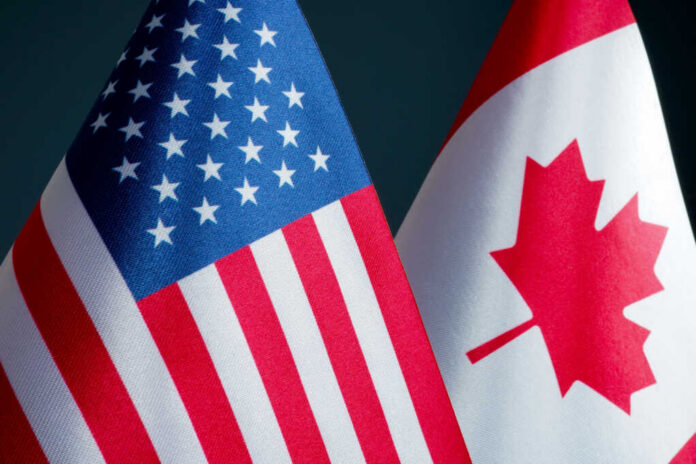
A rare bipartisan House vote just moved to undercut President Trump’s Canada tariffs—and it’s exposing a growing fight inside the GOP over who controls trade power and how America confronts fentanyl and border-linked threats.
Story Snapshot
- The Republican-controlled House passed a Democratic-led resolution, 219-211, to challenge Trump’s Canada tariffs by terminating the national emergency used to justify them.
- Several Republicans broke with party leadership, while one Democrat voted no, underscoring an unusual coalition built around cost-of-living concerns and congressional authority.
- Trump warned Republicans against voting to weaken tariffs, arguing that tariffs protect markets, security, and reduce deficits; the White House says the tariffs remain in place for now.
- The resolution is largely symbolic unless the Senate passes it and Trump signs it—or Congress overrides a veto, which is widely seen as unlikely.
House Vote Targets the Emergency Basis for Tariffs
House lawmakers voted Feb. 11 to advance a resolution aimed at rolling back tariffs President Trump imposed on Canada under an emergency declaration tied to drug flows such as fentanyl. The measure, led by Democrats, passed 219-211 even though Republicans control the chamber. The vote would end the emergency framework used to justify the tariffs rather than rewriting tariff rates directly, putting Congress’s wariness of executive emergency powers on public display.
President Trump’s tariff policy dates back to February 2025, when he signed an executive order imposing 25% tariffs on most Canadian goods and 15% on energy. The administration framed the action as a national-security response, bypassing normal trade procedures that typically run through agreements such as USMCA. In early 2026, Trump also threatened far steeper tariffs—up to 100%—after Canada discussed a potential trade arrangement with China.
GOP Defections Reveal a Real Split on Trade and Authority
The House outcome turned on a small group of Republicans who sided with Democrats despite pressure from leadership. Speaker Mike Johnson tried to slow the effort with a procedural move tied to waiting on judicial review, but the chamber still advanced the resolution and then passed it. One Republican lawmaker described the tariffs as poor economic policy and argued Congress should not simply wait for the courts to settle questions of legality.
Other Republicans opposed the resolution by stressing that the fentanyl crisis represents a genuine emergency, arguing the vote was missing the national-security stakes. That divide is important for conservative voters: one side emphasizes strict leverage and deterrence against cross-border trafficking and foreign pressure, while the other focuses on immediate consumer costs and the precedent of using emergency declarations to reshape trade without Congress fully in the driver’s seat.
Trump’s Warning Puts Midterm Pressure on Tariff Critics
After the vote, Trump publicly warned Republican lawmakers against breaking ranks on tariffs, saying those who vote against tariffs would face consequences at election time, including primary challenges. The political message is clear: Trump considers tariffs a core governing tool tied to security and negotiating leverage. The White House has also indicated the tariffs remain in force, reinforcing that a House vote alone does not change the policy.
What Changes Now—and What Doesn’t
The resolution now heads to the Senate, where previous anti-tariff votes have occurred despite Trump’s objections. Still, even if the Senate passes the measure, it would require Trump’s signature to take effect, or Congress would need to override a veto—an outcome viewed as unlikely based on the current political math. For now, businesses and consumers face continued uncertainty and potential cost pass-throughs while Washington debates strategy.
Canadian officials welcomed the House vote as a step toward restoring free trade, but they also acknowledged that more action is needed for any real change. For American conservatives, the immediate takeaway is less about Canada’s applause and more about the broader tug-of-war: how far Congress should go in reining in emergency-based executive action, and whether tariff policy should be treated as a security instrument, an economic tool, or both—especially in an election year.
Sources:
https://www.france24.com/en/americas/20260212-us-house-overturn-trump-canada-tariffs-bipartisan