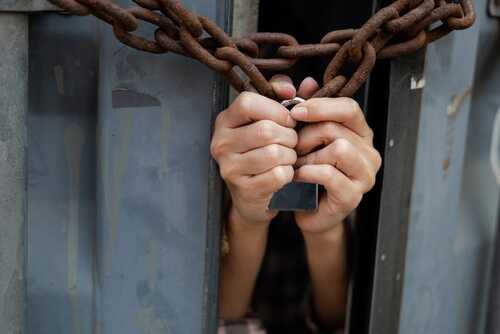
A South African court has sentenced seven Chinese nationals to 20 years in prison for trafficking and exploiting over 90 Malawian workers in Johannesburg.
At a Glance
- Seven Chinese nationals convicted of trafficking and forced labor in Johannesburg
- Over 90 Malawian victims, including minors, rescued from illegal factory
- Operation exposed by joint investigation involving multiple government agencies
- Sentencing marks one of South Africa’s toughest rulings on labor trafficking
Transnational Trafficking Network Busted in Johannesburg
A South African court has handed down a landmark 20-year sentence to seven Chinese nationals for running an illegal garment operation in Johannesburg’s Village Deep district. The factory, Beautiful City Pty Ltd, exploited over 90 Malawian migrants, some as young as 14 years old, who were subjected to coercive working conditions in violation of labor laws.
Authorities intervened after a tip-off in late 2019 triggered a multi-agency investigation led by the Department of Employment and Labour, the SAPS Hawks Unit, and the Department of Home Affairs. Investigators documented a pattern of trafficking, child labor, and systematic exploitation. Victims were isolated from outside contact, forced to work under threat, and denied legal protections.
Watch now: Seven Chinese nationals sentenced to 20 years in prison for kidnapping
The convictions are seen as a significant victory for South African authorities, who have long struggled to dismantle entrenched trafficking networks operating in the country’s industrial and informal manufacturing sectors.
Enforcement Challenges and the Role of Foreign Operators
South Africa’s position as the continent’s most industrialized economy continues to attract vulnerable migrants, especially from Malawi. Many arrive in search of work, only to fall prey to illegal operators exploiting gaps in enforcement. This case highlights how foreign-owned businesses can establish underground operations, shielded by weak oversight and overstretched inspection regimes.
While the convictions set an important precedent, labor experts caution that systemic drivers remain unresolved. High poverty levels, porous borders, and a shortage of labor inspectors create conditions in which exploitation persists. The scale of this bust, involving more than 90 victims, underscores the need for persistent vigilance and coordinated responses. Authorities are under growing pressure to tighten regulations and enhance border control to prevent recurrence.
Broader Implications: Security, Sovereignty, and Diplomatic Tensions
The sentencing represents not only a victory for law enforcement but also a test of South Africa’s capacity to defend its labor standards and sovereignty. By rescuing dozens of Malawians and prosecuting their exploiters, the government demonstrated its willingness to crack down on organized labor crime.
However, the case risks complicating South Africa’s diplomatic relations. The involvement of Chinese nationals has drawn attention to the role of foreign operators in illegal labor markets, raising concerns about oversight of international business interests. Observers warn that the episode could strain Pretoria’s relations with Beijing while simultaneously demanding deeper cooperation with Malawi to address migrant vulnerabilities.
Looking forward, the case may prompt tighter regulation of manufacturing and textile industries, especially those involving foreign ownership. It could also spark broader regional efforts to combat human trafficking through information-sharing and stronger legal frameworks. For South Africa, this moment underscores the enduring challenge of balancing open economic engagement with the imperative to protect human rights and national security.
Sources
South African Department of Employment and Labour
China-Global South Project
Reuters