

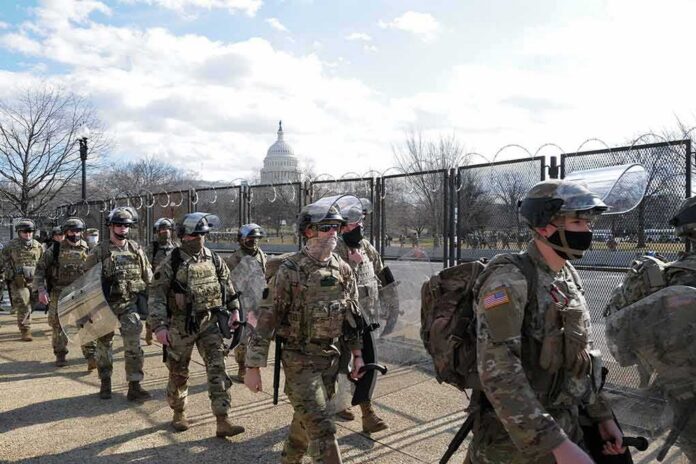
President Trump blasted a left-leaning think tank and threatened its donors after a report said National Guard deployments did not cut violent crime and could cost taxpayers more than $1.7 billion.
Quick Take
- Trump targeted the Center for American Progress and called it a “Radical Left SCAM.”
- The report says National Guard deployments showed no measurable drop in violent crime.
- CAP says the deployments could run past $1.7 billion if they continue through 2026.
- Trump singled out major corporate and foreign-linked donors in his attack.
Trump’s attack on the report
Trump lashed out after the Center for American Progress published a report saying his National Guard deployments had no measurable effect on violent crime. The president then attacked the think tank on social media and suggested legal action against the group and its backers. Reporting on the outburst said he named donors ranging from major companies to foreign-linked institutions, turning a policy fight into a broadside against the funding network behind the report.
The core of the dispute is simple. CAP says it reviewed multiple cities, datasets, and time windows, and still found no evidence that the deployments reduced violent crime. The group also put a price tag on the effort, warning that continued deployments through the end of 2026 could cost taxpayers more than $1.7 billion. For readers frustrated by waste and weak results, that combination of high cost and low payoff will sound familiar.
Why the cost figure matters
CAP’s claim lands in a broader debate over crime policy and federal power. Supporters of visible crackdowns often credit them for falling crime, even when the trend may already be moving in that direction. That is why the numbers matter so much here. If a costly military-style presence does not reduce violent crime, then taxpayers are paying for symbolism, not results. That is a hard sell for families already squeezed by inflation and public overspending.
The report does not say crime is unchanged in every category. Other analyses and local reporting have found some reductions in property crime or mixed effects, while still finding little or no impact on violent crime. That split matters because violent crime is the main justification Trump has used for these deployments. If the strongest available evidence shows no real change where it counts most, then the argument for expanding the program gets much weaker.
Trump’s broader fight with the donor class
Trump’s attack also reflects his long-running tension with donor networks and elite institutions that shape public debate. In this case, he did not just reject the report. He went after the people and corporations he said were funding it, including Apple, Walmart, and other high-profile names reported in coverage of his rant. That kind of pressure campaign fits a populist message: take on the institutions that bankroll the opposition.
Still, the policy question remains separate from the political fight. CAP’s report argues that the deployments failed on public safety and imposed a steep bill on taxpayers. If those findings hold up, then the White House will need more than tough rhetoric to justify the program. It will need evidence that the deployments produce a real drop in violent crime, not just a louder show of force in American cities.
Sources:
mediaite.com, en.wikipedia.org, independent.co.uk, theguardian.com, americanprogress.org, abcnews.com, skyfleet.blue, apnews.com