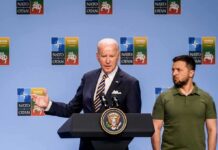


Chicago’s mayor openly tied migrant-crisis dollars to race-based contracting, handing critics fresh fuel for a constitutional and fiscal fight.
Story Highlights
- Mayor Brandon Johnson said migrant-response money went “directly” to Black-owned businesses.
- A 52-second clip of the remarks spread online after the full interview reportedly vanished.
- Chicago’s formal minority- and women-owned business program promotes participation in city work.
- Watchdog work found no major issues with about $630 million in migrant spending through 2024.
Mayor’s Recorded Remarks Spark Contracting Uproar
Mayor Brandon Johnson said he “put millions of dollars into black-owned businesses” through the city’s migrant response and that “these contracts were directly for these black-owned businesses.” Those words came in a Maze Jackson interview now circulating in a short clip. Critics said the mayor’s phrasing sounded like race-based steering, not neutral competition. The mayor also said some businesses grew from the work. Townhall reproduced the quotes in print, locking in the language at issue.
Fox News reported the backlash as the clip raced across social media. The dispute turned on what the city actually did versus what the mayor seemed to boast about. The short video made the controversy simple and sharp. The full interview reportedly disappeared from YouTube, which only deepened public doubt and hardened views. That missing context leaves the debate hinging on select quotes and secondhand accounts more than a full transcript.
What City Policy Already Allows in Contracting
Chicago runs a formal program for minority- and women-owned firms. The city says firms must be at least 51 percent owned and controlled by a qualifying owner and be certified. The program’s goal is to promote participation in city work. That policy is standing law, not an ad hoc rule only for the migrant surge. It explains why certified firms appear in city deals, but it does not by itself prove race was a deciding factor in specific awards.
City bid materials also urge “maximum opportunity” for certified firms, while noting some procurements may set no participation goals. That caveat matters in emergencies when speed often reduces subcontracting and competition. It shows inclusion rules exist, yet they can be waived or applied differently by project. The paper trail for each migrant contract would show how this played out on the ground, but not all files are public in one place.
Known Meal Contracts And The 3 Percent Claim
After early emergency work, officials used a request for proposals to pick meal vendors in January 2024. Two companies won large contracts, replacing a prior provider. Reports tied those selections to a competitive process, at least for that round. That said, the mayor’s own words went further, saying contracts were “directly” for Black-owned businesses, a claim that goes beyond routine inclusion messaging and triggered the current storm.
Separate coverage says Black-owned firms received about 3 percent of emergency migrant dollars, even as total response spending neared hundreds of millions. If accurate, that figure undercuts any idea that most funding was racially targeted, but it does not resolve whether any specific awards used race in selection. It also raises a new question: why claim sweeping benefits if the slice was small? That gap now feeds the scrutiny.
Funding Sources, A Vanishing Video, And A Watchdog Check
A city press release described a $17.6 million effort, funded by the State of Illinois and the Greater Chicago Food Depository, to pay mostly Black- and Latino-owned restaurants to feed new arrivals. That pool mixed state and private dollars, not just city funds. Supporters cite it as inclusion success. Critics say it does not prove the mayor’s broader claim about city-directed contracting, and note that only a limited number of businesses took part.
🚨 JUST IN! Chicago Mayor Brandon Johnson Faces Scrutiny Over Millions in Contracts Awarded to Black-Owned Businesses!
During an interview, Johnson said his administration directed millions of dollars in migrant-response funding to Black-owned businesses providing food.… pic.twitter.com/kKs2zO2jSo
— Red Eagle Updates 🦅🇺🇸 (@RedEagleUpdates) November 18, 2026
The city’s inspector general said no major issues surfaced in the review of roughly $630 million spent on migrants through 2024. That means auditors did not find systemic fraud in that period. It does not answer every legal question about race in selection. It does show many controls worked in a high-pressure mission. For conservatives, the real test now is full contract files, clear award logic, and whether any rule allowed race to trump open competition.
Why This Matters To Taxpayers And The Constitution
Americans expect neutral bidding, clear rules, and results that serve the public. The Supreme Court has warned that government race-based set-asides face the highest legal bar. When a mayor frames awards by race, he invites legal risk and erodes trust, even if staff followed policy. Taxpayers who paid high prices during an emergency deserve straight answers: who bid, who won, why they won, how they performed, and who signed off on each step.
The path forward is simple. Release the full interview so the record is complete. Publish a contract ledger for the migrant mission, including solicitations, scores, awards, invoices, and payments. Match meals delivered to dollars paid. Show how inclusion rules applied in each deal. If the city did it right, transparency will prove it. If not, reforms and restitution should follow. Sunlight protects both equal treatment and every hard-earned tax dollar.
Sources:
thegatewaypundit.com, ground.news, x.com, chicago.gov, hannity.com