Critics say a July “smudging” rite at a Durham Catholic parish honored St. Kateri while using language tied to four directions, raising alarms about pagan elements in Church life.
Story Highlights
- LifeSite reports a July smudging ceremony at Holy Cross Parish in Durham tied to Bishop Luis Rafael Zarama, with critics noting no mention of Jesus in the parish write-up.
- Parish and diocesan pages confirm Bishop Zarama’s leadership link to Holy Cross and active diocesan programming at the site.
- A diocesan article describes smudging as comparable to incense and a form of cleansing, reflecting a defense of inculturation by Native Catholic leaders.
- No primary text or video of the rite appears in the record provided, leaving key details unverified.
What Happened at Holy Cross and Why It Sparked Pushback
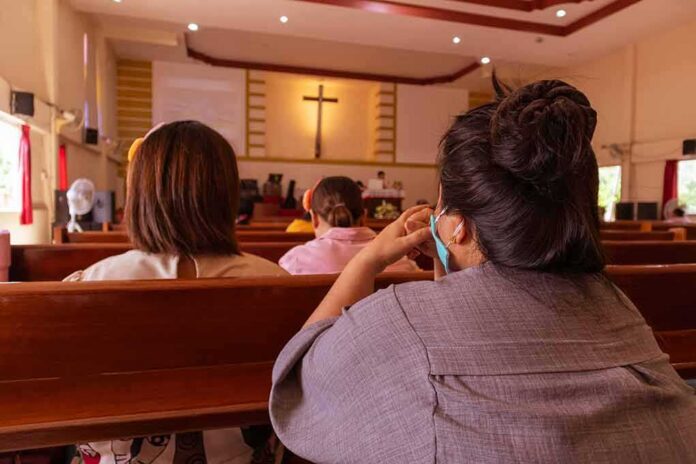
LifeSite highlighted a July smudging ceremony at Holy Cross Catholic Church in Durham, North Carolina, connected in its framing to Bishop Luis Rafael Zarama. The outlet said the parish write-up did not mention Jesus and that critics viewed parts of the rite, such as four-directions language, as non-Christian. Parish materials place Bishop Zarama in leadership links with Holy Cross, including an installation Mass and ongoing diocesan activity there, which increased attention to the event and questions about oversight.
Supporters of inculturation point to Native Catholic practice to defend smudging. A Diocese of Raleigh article quotes Father David Miller, a Cherokee Nation citizen and chaplain to the Native American Catholic Community, saying smudging is like using incense during Mass, offering blessing and cleansing. That view presents smudging as cultural expression compatible with Catholic worship when done under Church authority. The clash turns on meaning: is it a cultural sign aimed at Christ, or a rite with theology from outside the faith?
The Evidence Gaps and Why They Matter
The public record presented here lacks the primary text or full video of the July ceremony. Without the script or footage, claims about exact prayers, invocations, or omissions cannot be verified. That gap fuels a dispute in which labels do most of the work. Critics warn about four-directions formulas as spiritual error; defenders stress cultural symbols that can point to God within Catholic norms. Clear documentation would help settle what was actually said, blessed, and taught during the event.
Holy Cross web pages show steady diocesan programming and bishop-linked milestones, making the parish a plausible venue for approved events. That visibility raises stakes. If a rite confuses doctrine, it risks spreading error. If it is a lawful cultural sign, it deserves a clear explanation to avoid scandal. The situation shows how fast controversy grows when Church leaders do not release precise texts, rubrics, or catechesis that explain how an element serves the faith.
Inculturation Versus Syncretism: How the Church Frames It
The United States Conference of Catholic Bishops released a pastoral framework on Indigenous ministry that encourages authentic inculturation while staying in full harmony with Church authority and doctrine. The guidance stresses collaboration with Indigenous Catholics and careful explanation for worshipers, so symbols point to Christ and avoid mixed messages. That standard gives faithful Catholics a benchmark: culture can enrich worship, but the result must keep Christ at the center and stay within approved norms.
For readers who value clear doctrine, the next steps are simple. First, request the ceremony’s exact text and any bishop or diocesan approval note. Second, ask for a plain-language catechesis that states how any cultural element serves Jesus Christ and the Gospel. Third, confirm that parish events do not replace Catholic prayer with non-Christian formulas. These steps respect Indigenous citizens, honor St. Kateri Tekakwitha, and defend the faith without compromise.
Sources:
lifesitenews.com, holycrossdurham.org, holycrossparish.net, holycrossparish.com, holycrosssc.org