
Ada County investigators named Boise’s long-unknown church decedent and outlined a possible, but unproven, tie to the 1982 Chicago Tylenol killings.
Story Highlights
- Detectives identified the “Unknown Wanderer” as Dr. Mathew Francis Betkouski using DNA and records.
- The man died by cyanide suicide inside a Boise church on December 4, 1982.
- An engraved key led from Boise to property records in Jacksonville, Florida.
- Officials discussed a possible Tylenol link; Illinois investigators did not endorse it.
Cold Case Identification Announced By Ada County
Ada County Sheriff’s Office investigators announced they have identified the man long known as the “Unknown Wanderer” as Dr. Mathew Francis Betkouski. Detectives said the case reopened in 2019 and moved forward through DNA work, family outreach, and property research. Reporting states the break came after investigators built leads from preserved evidence and contacted relatives. Authorities shared the identification publicly in a press event on September 23, 2026, bringing a 44-year mystery closer to closure for the Boise community.
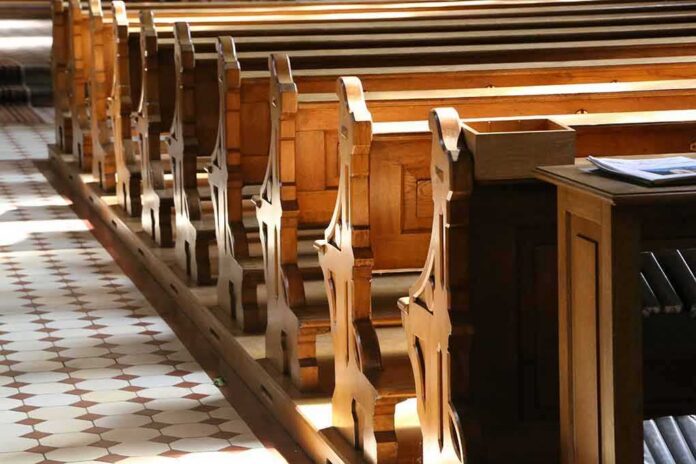
Officials said the man died by suicide from cyanide inside Sacred Heart Catholic Church in Boise on December 4, 1982. The discovery shocked parishioners at the time and left few solid clues. The sheriff’s office said cyanide poisoning was documented as the cause of death in the original case. That key fact shaped the new review of the file. Investigators re-examined the man’s belongings and notes to help trace his steps before his death and to confirm his identity.
From An Engraved Key To A Name And A Family
Detectives found an engraved key with the body and traced it to an address in Jacksonville, Florida. Property records tied that key to an owner who disappeared in 1982. That discovery pointed investigators to the missing man’s family. Photos and documents helped confirm the match. DNA then supported the finding by linking the decedent to a surviving brother, who lived in Los Angeles. Together, those steps allowed authorities to name the man as Dr. Betkouski.
DNA comparison with the brother indicated the men shared the same father, which backed the identification. Reporters at the briefing also described personal effects that fit the man’s background. Items included letters, photographs, a University of California, Los Angeles medical services card, and a map of Chicago. Investigators also noted a small bottle labeled sodium cyanide among preserved possessions, which lined up with the cause of death and his training in chemistry.
Professional Background And Travel Timeline
Coverage described Dr. Betkouski as an organic chemist with a doctorate who lived in several states during the late 1970s and early 1980s. Reports said he disappeared from Las Cruces, New Mexico, on October 15, 1982. Less than two months later, he was found dead in Boise. Investigators said the mix of academic records, travel notes, and family testimony fit the person they identified. That timeline helps explain how he moved across states in the weeks before his death.
Authorities detailed a methodical process to confirm the man’s identity rather than leaning on a single test. Detectives combined preserved evidence, family DNA, and public records to build a clear picture. That approach reflects how modern cold cases are often solved in stages. National guidance says this blend of genealogy signals and records can narrow the field and support a legal identification when traditional database matches are not available.
The Tylenol Angle: What Officials Did And Did Not Say
Investigators said facts in the Boise case raised questions about a link to the 1982 Chicago-area Tylenol murders. They cited the man’s chemistry training, cyanide access, and a Chicago map among his items. However, they did not present physical evidence tying him to the Tylenol crime scenes. Illinois investigators and the Federal Bureau of Investigation did not endorse the connection, and the reported position called the link unsubstantiated at this time.
After 41 years, Dr. Matthew Betkowski has been identified as the "Unknown Wanderer" found in a Boise church in 1982. He could be connected to the Tylenol murders. https://t.co/C3u0WDnpuP
— KTVB.COM (@KTVB) September 24, 2026
Officials also noted a chemical difference: the bottle found among his effects was labeled sodium cyanide, while the Tylenol murders involved potassium cyanide. That gap leaves the larger homicide theory open and separate from the confirmed Boise identity. As with any historic case, law enforcement can still request records and re-test items using modern tools. For now, the Ada County identification stands on its own, while the Chicago link remains a lead to check, not a conclusion.
Sources:
foxnews.com, seattlepi.com, patch.com, nbcnews.com, abc15.com, yahoo.com