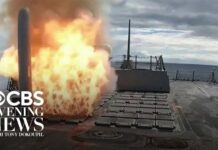
Fox’s Laura Ingraham pressed President Trump on Iran’s remaining firepower, spotlighting a sharp split over how “decimated” Tehran’s military truly is.
Story Highlights
- Trump and key officials said U.S. strikes “decimated” Iran’s nuclear and military capacity.
- Ingraham questioned that claim, citing continued Iranian missile and drone threats.
- Military reporting shows major Iranian losses, while intel says some strike capacity remains.
- The gap reflects fast politics versus slower battle-damage assessments.
What Sparked The On-Air Clash
President Trump and his team have argued since last year that U.S. strikes crushed Iran’s key nuclear sites and gutted its military. Trump’s June 2025 remarks said vital enrichment facilities were “utterly decimated,” and later statements described Iran’s navy, air force, and air defenses as wiped out. The White House and Pentagon echoed that theme, citing heavy damage at Fordow, Isfahan, and Natanz, and claiming Iran’s nuclear capability was “totally obliterated”.
Laura Ingraham pushed back on Fox, asking how Iran can still threaten American targets if its forces were decimated. She argued that credible threats to Air Force One and ongoing drone launches show Tehran retains meaningful capacity to do harm. Her on-air question—“How are they getting off missiles?”—captured a growing concern: battlefield success can be real, yet not absolute, and the public needs clarity on what was hit and what survived.
What The Record Shows About Damage In Iran
U.S. commanders and allied reporting describe heavy losses for Iran’s war machine. Public assessments linked to the United States Central Command said more than 85 percent of Iran’s ballistic missile, drone, and naval defense industry was damaged or destroyed, pointing to large strikes on production, storage, and air defenses. A separate tally noted that roughly 90 percent of weapons factories were targeted, suggesting a major blow to Iran’s ability to build and sustain arms.
At the same time, intelligence reporting indicated Iran kept significant launch capacity. Analysts said thousands of one-way attack drones remained and that a substantial portion of missile launchers survived. Those findings undercut the idea of near-total disablement, even as overall capability dropped sharply. An early defense intelligence view also concluded that some nuclear infrastructure endured and that strikes may have delayed, not erased, core functions.
Why The Messaging Gap Matters For Voters
The friction between decisive-sounding claims and mixed-field results creates confusion for Americans who want straight answers. Officials promoted sharp reductions in Iranian attacks over time, noting steep drops in ballistic missile and drone launches, but they did not release detailed methods or target lists alongside those figures. That feeds a perception gap: the operation may have weakened Iran badly, yet the lack of declassified proof invites critics to say the bar was set too high.
Conservatives expect truth in plain English and a plan that protects our troops, our allies, and our pocketbooks. Strong strikes that reduce enemy power are a win. But plain numbers, photos, and timelines would stop the spin cycle. Clear battle-damage releases, even with redactions, would show what was destroyed, what was not, and how fast Iran can rebuild. That transparency keeps faith with the public while backing deterrence.
What Comes Next To Settle The Debate
Congress and the administration can close this gap with a controlled release of battle-damage assessments. Declassifying summaries on air defenses, missile launchers, drone stockpiles, naval assets, and nuclear sites would ground the debate in facts. Verified before-and-after imagery, plus strike and intercept logs, would show launch rates fell and explain remaining threats. That evidence would either validate the “decimated” framing or refine it with honest limits.
For now, both points can be true: America dealt Iran a major blow, and Iran can still cause harm. Trump’s team points to collapsed production lines and shattered defenses. Ingraham points to missiles and drones that still fly. The mission is not wordplay; it is deterrence. Publish the data, keep pressure on Tehran, and protect American strength without overpromising. That is how we win the fight and the trust.
Sources:
bbc.com, foxnews.com, cnn.com, politifact.com, nbcnews.com, wral.com, reuters.com, siasat.com