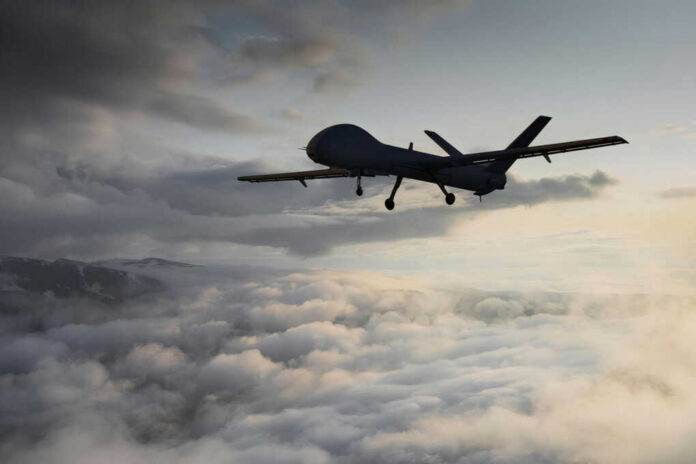
America’s next battlefield vulnerability isn’t a secret weapon—it’s the cheap drone that can find, track, and strike faster than Washington can adapt.
Quick Take
- Drones have shifted from niche reconnaissance tools to the “primary sensors, relays, and kinetic effectors” in modern high-intensity war, especially in Ukraine.
- It describes “several million” drones being produced and destroyed annually in the Russia-Ukraine fight, though precise counts remain unclear.
- Military analysts argue “dronization” is not just a new gadget category but a restructuring principle comparable to past mechanization.
- The drone era is compressing decision timelines, pushing armies toward automated, networked targeting that strains traditional command-and-control.
From Curiosity to Core Capability: How Drones Became a Military Mainstay
Military drones did not appear overnight, and the earliest “unmanned aerial weapon” predates modern aviation, with explosive-laden balloons used in the 1800s. The modern drone industry took recognizable shape in the 1930s, driven by air-defense training needs and purpose-built target drones. By the late 20th century, advances in computing, miniaturization, and GPS helped move drones from large, specialized platforms toward smaller, more practical systems usable across missions.
Major conflicts then accelerated adoption. It highlights reconnaissance and battlefield impact milestones—from Cold War-era utility to widely cited operational proof points like Israeli UAV use in the early 1980s and U.S. employment through the post-9/11 period. Those chapters mattered for capability, but they also shaped doctrine: militaries learned that unmanned systems could extend surveillance, reduce risk to aircrews, and deliver precision effects—often with fewer political costs than putting pilots in harm’s way.
Ukraine’s Drone War: Scale, Speed, and Constant Adaptation
The Russia-Ukraine war is widely described as the most important real-world “laboratory” for mass drone warfare. Analysts cited in the brief characterize the scale as unprecedented, with “several million” drones produced and destroyed annually, even if exact tallies are not firmly documented. What is clear is the pattern: drones are no longer occasional add-ons. They sit at the center of reconnaissance, targeting, and strike cycles for both sides.
Operationally, drones now perform multiple roles at once—spotting targets, relaying communications, and delivering explosive effects—creating an “automated nervous system” for the battlefield. The brief also emphasizes the rise of expendable and rapidly modified drones, reconfigured by infantry and small units to meet immediate threats. That reality favors agile adaptation over bureaucratic acquisition cycles, and it pressures legacy forces built around slower, platform-centric planning and tightly controlled echelons.
Why Analysts Call This a “Revolution in Military Affairs”
It leans on a classic framework: a true “revolution in military affairs” combines new weapons, new organizations, and new ways of war. In that view, drones matter not simply because they fly without pilots, but because they drive structural change. The brief describes “dronization” as comparable to historic motorization and mechanization—language that signals a shift in how armies see, decide, and strike, not just what they buy.
One practical consequence is tempo. Drone-enabled reconnaissance can shorten the time between detecting a target and engaging it, compressing decision-making and increasing pressure on command-and-control. Another is force design: the brief argues traditional echeloning becomes harder to sustain when sensors and fires are distributed, robotic, and increasingly automated. For voters already skeptical of federal competence, that poses an uncomfortable question: can large Western bureaucracies keep pace with a battlefield that rewards speed, iteration, and decentralized initiative?
Strategic Tradeoffs: Precision, Accountability, and a More “Democratized” Battlefield
Drones can reduce pilot casualties and, in some contexts, support precision targeting that may lower collateral damage. At the same time, the research notes that growing reliance on drones reshapes strategy and expands access to advanced effects. When relatively low-cost systems can scout and strike, smaller states—and potentially non-state actors—gain capabilities once reserved for major powers. That “democratization” of warfare is strategically destabilizing, even if it also undermines entrenched monopolies on force.
Drones Are The Biggest Military Revolution In A Centuryhttps://t.co/gfqYugSMSh
— Bodoxstocks (@bodoxstocks) April 27, 2026
For Americans, the policy stakes are not confined to foreign battlefields. The same trends that reward rapid iteration abroad can expose procurement waste at home, and they can pull defense spending toward mass production and counter-drone systems rather than big-ticket platforms alone. It does not quantify U.S. budget impacts, so conclusions should be cautious. Still, the underlying signal is hard to miss: the drone era punishes complacency, and it amplifies the cost of institutional slow-walking.
Sources:
https://www.axon.com/resources/history-of-drones
https://www.zenatech.com/history-of-drone-technology/
https://www.iwm.org.uk/history/a-brief-history-of-drones
https://airandspace.si.edu/air-and-space-quarterly/issue-12/secret-history-of-drones